
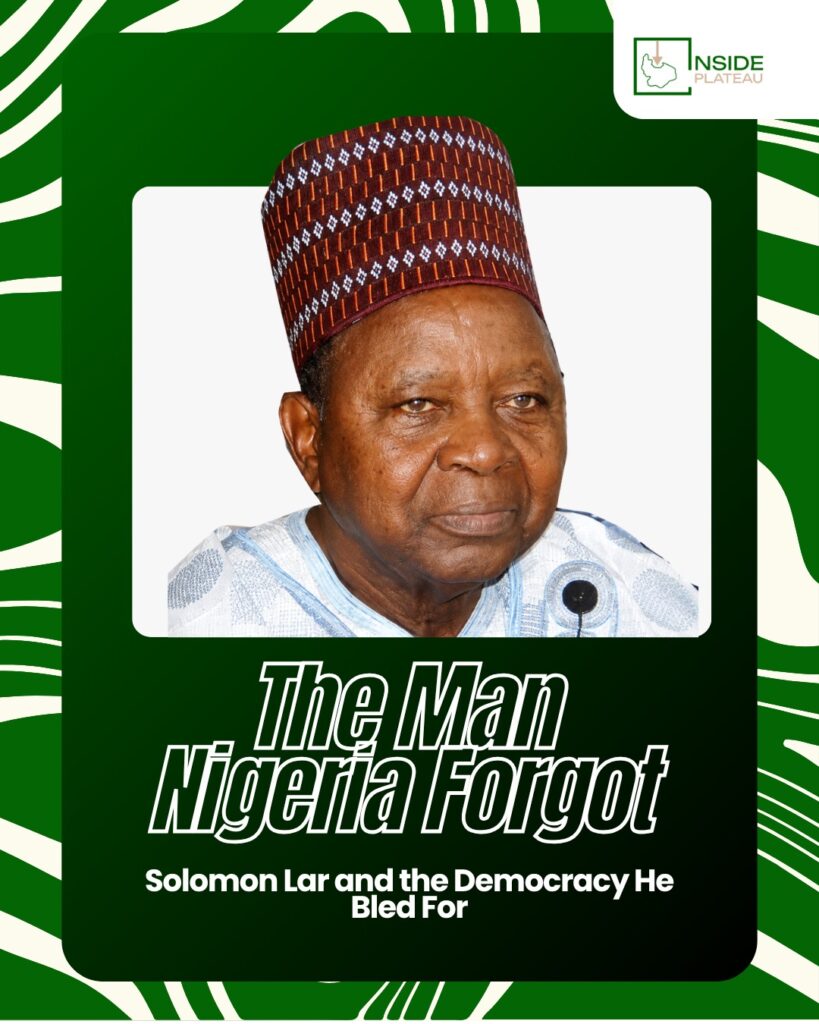
Solomon Lar is a household name in Plateau State whose impact is celebrated across the whole nation. However, he is one of the figures who don’t get as much plaudits as he deserves. This article tries to loud his impact and highlights why this great man is not much celebrated.
A Warning to the Lion
The year was 1993 with Nigeria holding its breath. Sani Abacha has just seized power in a coup that surprised no one and terrified everyone. The transition program — the carefully constructed ladder back to civilian rule — has been kicked over. Across the country, the men who had hoped, organised, and believed are retreating into silence. And one by one, the way sensible people do when a lion is loose.
Solomon Daushep Lar was not retreating. He resigned his ministerial position (Minister of Police Affairs), because he will not lend his name to a government that has no honest intention of returning power to the people.
Then, with a group of Northern leaders who call themselves the G18, he does something that most Nigerians alive at the time would have considered either deeply principled or deeply reckless: he writes Abacha a letter. A direct, unflinching letter, telling the General not to transmute himself into a civilian president, warning him that doing so would poison whatever remained of Nigeria’s democratic promise.
And then the most amusing part is that, he personally delivers it. His wife, Prof. Mary Lar, would later describe it simply: he took the message “to the lion’s den.”
Also Read:The History, Culture, and Pride of the Tarok People of Plateau State
That is the man this article is about. Not a man of thunder and rallies, whose name filled stadiums. But a quiet man, a careful man, a man who, when the moment demanded everything, gave it. Nigeria has largely forgotten him. That is the first injustice this article intends to correct.
The Country Has a Short Memory
There is a particular kind of Nigerian hero that the country is good at forgetting. This is the builder, the patient one, the man who works across decades without a single defining photograph, without a war named after him, without a scandal large enough to be entertaining.
Nigeria remembers its loudest voices. It mourns its martyrs and mythologises the dramatic and the catastrophic. However, men who sat in committees, drafted constitutions, founded institutions, endured prisons, and came back to the table — again and again — without bitterness and without headlines? Those men fade.
Solomon Daushep Lar faded.
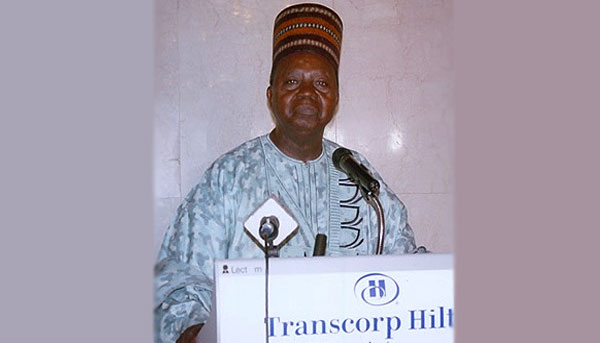
Solomon Lar was born on April 4, 1933, in Pangna, Langtang, in what is today Plateau State. He was the son of a farmer and a pottery-maker. And he died on October 9, 2013, in the United States, after a long illness.
In between those eighty years, he served in Nigeria’s First Republic parliament, survived a military coup, studied law, went to prison, challenged a dictator, and founded the political party that shepherded Nigeria into its longest unbroken stretch of democracy.If you read that list and thought, I should know more about this man, you are right. You should
The Soil He Grew From
To understand Solomon Lar, you have to start in Langtang — not as a footnote, but as a foundation.
The Middle Belt of Nigeria is one of the country’s most complex and least understood regions. A vast transitional zone between the predominantly Muslim north and the predominantly Christian south, it is home to hundreds of ethnic groups, many of them small, many of them historically squeezed between larger, more powerful neighbours. The people of Plateau — the Tarok, the Berom, the Ngas, the Mwaghavul and dozens of others — were not without pride or culture, but they were, for much of colonial and early post-colonial Nigeria, peripheral to the centres of power.
Into this world, a farmer’s son was born.
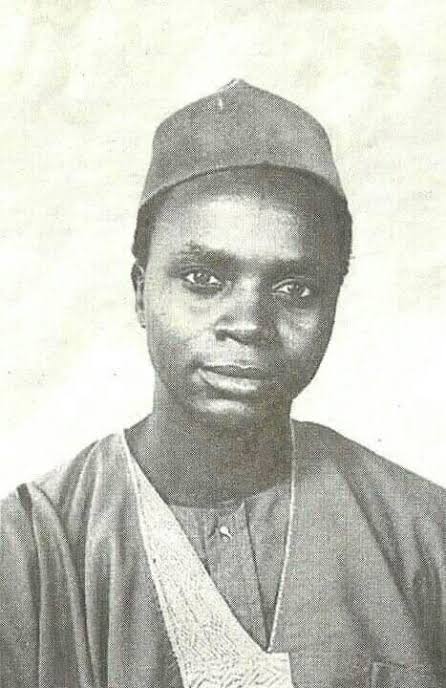
Solomon Lar’s Early House
Lar’s early path was not politics. He trained as a teacher at Gindiri Teachers College, one of the most respected mission institutions in northern Nigeria, and for a time considered the clergy. There is something worth pausing on in that detail — the man who would one day challenge Sani Abacha first considered devoting his life to God rather than governance. Whatever redirected him toward public life, the missionary impulse never quite left. He would speak of the “emancipation” of his people the way a preacher speaks of liberation — as a calling, not a career.
By 1959, he was a councilor to the Langtang Native Authority. That same year, at twenty-six years old, he was elected to Nigeria’s Federal House of Representatives on the platform of the United Middle Belt Congress, representing Lowland East. He would serve under Prime Minister Abubakar Tafawa Balewa, first as Parliamentary Secretary, later as a Junior Minister in the Federal Ministry of Establishments.
He was in the room when Nigeria was young. One of the very few people who would survive long enough to see it grow old.
When Everything Collapsed
On January 15, 1966, the first military coup ended the First Republic. Balewa, the Prime Minister Lar had served, was killed. The parliament Lar had sat in was dissolved. The experiment — messy, imperfect, but real — was over.
Lesser men accepted this as the new permanent reality of Nigerian life. Lar went to school.
Solomon Lar enrolled at Ahmadu Bello University in Zaria, earning his LLB in 1970 and being called to the bar in 1971. He established a private legal practice. Also, he co-founded the Nigerian Legal Aid Association and served as its first national secretary — an organisation dedicated to giving the poor access to justice in a country where justice had always favoured the wealthy.
This is the part of his story that most political biographies rush past on their way to the governorship. They shouldn’t.
A man who has just watched his government collapse, who has seen colleagues killed and institutions dismantled, who could have retreated into comfortable obscurity — that man choosing instead to build a legal aid association tells you something essential about his character. He was not driven by power, but was driven by the persistent, almost stubborn belief that people deserved better than what they were getting.
He also served on boards that shaped the country’s institutional architecture: the Board of Amalgamated Tin Mines of Nigeria, the Board of Directors of African Continental Bank, the Nigeria Council of Legal Education. Most notably, he served as Vice-Chairman of the Justice Ayo Irikefe panel in the 1970s, the body whose recommendations led to Nigeria’s expansion from 12 states to 19 — a structural change that gave more communities a direct stake in the federation.
He was building Nigeria in the background while the generals were busy taking credit for running it.
The Governor the Middle Belt Deserved
In 1978, as Nigeria prepared to return to civilian rule under the Obasanjo military government’s transition program, Solomon Lar co-founded the Nigerian People’s Party. He was nominated as its presidential candidate — a measure of how his peers rated him. He chose instead to run for governor of Plateau State. On October 1, 1979, Nigeria Day, Solomon Lar was sworn in as Plateau State’s first elected civilian governor.
Read that slowly. The first. In the history of a state that had existed for less than a decade, carved from the old Benue-Plateau State in 1976, this was not just an election victory. It was the beginning of self-determination for people who had long felt that their destinies were decided elsewhere, by others, without them. His deputy was Alhaji Aliyu Akwe Doma — a Muslim. In a state defined by its ethnic and religious complexity, the pairing was deliberate and symbolic.
Lar governed as a man who understood that the Middle Belt’s only real power lay in its unity. What he did with four years in office is the part of his story most obscured by time. He built hospitals and extended schools to communities that had waited for them through independence, through coups, through oil booms that never reached them.
Achievements
He pushed rural electrification into areas that had lived by lamplight. Also, he invested in water infrastructure that changed the daily reality of women and children in ways that no government press release fully captures. But two reforms stand out as quietly revolutionary.
First, he abolished the daily pay and contract system for workers — a practice that kept labourers in chronic financial insecurity, hired and dismissed by the day, with no stability and no protection. Under Lar, they became salaried employees with rights.
Secondly, he introduced paid maternity leave for nursing mothers. In 1979. In Plateau State, Nigeria.
It is worth stating plainly: most of the world’s wealthy nations had not yet codified what Lar was doing in Jos. He looked at the women of his state, the farmers, the civil servants, the teachers, the daughters of pottery-makers like his own mother — and decided that their biology should not be a financial punishment. This was not policy-by-committee. This was governance as a moral act. His people called him the Emancipator. He had earned it.
88 Years
On December 31, 1983, General Muhammadu Buhari led a coup that ended the Second Republic. The elected governors were removed. The politicians were arrested. The tribunals began. Solomon Lar was tried and sentenced to 88 years in prison. Not for embezzlement. Not for looting. The charges against him have been disputed and are widely regarded as the kind of trumped-up accusations that military tribunals in Nigeria specialised in producing — guilt by proximity to a democratic system the new rulers wanted to delegitimise entirely.
He was imprisoned in Jos. Then in Kirikiri Maximum Security Prison in Lagos. He would later be released under General Ibrahim Babangida. But those years — the confinement, the disgrace, the deliberate erasure of a man who had done nothing but govern — were meant to break him. They did not. The most remarkable thing about Solomon Lar is not his entry into the G18 or his role in founding the PDP or even his governorship. It is the quality of his spirit. A man who goes to prison for governing, who survives it, who comes out without venom and goes straight back to the work of building democracy — that man is not just a politician. That man is something rarer.
Into the Lion’s Den
When Abacha took power in November 1993, Nigeria entered one of the darkest chapters in its history. Journalists were killed. Opposition leaders were jailed or fled. Ken Saro-Wiwa was hanged. The machinery of intimidation ran without apology.
Lar, having resigned his ministerial position in protest, did not simply retreat into opposition from a safe distance. He organised. The G18 — eighteen prominent Northern leaders — was his initiative. Their collective voice carried weight that could not be easily silenced. The open letter they wrote to Abacha was not diplomatic language wrapped in plausible deniability. It was a direct warning: do not transmute yourself into a civilian president. Do not extend your grip. Do not betray the country.
The group later expanded to the G34, broadening its base and deepening its pressure. But what sets Lar apart from the other signatories is what Prof. Mary Lar has consistently emphasised: he did not simply sign the letter and hope for the best. He carried it personally, looked the General’s inner circle in the eye. He said, in effect, We see what you are doing, and we are telling you, to your face, to stop.
This was not safe. Men had disappeared for far less under Abacha’s government. Lar was not young, not healthy, and not unaware of the risks. He went anyway. Abacha died in June 1998, under circumstances that remain murky. His self-succession project died with him. Nigeria stumbled, battered and blinking, back toward the light. The people who held candles in that darkness deserve their names remembered. Solomon Lar is one of them.
The Party He Built
In 1998, as Nigeria prepared — once again, after so much pain — for a return to civilian rule, the political architecture had to be constructed almost from scratch. The old parties were dead. New structures were needed. New coalitions had to be forged across a country that had reason to distrust everything. Solomon Lar became the founding National Chairman of the People’s Democratic Party.
It is difficult to overstate how much this moment required of him. The PDP was not born in a moment of national consensus. It was born in tension, in negotiation, in the difficult work of convincing people from wildly different interests and regions that they could share a platform. Lar stewarded that process with the skills he had spent forty years developing — patience, coalition-building, the ability to hold competing egos in the same room long enough to find common ground. It worked.
1999
In February 1999, Olusegun Obasanjo won the presidential election. On May 29, 1999, Nigeria inaugurated its Fourth Republic — the one that is still, imperfectly and sometimes barely, standing today. Obasanjo, in a moment of public generosity, said this about him: “I wish to thank Chief Solomon Daushep Lar, our indefatigable National Chairman, whose wisdom, dexterity, and political sagacity contributed in no small measure to building the party.”
From a man not known for freely distributing credit, that is a significant tribute. Lar served as National Chairman until 2002, then as Chairman of the PDP Board of Trustees before eventually stepping back from the party’s internal politics. Even in his final years, he remained relevant — engaged in the debates and struggles that he had been part of for half a century.
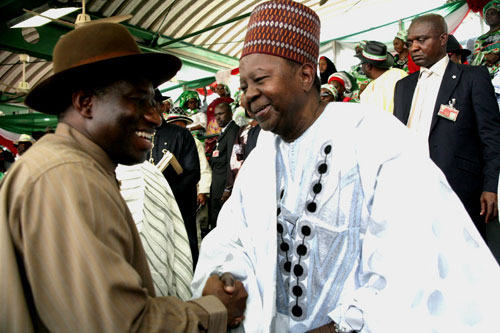
In 2010, Acting President Goodluck Jonathan appointed him to chair a presidential committee addressing the cycles of violence that had plagued Jos. He came home — to Plateau State, to the people he had governed thirty years earlier — and tried, once more, to help.
What He Left Behind
Solomon Lar died in the United States on October 9, 2013, at eighty years old, and was survived by his wife, Prof. Mary Lar a woman of extraordinary accomplishment and courage, whose voice has kept his memory alive in the years since his passing. Their children include Dr. Chalya Lar and the late Hon. Beni Lar. The Solomon & Mary Lar Foundation continues their shared legacy of public service.
The tributes that followed his death described him as selfless. As a unifier. As a “crucial player in the battle that ousted the military.” All of this is true. However, tribute language has a way of softening things into abstraction. So let us be specific about what he left.
He left a generation of Plateau workers who had dignity because of a salary, not a daily wage. He left women who went home with a baby and kept their jobs. Solomon Lar left a legal aid infrastructure that gave the masses a fighting chance in a country where the law had always been an instrument of the powerful.
Also, he left a political party that made Nigeria’s longest democracy possible. He left the memory of a letter that was carried into a dictator’s stronghold by a man who had already been imprisoned once for believing in democracy and who was willing, if necessary, to pay that price again.
What he did not leave is enough noise, enough statues, and enough textbook pages.
Why Nigeria Forgot – And Why it Matters
There is a structural reason Nigeria forgets men like Solomon Lar.
The country’s political memory is shaped by crisis — by the Civil War, by assassinations, by spectacular corruption, by dramatic collapses. What it struggles to honour is continuity. The patient builder, the principled negotiator, the man who does the quiet work across five decades — he doesn’t fit neatly into a headline.
Lar came from the Middle Belt, a region that has historically been caught between the country’s loudest power blocs, seen as a buffer zone rather than a centre. Its heroes are underrepresented in the national narrative almost by design. The emancipation he spent his life pursuing was not just political — it was historical. He wanted his people to be seen, to be counted, and to matter to the story Nigeria tells about itself.
The Man Who Stayed
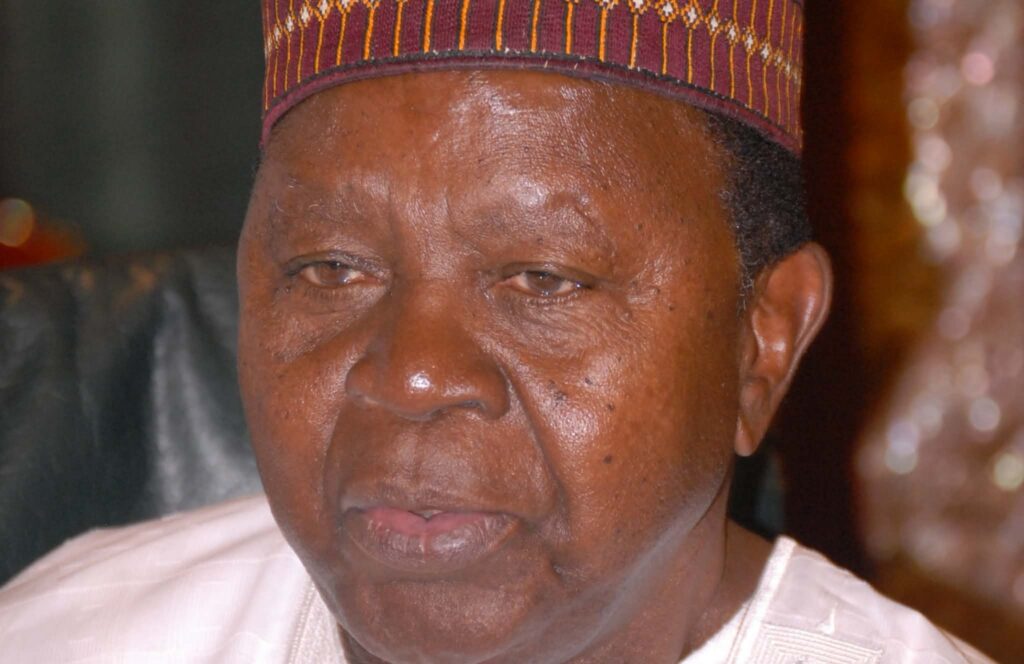
There is one final thing worth saying about Solomon Daushep Lar. He could have left.
Firstly, after the First Republic fell, Solomon Lar could have taken his education and his intelligence elsewhere. He could built a quiet, comfortable life far from politics.
Secondly, after prison, Lar had every justification a man could need to wash his hands of public service.
And, after the PDP and the transition, he had done more than most Nigerians will ever do for their country. And no one would have blamed him for resting. He didn’t leave. He stayed, kept showing up to coalitions, to crises, to the exhausting, grinding, necessary work of trying to make Nigeria more just than he found it.
That is the democracy he bled for. Not a single dramatic sacrifice, but a lifetime of smaller ones .The salary he didn’t take when he resigned in protest, the years in Kirikiri, the dangerous letter hand-delivered to a man who could have had him killed, the long nights building a party that would outlast his involvement in it.
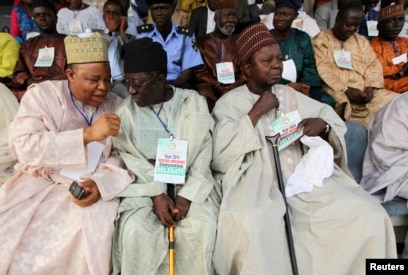
Nigeria has a habit of forgetting this kind of sacrifice, because acknowledging it would obligate us to something. To remember that democracy is not a gift delivered by history. And, it is a thing that citizens choose, again and again, at great personal cost, in the hope that the country they are building will be worth the price they are paying. Solomon Daushep Lar paid that price. It is the least we can do to remember his name.
Also Read:https://www.vanguardngr.com/2013/12/lar-buried-amidst-eulogies/