
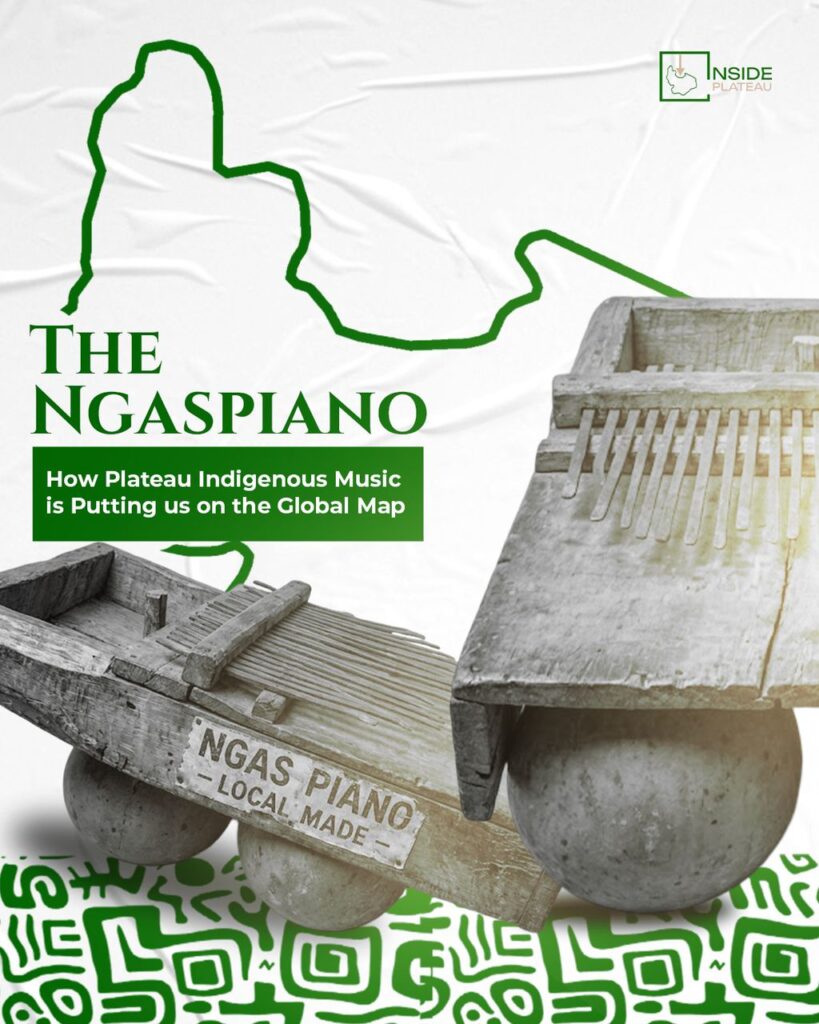
These days, you can be scrolling through your Tiktok or Instagram reels are then suddenly the algorithm hits you with yet another Ngaspiano video from somewhere unexpected—Brazil, maybe. Probably, South-Africa. Or the UK. Mehn, Plateau Indigenous Music is really putting us on the global map.
Plateau State has always had sound. Not noise. Sound. This kind of sound stays with you. And it doesn’t ask for anyone’s permission before it travels round the world.
Long before the recent social media trends, I mean, before streaming numbers and all these viral challenges, Plateau has always been exporting culture. We just didn’t call it “global reach” back then. We called it music.
Finally the world is now catching up. And these recent Ngaspiano wave is proof.
What is The Ngaspiano, Really?
The term ‘Ngaspiano’ isn’t something to explain with big grammar. You have to feel it first. However, I will do my best to break it down for you. Ngaspiano is that familiar Ngas rhythm that is rooted in ancestral drums, Ngas melodies (the common call-and-response patterns), all blended with similar bounce and structure of the Amapiano.
The Ngaspiano is where our Plateau Traditional vocals ride on modern beats. It’s a way of telling our old Plaateau stories on hybrid beats. And no, this movement didn’t start in a boardroom or in a streaming farm trying to “go viral.” It started the Plateau way. Organically. One hundred percent organically.
A few Plateau indigenous producers like; MKleb, Wuso, Padrebeatz, and a few more started the experiment. Then some Artists who refused to abandon their mother tongue jumped on the trend. Young Plateau content creators also decided to use the sounds along with the hashtags #ngaspiano.
Today, people across different continents are actually dancing to a sound that carries Plateau DNA, even if they don’t know the names of the hills yet. They know our sound. They really love it. This is how culture travels.
The Ngaspiano Online Trend: From Jos to the World
If you’re an online person, I mean a TikTok, Instagram Reels, YouTube Shorts, or Facebook Reels person, then I’m very certain that you’ve seen it. The clip often starts with that unmistakable Ngaspiano bounce. The log drum then kicks in. You either see someone dancing, while someone else stitches it. Another creator may focus on translating the lyrics. Suddenly the sound is everywhere.
People in Ghana, South Africa, The UK, The US, and other parts of the world all vibe to the Ngaspiano. Some can’t even pronounce “Ngas” correctly. But they’re dancing and singing along. They are always asking questions in the comments.
“Where is this from?”
“What language is this?”
“Why does this feel so different?”
And that’s the silent power of Plateau Indigenous Music. It doesn’t shout. It invites.
Plateau Has Been Doing This for Decades (We Just Forgot to Loud it)
Here’s a fact I want most people outside the state don’t know: Plateau State has always produced world-class indigenous musicians.
Let’s take Nde Dantala for instance. Just mention that name anywhere indigenous music is cherished, and everyone would nod. His sound isn’t just music—it is storytelling, it is history, and it is philosophy wrapped in beautiful melody. Songs that traveled far beyond Plateau villages and ended up in international cultural spaces, academic studies, and global festivals.
But, he wasn’t alone. Plateau has always been a melting pot of ethnicities—Berom, Ngas, Mwaghavul, Goemai, Tarok, Ron, Afizere—and each of these ethnic groups carried its own sound. Different rhythms. Different instruments. Different vocal styles. Yet all unmistakably Plateau.
These artists never chased trends, but they became reference points. The problem had never been lack of talent. It has always been lack of spotlight. Now, thanks to digital platforms like TikTok, that spotlight can’t be controlled by gatekeepers anymore.
The New Generation Is Doing Something Smart
What makes this moment very special isn’t just nostalgia. It’s evolution.
Artists like Sammy Gyang, Dicekid Sos, Kate Miri, GTapzy, and other Plateau indigenous creatives from different ethnic backgrounds are not abandoning tradition. They’re actually upgrading it.
They sing beautiful contemporary songs in our indigenous languages without apology. They blend our native melodies with modern production and style. They now make music that works in a village square and in a Top Club in Abuja or Lagos.
Read Also: Plateau IS Positioning Its Youth for the Future of Work Plateau IS Positioning Its Youth for the Future of Work
And this balance is very important, because it tells a different story about Plateau State. A story of our adaptability. A story of confidence. A story of young people who know their roots and are comfortable enough to bring it into global conversations.
There are Berom, Ngas, Mwaghavul, Tarok, and Goemai artists pushing indigenous pop, redefining dance music, experimenting with soul and native fusion, as well mixing rap music with our native chants. Different tribes. Same direction. Forward.
Why This Matters Beyond Music
Here’s the most interesting part of all these. Music is never just music. When people are able to connect emotionally to a sound, they start asking about its source. Culture then turns to curiosity. Curiosity then becomes tourism. Tourism becomes investment. And investment becomes settlement. That’s the pipeline.
Ngaspiano isn’t just exporting our native beats. It’s exporting our image. It’s exporting an image of Plateau State as:
- Creative
- Youthful
- Adaptive
- Peaceful enough to create
- Structured enough to nurture talent
- Rich in culture, not defined by crisis
That directly counters the single story many outsiders have been fed. And it does so without press releases or political speeches. Just vibes.
A Different Narrative than the One on the News
Truly speaking, if someone who has never been to Plateau State Googles it, the first things they’ll likely see are reports of attacks, conflicts, or tension. That narrative has been dominating for years. But that’s not the full story and it’s definitely not our daily reality.
Ngaspiano exposes another truth:
It says: we are creating here.
It says: our studios are active.
It says: our young people are hopeful enough to dream.
Cultural movements are not gotten from places that are dead. You only get them from places that are alive.
Plateau as a Cultural Capital (Yes, That’s a Thing)
One of the most special aspects of Plateau geography is the cool weather, the hills, and the diversity of people. Historically, it has always attracted artists, thinkers, and creatives from all over Nigeria.
That’s should come as no surprise because, creativity needs space to breathe, it needs safety, and
it also needs inspiration. Plateau State offers all three. Ngaspiano is simply the latest evidence.
This should matter to investors watching cultural trends. Creative economy is real economy. Music making business creates jobs—producers, videographers, sound engineers, marketers, event planners, and lots more.
For tourists, this is an invitation. Come witness where the sound comes from.
For remote workers and digital professionals, this sends a quiet message: this is a place where life exists beyond stress.
What the World Is Responding To
People aren’t just dancing to Ngaspiano because of its catchy vibe. They’re actually responding to its authenticity.
In a time like this when global music feels highly manufactured, Plateau indigenous music feels honest and original. It carries community. It carries memory. It carries something human.
This is something that can’t be faked. And once people feel it, just like Oliver, they always come back more: More sounds, more stories, and more context.
This Is Bigger Than a Trend
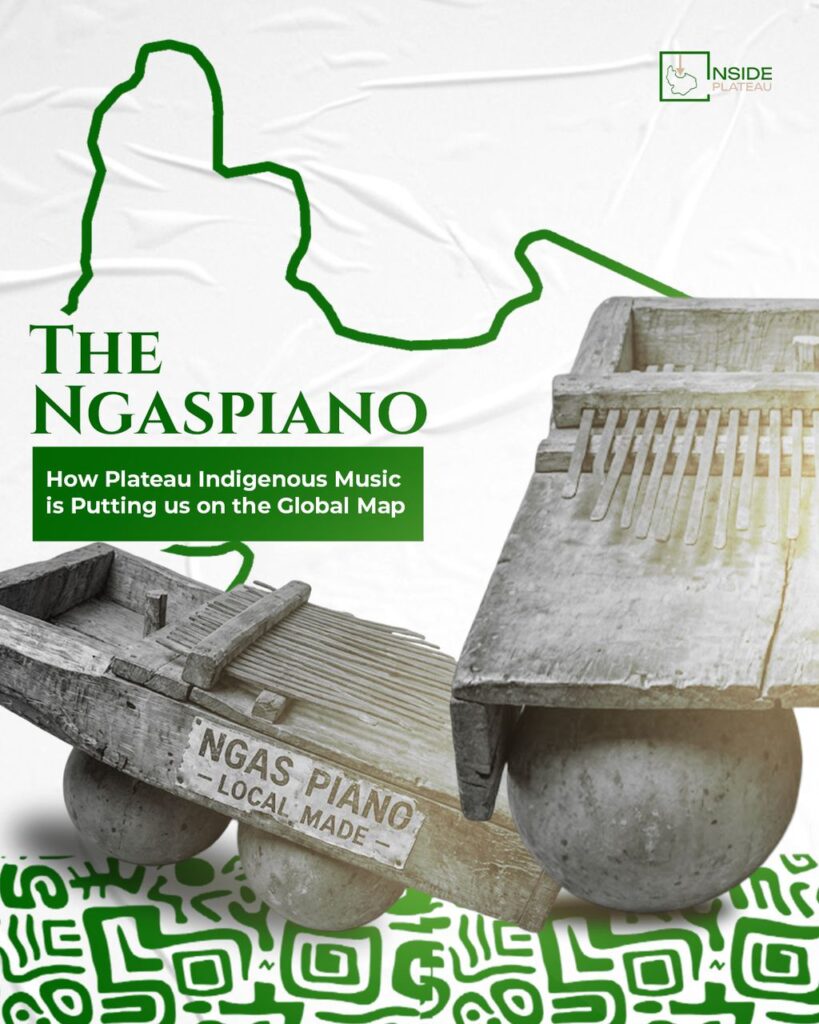
Trends may fade, but Culture doesn’t. The Ngaspiano is only a signpost that is pointing to something bigger and deeper— Plateau State is not waiting for outsiders to rebrand it. It’s doing the work itself, through its people
Through artists who understand that singing our indigenous Plateau songs is not a limitation, but a superpower.
And as more Plateau creatives return to their roots, our sounds will keep evolving. New sub-genres will emerge. New collaborations would be made. The tables are finally turning in our favour.
Plateau Is Not Just Surviving. It’s Creating.
Next time someone reduces Plateau State to a mere headline, remember this: While narratives were being written about us, music was being written by us.
Ngaspiano never asked for permission to go global. It went global and carried Plateau with it. And now the whole world is listening.