
If you’ve driven past Old Government House Junction lately, you may have noticed something new watching the road. A CCTV camera. A quiet sign that security in Plateau State is changing.
However, for months, residents have been aware of a plan to install 5,000 AI-powered cameras across the state. Many assumed nothing had actually happened. But the real story is more layered than that. And understanding it matters for anyone who lives, works, or does business in Jos.
Security in Plateau: Three Projects, Not One
Here’s the part most people miss: there isn’t just one camera project. There are three separate efforts, all aimed at improving security in Plateau State, which are progressing at very different speeds.
| Initiative | What It Is | Status |
| 5,000 FG-China Camera Fleet | Full HD cameras with infrared, thermal sensors, and AI detection, custom-manufactured in China | In production and shipping — not yet installed |
| Jos-Bukuru CCTV & Streetlight Project | 199 cameras paired with 4,029 solar streetlights across key urban corridors | Rolling out now |
| Drone & UAV Patrols | Thermal drones with 30x zoom, 10–15km range, covering rural and boundary areas | Already active |
Most public conversation lumps these together as “the 5,000 cameras.” That’s why people assume nothing is happening. In truth, part of the system is already working — just not the headline part.
Security in plateau: What’s Already Running
The drones aren’t a future promise. They’re flying now, gathering intelligence and monitoring hard-to-reach areas where fixed cameras can’t go. Plateau State also has a functional command center in Jos, capable of receiving live video and coordinating field teams.
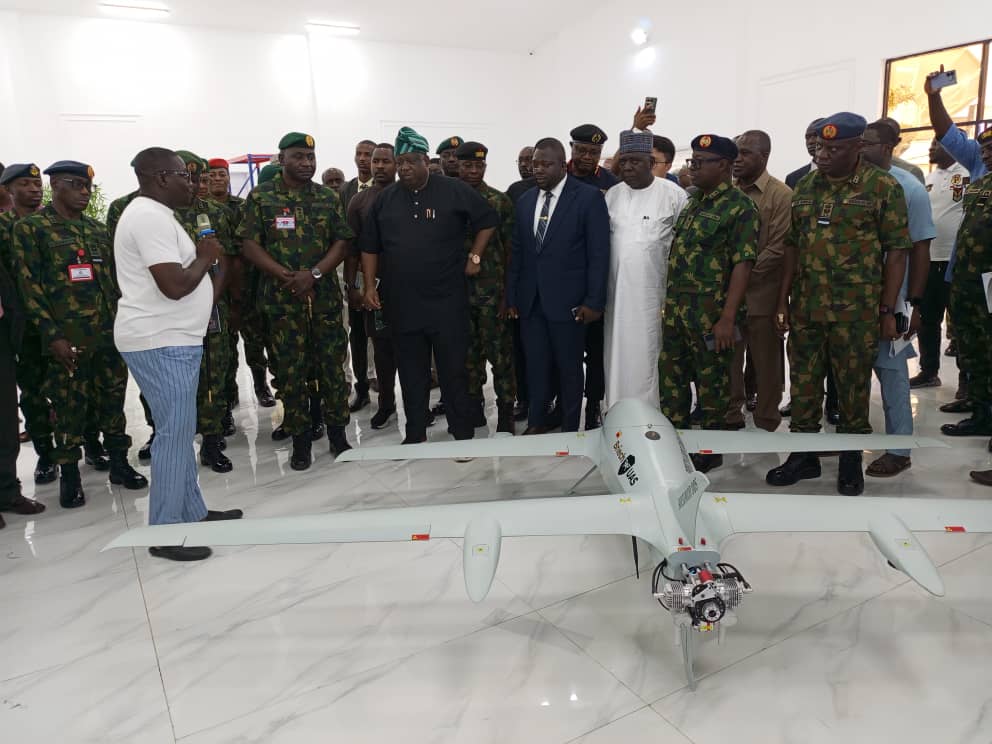
This matters because security in Plateau State was never meant to rely on cameras alone. The command center is the part that turns footage into action. They are responsible for dispatching officers, tracking incidents, and connecting the dots between locations.
The 199-camera Jos-Bukuru project is also moving. Paired with thousands of solar streetlights, it’s designed to light up and monitor major corridors in the metro area. If you’ve seen new streetlights recently, it’s this project, not the bigger federal one.
Read: Why Security Collaboration Matters for Plateau State
What’s Still Coming
The 5,000-unit camera fleet (the one most people are waiting for) is still in production. Officials traveled to China to inspect the equipment and finalize specifications. According to Plateau State’s Secretary to the Government, Samuel Jatau, the delay comes from manufacturing and shipping timelines, not a stalled decision. As of August 2026, there’s still no firm delivery date.
That gap between announcement and installation is exactly why frustration has grown online. People aren’t against the idea of better security in Plateau State. They’re tired of waiting for it to show up.
The Privacy Question Nobody’s Asked Yet
Here’s something that hasn’t been widely reported: the camera system includes facial recognition. The AI is built to cross-reference faces against security watchlists at entry points and high-density areas. Drones carry similar tracking capability, with auto-target lock and real-time coordinates fed back to the command center.
This is a serious upgrade from ordinary CCTV. It raises fair questions: Who can access this footage? How long is it stored? What happens if someone is wrongly flagged? So far, there’s no published policy answering any of these questions.
None of this means the technology is bad. It means that as security in Plateau State becomes more advanced, the rules around it need to keep pace. Transparency isn’t the enemy of safety — it’s what makes people trust the system enough to support it.

What Jos Residents Are Actually Saying
Online, the mood isn’t fear of surveillance. It’s impatience. People want to know why a project announced months ago still isn’t visible on the ground. Some point to private efforts like community security outposts and volunteer patrols. They see it as proof that residents aren’t waiting around for the government to catch up.
Corper Miwa, an NYSC Corps Member, sees this equipment regularly and described a similar mix of hope and normalization. “Most people don’t know Jos has this many advanced gadgets,” she said. She added that when she’s seen cameras in public, it felt like reassurance rather than intrusion. Her biggest question for the government isn’t about privacy, but practical: how long will this actually be maintained?
That question cuts to the heart of it. Nigeria has seen security promises before. What makes this one different is that part of it is already working — the drones, the command center, the early streetlight rollout are real and running.
What This Means for Daily Life in Jos.
If you live near one of the newly lit corridors, you’re already part of the first phase. If you’re waiting for the bigger camera network, patience is still required — but it’s coming, even if slowly.
For business owners, more visible security in Plateau State means more confidence to stay open later or invest in previously avoided areas. For residents, it could mean faster response times when something goes wrong. But these are potential benefits, not guarantees — they depend on how well cameras are maintained and how quickly the command center can act on what it sees.
The Bottom Line
Security in Plateau State isn’t a single switch waiting to be flipped. It’s three moving parts — drones flying, streetlights going up, and a bigger camera fleet still being built. Understanding that difference is the first step to knowing what to actually expect, and what questions still deserve answers: about cost, privacy, and how long the government plans to keep it all running.
For now, the safest way to check where things stand is simple — look up. If you see a camera or a drone nearby, that part of the plan has already arrived.