The first year I ran a poultry farm, I thought I understood the profit. Then, during that same farming season, I sold five bags of manure for fifteen thousand naira each. Seventy-five thousand naira, from something I had barely considered a product. That was the moment I understood something bigger: livestock farming in Plateau is not just about meat or eggs. It is a business with more than one income stream hiding inside it, and most people only ever see one of them.
This article is about the other streams. It is about why livestock farming in Plateau deserves far more attention, investment, and respect than it currently gets.
The Meat – What Everyone Already Sees
When people talk about livestock farming in Plateau, they usually mean the obvious part. Cattle, goats, poultry, pigs, sold for meat, moved through markets, eaten at home or in restaurants. This is the visible economy, and it is genuinely large.
Plateau’s cool climate and highland terrain have made it a natural home for animal rearing for generations. That advantage is now being backed by real infrastructure. In June 2026, Governor Caleb Mutfwang broke ground on a 500-cattle-per-day ultra-modern abattoir at Pwomol Village in Barkin Ladi. The anchor project of the new Heipang Special Agro-Processing Zone. The facility is backed by the Livestock Productivity and Resilience Support Programme. It has support from the World Bank and the Federal Ministry of Livestock Development. Minister Idi Mukhtar Maiha called Plateau one of the most strategically positioned states in Nigeria. Our state is to lead the country’s livestock transformation. He points to its climate, transport links, and the presence of the National Veterinary Research Institute in Vom.
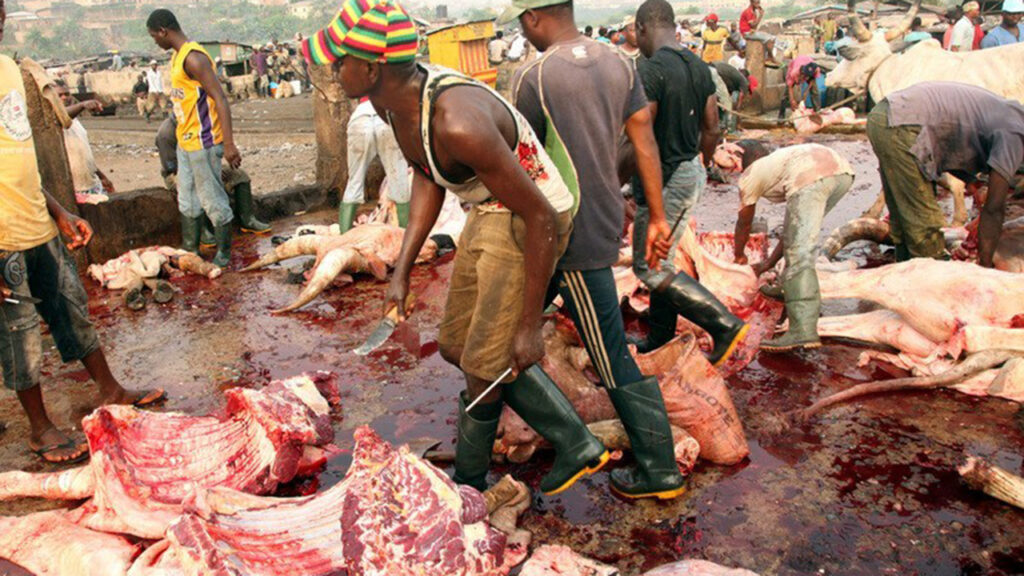
This is not a small project. It is designed to replace crude, unhygienic slaughter practices. To replace with a modern, automated processing system. And, it is expected to pull in feed millers, cold-chain investors, and leather processors around it. Officials expect it to be completed within a year of the groundbreaking. When it opens, it will change what livestock farming in Plateau actually looks like on the ground, not just on paper.
But meat is only the first stream. It is the one everybody sees. The other two are where the real story hides.
The Manure: What Almost Nobody Talks About
Ask most people what a farm animal produces, and they will say meat, milk, or eggs. Almost nobody mentions the manure. And yet manure is one of the quietest, most consistent income streams in livestock farming in Plateau.
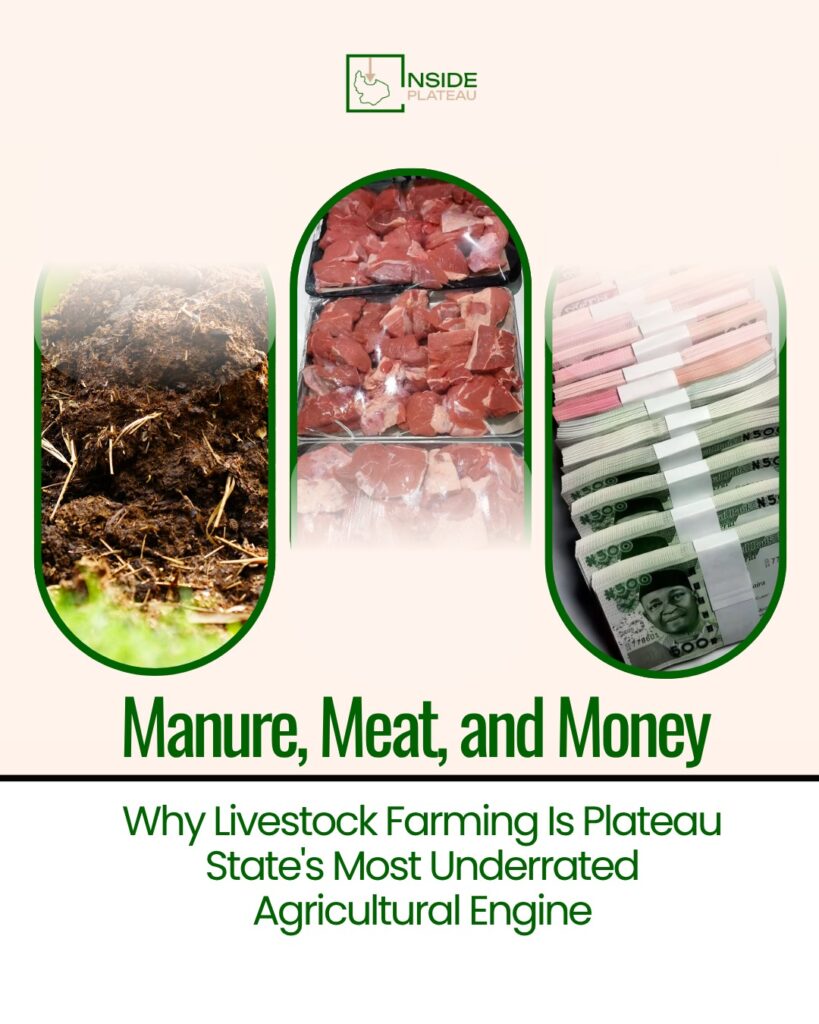
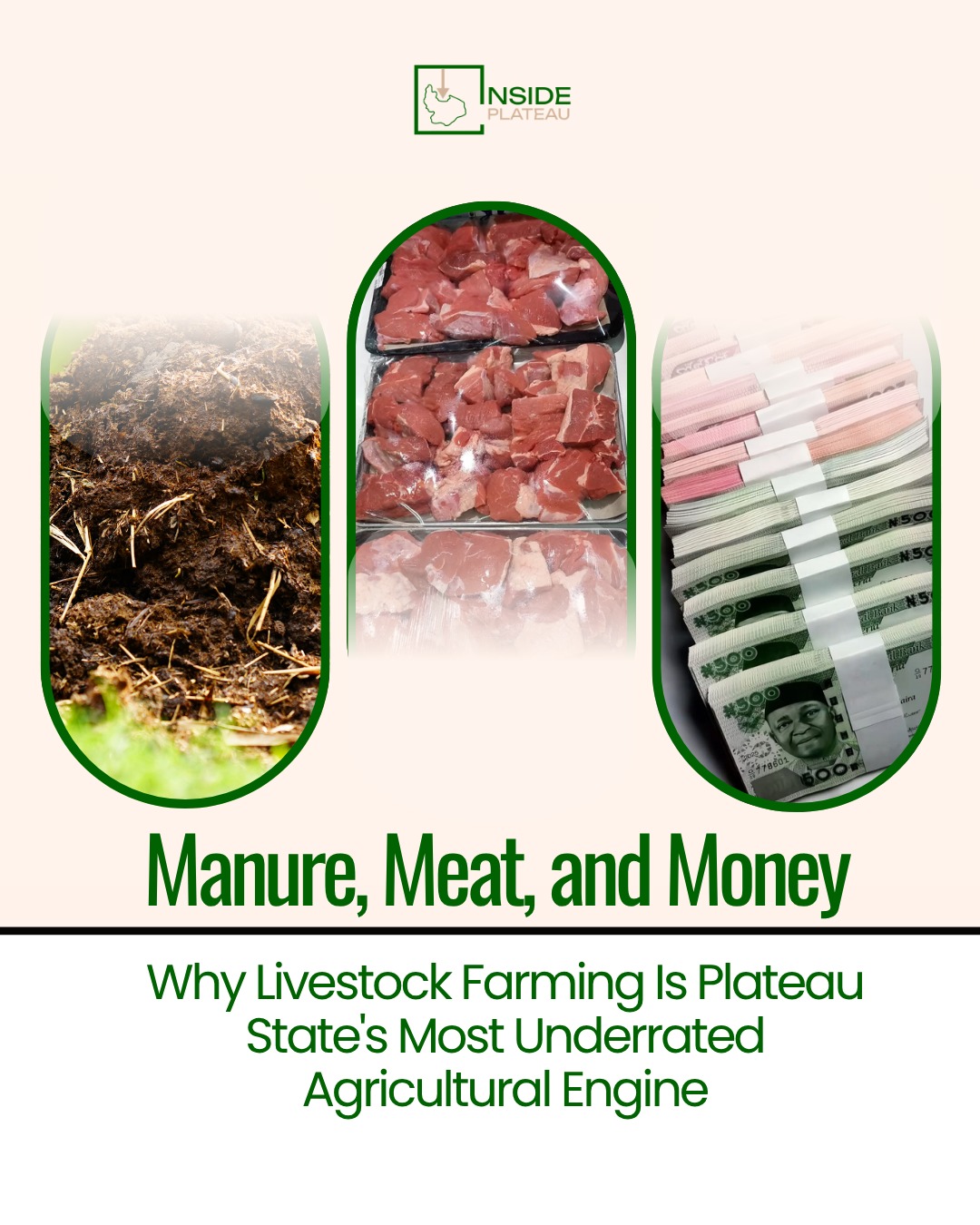
I felt this firsthand. Selling five bags of manure for seventy-five thousand naira in one season taught me something. It thought me that livestock farming in Plateau produces value even while the animals are simply alive and growing. It is not a byproduct. It is a second business sitting inside the first one.
This is not just my experience. Two years ago, we generously applied cow dung to a plot of land where we grow vegetables. That land remains fertile to this day. Chemical fertilizer is still what most Nigerian farmers reach for first, mainly out of habit. However, rising fertilizer prices are quietly pushing more farmers back toward manure. It costs less, it does not damage the soil over time, and it works. Crop farming and livestock farming in Plateau already sit side by side. So, manure is the bridge that lets one strengthen the other.
There is a bigger lesson buried here. Livestock farming in Plateau does not need to wait for an animal to be sold before it starts making money. Manure is already income, every single season, whether or not the market for meat is favorable that year.
Also Read: Plateau Potatoes: A Taste of Home, Pride, and Prosperity
The Money: Why the Numbers Actually Work
Here is where livestock farming in Plateau stops being a lifestyle and starts being a real investment case.
Start small. Poultry, particularly broilers, is often the easiest entry point, needing as little as one hundred to five hundred thousand naira to start a small batch, with a production cycle of just six to eight weeks. That is a fast return compared to almost any crop. Goats are not far behind. A small goat operation, ten animals or so, can be started with three hundred to seven hundred thousand naira, and a well-run small setup can generate two hundred fifty to four hundred thousand naira in profit a year. Scale that up to a commercial herd of a hundred goats, and the annual return can climb to somewhere between two million and seven million naira.
Cattle fattening sits at the top end. It needs more capital, often over three hundred fifty thousand naira per animal, but studies on cattle fattening operations put the return on investment at around 27 percent, with a profit of roughly ninety-five thousand naira per animal after costs. These are not guesses. They are the kind of numbers that make livestock farming in Plateau genuinely competitive with crop farming, and in some cases, more resilient.
I know this is not just theory. A lecturer I know at a tertiary institution in Pankshin runs the largest poultry operation in his local government, supplying eggs across the entire area. When I saw the home he had built, it was clear his salary alone could never have paid for it, no matter how carefully he saved. Livestock farming in Plateau, done seriously and consistently, built that. Quietly, without a single press release.
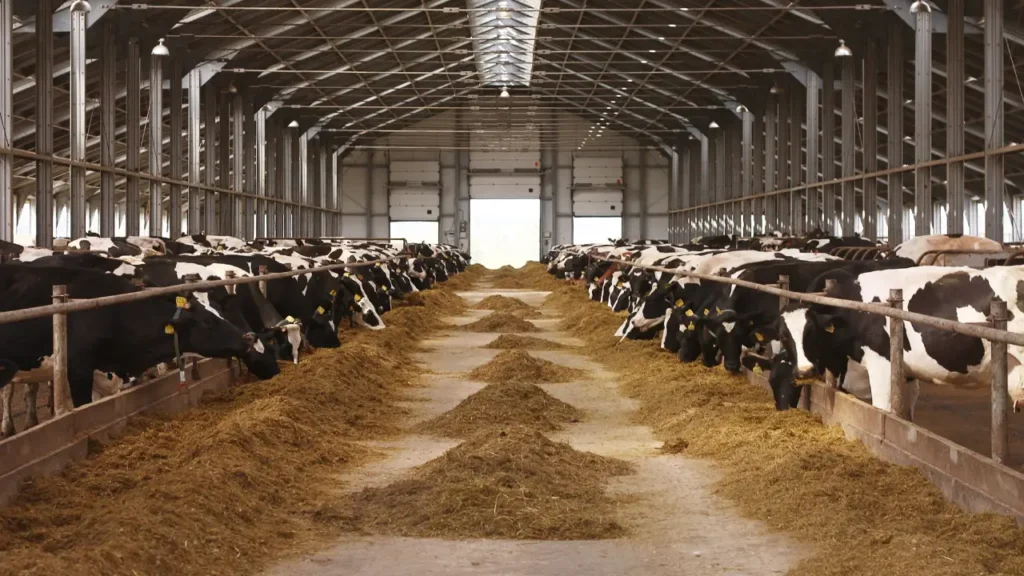
Then there is Integrated Dairies Limited, based in Vom on land inside the National Veterinary Research Institute. The company runs a herd of more than 500 Holstein Friesian cows across 550 hectares, producing up to 10,000 litres of milk a day under its Farmfresh brand. It employs over 180 people directly, with an estimated 500 more jobs supported indirectly across its supply chain, from feed growers to delivery drivers. Nigeria imports over 70 percent of the milk it consumes, despite having more than 20 million cows of its own, a gap that costs the country over $1.5 billion in foreign exchange every year. Integrated Dairies is proof that livestock farming in Plateau can compete directly with that import bill, not someday, but right now.
Why It Stays Underrated
If the numbers are this strong, why does livestock farming in Plateau still get treated as a lesser sector, behind crops, behind tech, behind almost everything else?
Part of it is respect, and part of it is fear. Livestock keepers are sometimes seen as wealthy simply by the size of their herd, and at the same time looked down on because the work is seen as dirty. Many young people avoid it for the same reason: it demands full attention, it carries real risk from disease and theft, and it does not forgive half-measures. As one young farmer close to this project put it, there is no part-time version of livestock farming. You are either fully in, or you are not in at all.
There is also a myth worth correcting directly. Many people assume livestock farming, especially cattle rearing, belongs to one ethnic group alone. It does not. Anyone can raise cattle, goats, or poultry, and Plateau’s climate is arguably the most conducive in Nigeria for doing exactly that. Reducing livestock farming in Plateau to one group’s business ignores both history and opportunity, and it quietly discourages a lot of people who could otherwise succeed at it.
It would be dishonest to leave out the tension around grazing and land use that has affected parts of Plateau over the last decade. It is real, and it has cost lives and livelihoods on multiple sides. But it is also worth remembering that this tension is not ancient. It is roughly ten years old, not something that has always defined the state. Plateau was known as the Home of Peace and Tourism long before this tension began, and there is genuine reason to believe it can return to that identity while still building a strong, modern livestock economy.
Also Read: https://atlanticprojectcargo.com/insights/top-largest-farms-in-the-world/
What Winning Looks Like
Winning in livestock farming in Plateau is not about becoming a tycoon overnight. For most farmers, it looks like something simpler: enough land, a stable settlement, room for the family and the animals to live and grow together, season after season.
Also Read: A New Era for Plateau Livestock: Governor Mutfwang Breaks Ground on Heipang Mega Abattoir
That is not a small thing. It is the same quiet, patient version of success that runs through every part of Plateau’s economy, whether it is a farmer in Shendam selling grain, a woman building a food brand from two benches, or a lecturer in Pankshin who never advertised how he built his house. Livestock farming in Plateau already has the climate, the institutions, and now real government investment behind it. What it has needed all along is simply to be taken seriously, meat, manure, and money together, as one business instead of three separate afterthoughts.