
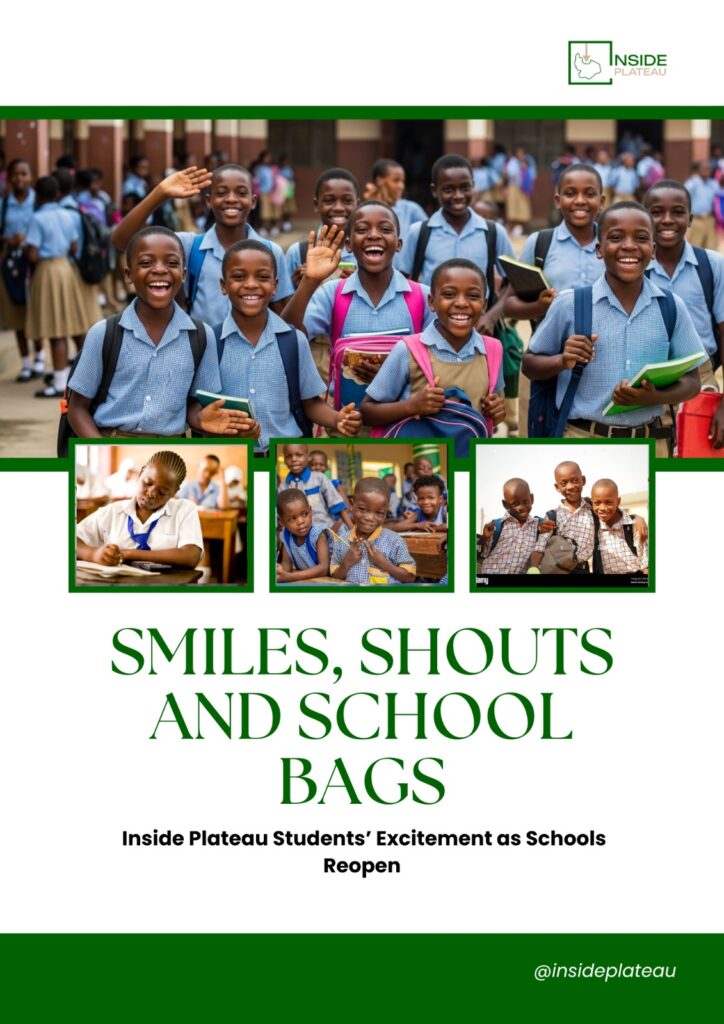
Fourteen-year-old Dorathy had just begun a new chapter. Fresh out of junior secondary school and newly admitted into SS1, her first term felt like a reset with new friends, new subjects, and new expectations. The transition was challenging, but she was settling in. Then, just as she felt she was finally adjusting, the emergency break came.
“At first, I was happy,” she recalled. “I felt like I needed small breathing space.”
But as days stretched into weeks, excitement gave way to uncertainty. Without the structure of school, her focus slowly began to fade.
ALSO READ: Turning 2025’s Challenges into 2026 Plans: A Plateau Entrepreneur’s Story
When Schools Were Forced to Close
By late November 2025, Nigeria’s education system entered one of its most fragile moments in recent history. A wave of coordinated school shutdowns swept across parts of northern Nigeria following renewed terrorist threats targeting students and learning institutions.
In response to this, the Federal Ministry of Education announced the immediate closure of 47 Federal Unity Colleges nationwide, citing escalating security risks. Consequently, several states including Katsina, Niger, Kwara, Benue, and Plateau followed suit. For many Nigerians, the decision reopened painful memories of Chibok (2014), Dapchi (2018), and repeated school abductions across Zamfara, Kebbi, and Niger States. Once again, classrooms became symbols of vulnerability.
In Plateau State, the impact was immediate. A directive issued by the Plateau State Universal Basic Education Board (PSUBEB) ordered all government junior model secondary schools, primary schools, and day schools to close indefinitely from late November 2025. Hence, classrooms went silent, morning assemblies stopped, lesson plans were abandoned and thousands of students were sent home without knowing when or how they would return.
For the first few days, it felt like freedom: no tests, no drills, and no pressure. But freedom without certainty does not last. As days turned into weeks, questions replaced laughter: “When will we return?” Then came the cold reminder that exams would still hold once school resumed.
Resumption at Last!
When the news finally came, it broke quietly. So quietly that if you were not directly affected by it, you might have missed it. Yet, if you were, it was the best news to hit your home this new year.
And the headlines read: “SCHOOLS ARE RESUMING!”
Across Plateau State, the message travelled faster than any other official circular. It echoed in homes, shouted across compounds, and was forwarded endlessly in class WhatsApp groups. And just like that, excitement returned.
Somewhere between ironing uniforms and dusting school bags, a familiar feeling resurfaced; it was the feeling of going back. A feeling most adults remember well. The joy of reuniting with classmates after a long break. The silent celebration of escaping endless chores, market errands, and long afternoons of boredom at home.
“I was so happy,” Dorathy said with a laugh. “Finally, no more useless waka at home. No more boredom. No more wondering when the long break would end.”
Fear Beneath the Excitement
Nearly two months had passed with no structured learning, no revision timetable, and no clarity. In this space of time, anxiety quietly took root and for Dorathy, resumption brought mixed emotions.
“I was very scared,” she admitted. “What if I forgot everything? I wasn’t attending any extra-moral lessons. I didn’t have anybody at home to be keeping me serious. I just played and worked.”
“My fear was that it was going to be hard for me. I was starting to understand the subjects and getting used to the changes, and I was back home as if I never started school,” she said.
However, the reality upon resumption was reassuring; not because things were perfect, but because everyone was struggling together.
“When I got to school and met my friends (not everybody resumed the first day) I knew I was going to be fine, because we were all confused. I was not the only person who didn’t know where to start from”
As Dorathy would later find, her biggest relief came from understanding teachers. They did not rush them into writing their exams, neither did they expect them to remember everything at once. So, they revised with them, persevered and helped them gain back what repressed knowledge.
Now fully in second term, Dorathy admits the adjustment is still ongoing. She said, “It’s still confusing, sha. But I know that with time, we will all learn how to adjust.” But she knew that she was not alone.
ALSO READ: Children Shine at Jos Family Christmas Festival with Essay Competition, Dance Contests and Fun Fair
Teachers, Parents, and the Weight of Resumption
For teachers, resumption came with responsibility more than celebration. A government secondary school teacher in Jos North said the biggest challenge was helping students rebuild confidence after a long academic pause.
“You could see it immediately,” he said. “They were excited to be back, but their confidence was low. Many of them were scared of exams. We had to slow down, even though the calendar did not wait for us.”
Most schools adopted a softer approach of delaying examinations, revising missed topics, and easing students back into academic rhythm.
Meanwhile, parents carried a different burden.
“For a parent, you want your child in school, but you also want them alive,” said Mrs. Deborah Longmut, a mother of two students in Jos South. “The break was frustrating because learning stopped, but at least I knew where my children were. Sending them back meant trusting that the government had put something in place.”
That trust rests largely on Operation Rainbow, Plateau State’s multi-agency security outfit. In the weeks leading up to resumption, security presence around school corridors increased, patrols were intensified, and community intelligence structures were strengthened.
“Seeing security around schools, however, made a difference,” Mrs. Longmut added. “It told us that someone was thinking about our children.”
Adjusting, Not Rushing
Beyond security, schools faced another question: how do students catch up without breaking under pressure?
The response came through an adjusted curriculum approach. Schools were encouraged to review missed topics, prioritise core subjects, delay high-stakes assessments, and provide psychosocial support where needed.
It is not a flawless approach as learning gaps remain, teachers are stretched, and students are still finding their footing. But the approach signals something important: this resumption is not about pretending nothing happened. It is about moving forward honestly.
More Than a Return
On resumption morning, backpacks bounced on small shoulders, shoes scraped against familiar corridors, and laughter returned to classrooms that had waited too long. In Plateau State, where education is often the first casualty of crisis, this resumption represents more than a calendar decision. It is a test of stability, trust, and collective will.
From Operation Rainbow’s security presence to teachers slowing down lessons, and parents choosing courage over fear, each day since that resumption morning tells a deeper story; one of resilience. And as students like Dorathy learn, forget, relearn, and adjust, one thing becomes clear: this return to school is not just about uniforms, timetables, or exams. It is about reclaiming routine, rebuilding confidence, and insisting, quietly but firmly, that learning will continue, even in uncertain times.
ALSO READ: Why Security Collaboration Matters for Plateau State