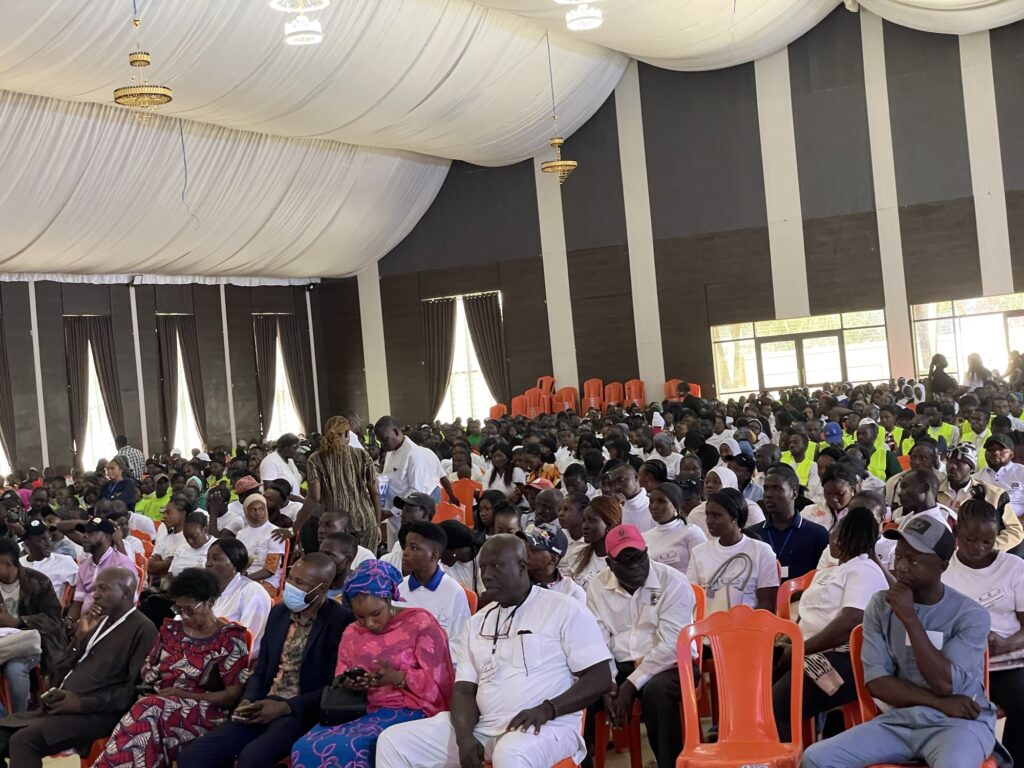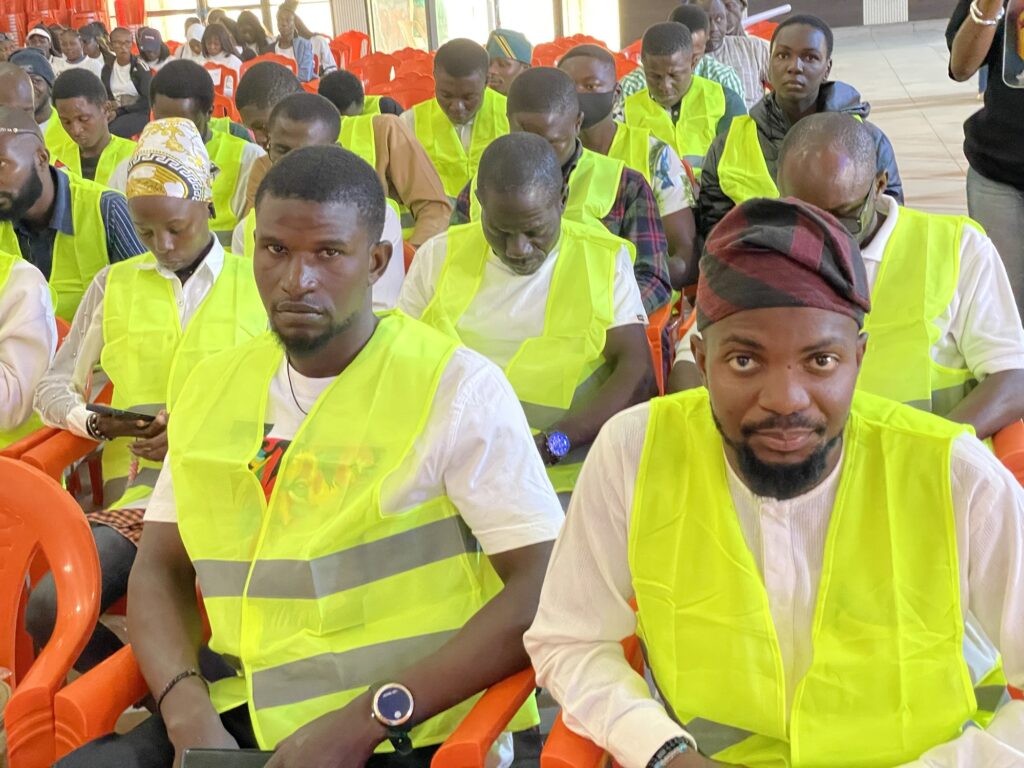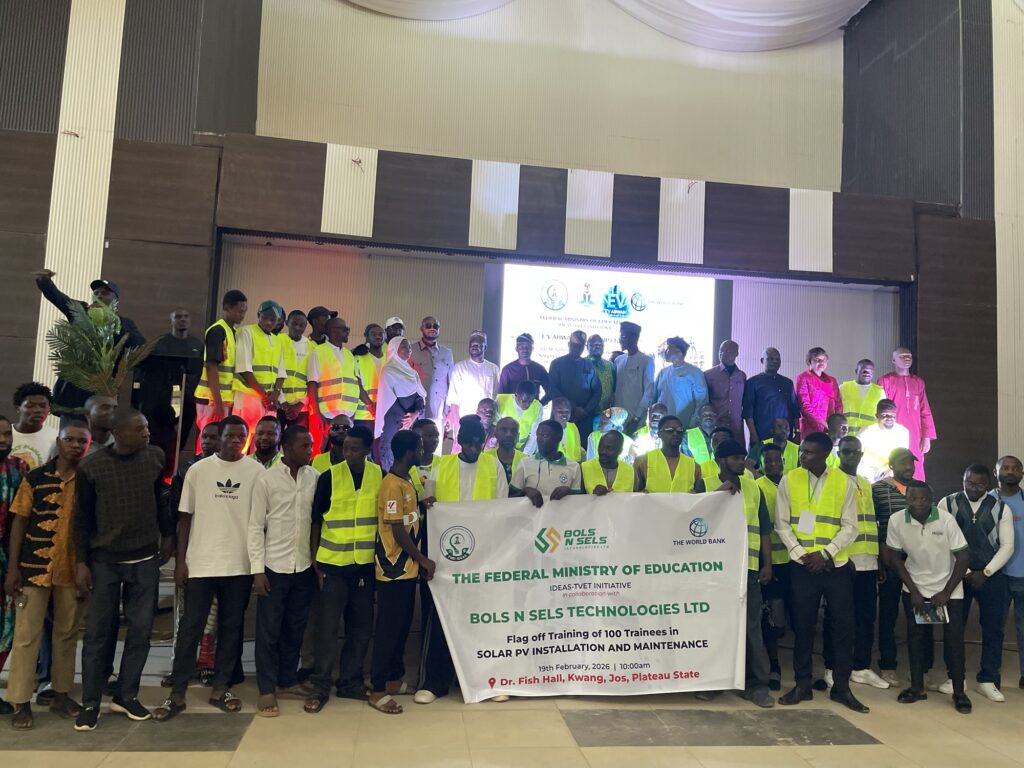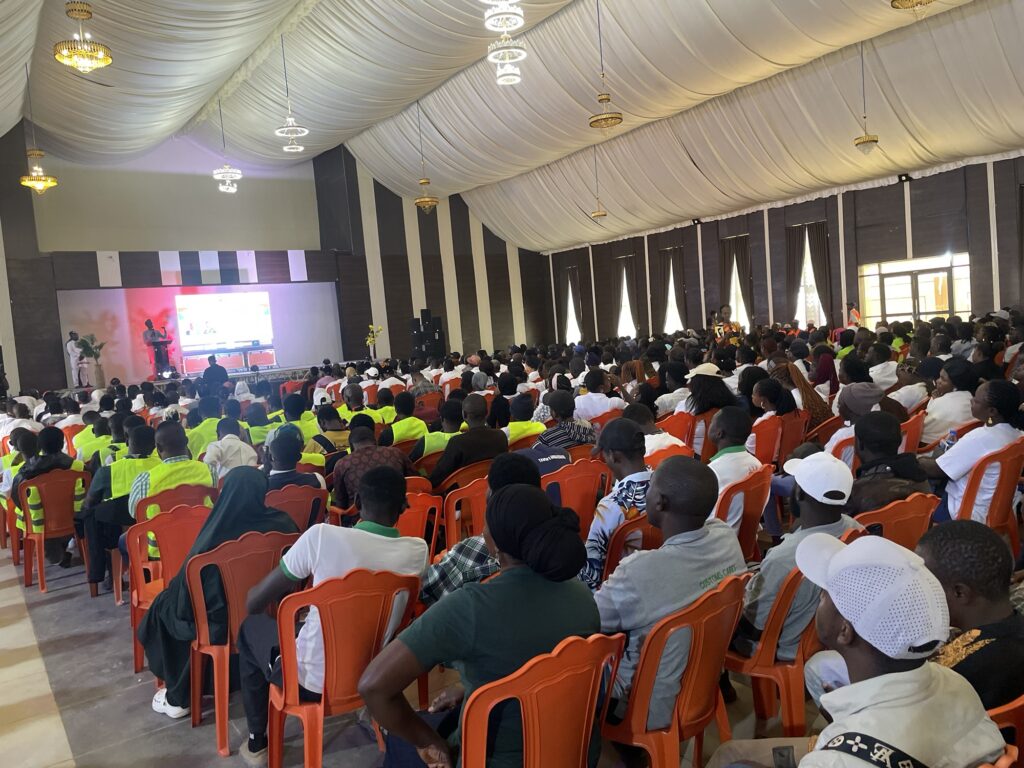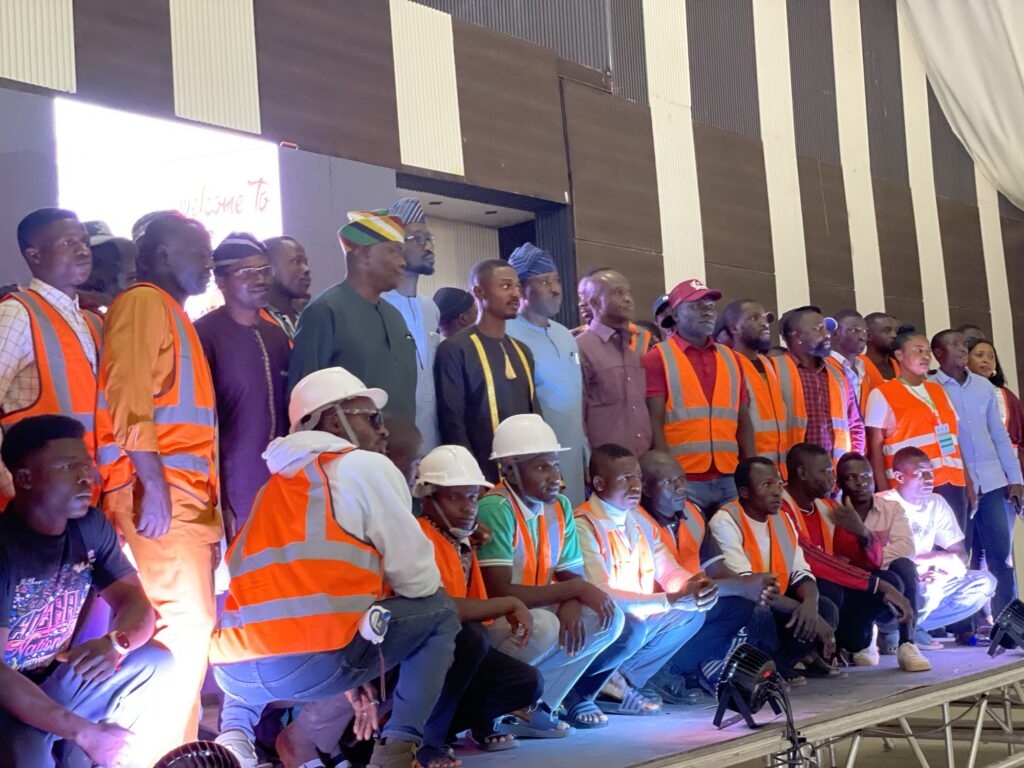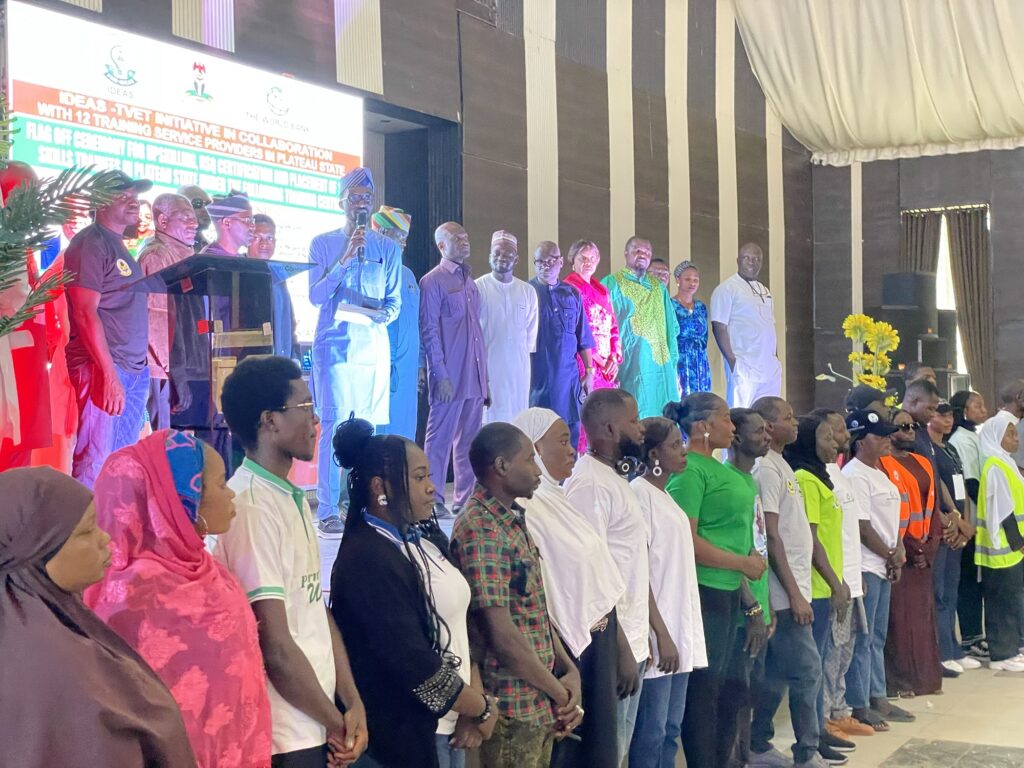
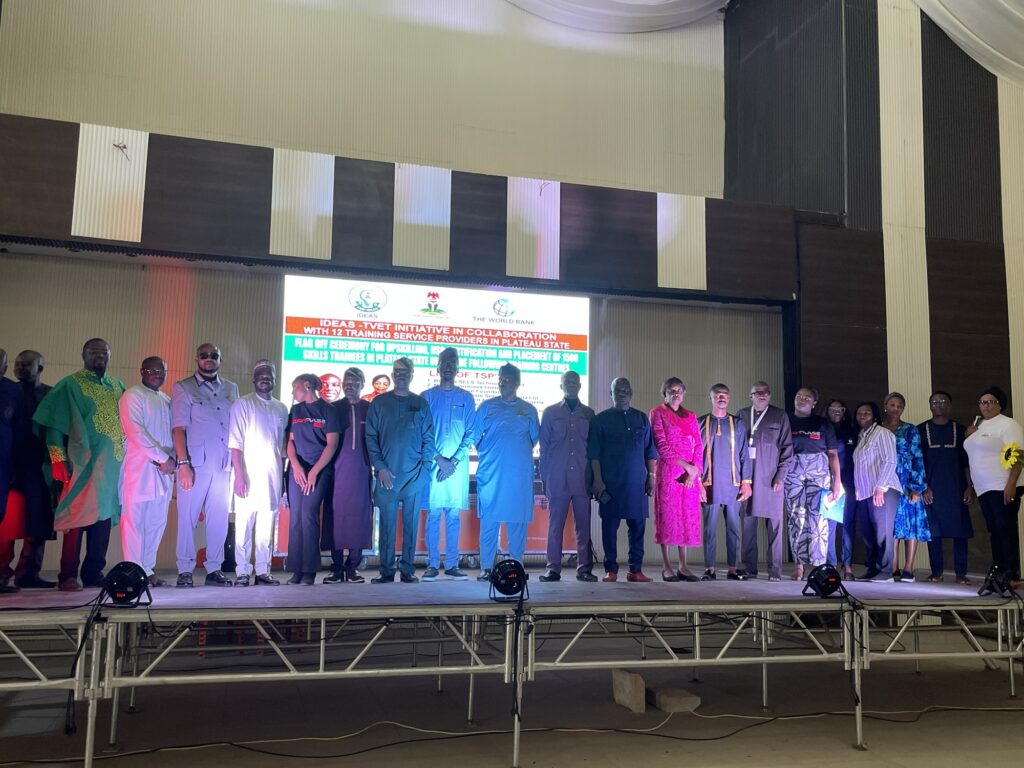
The atmosphere at Dr. Fish Event Centre, Kwang, along Lamingo Rafield Road in Jos, was charged with anticipation on February 19, 2026. More than a thousand young participants, trainers, government officials, and development partners gathered for what proved to be more than a ceremonial gathering it marked a strategic investment in the future of Plateau State’s youth.
The IDEAS-TVET Initiative, a partnership between the Federal Ministry of Education and the World Bank, officially launched its Batch V Skills Training Programme in Plateau State. The rollout brings together 13 accredited Training Service Providers (TSPs) tasked with training, certifying, and facilitating job placement for 1,500 young people across diverse vocational and technical fields.
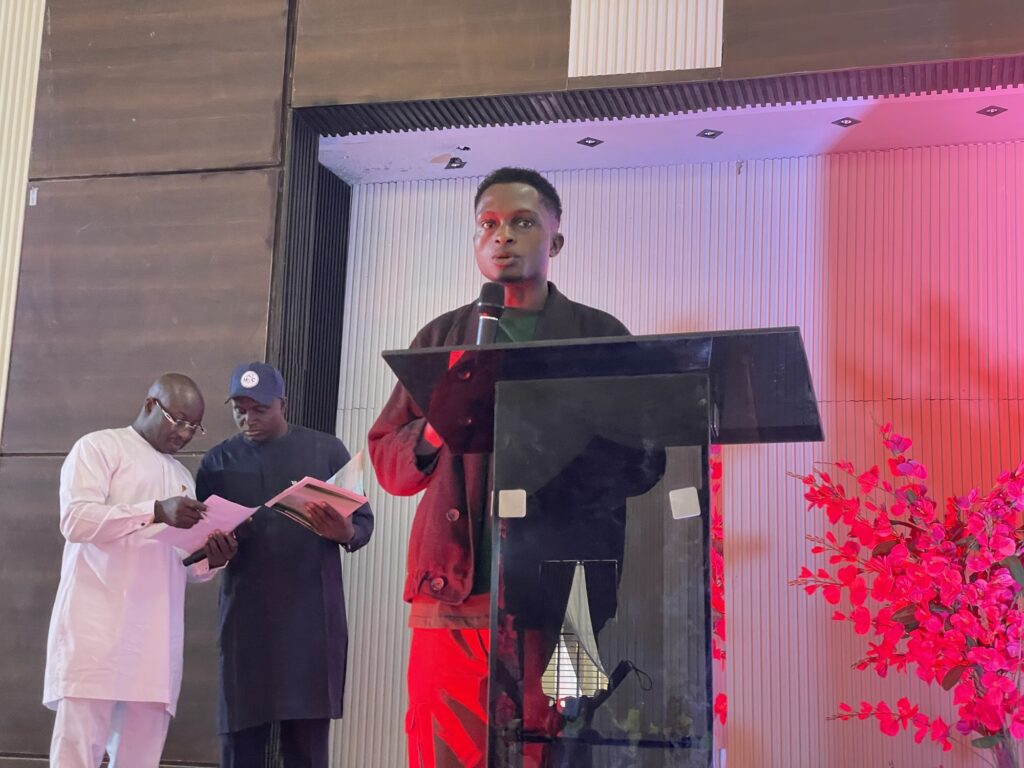
Delivering the welcome address on behalf of the Training Service Providers, Mr. Gabriel Helen noted that training activities had already been underway for five weeks prior to the formal launch. However, he stressed that the official flag-off was critical to reinforcing the programme’s credibility and statewide coordination.
Addressing the trainees directly, he urged them to recognize the value of the opportunity before them.
“Many people spend hundreds of thousands of naira to gain the same skills you are receiving free of charge. Do not make the mistake of undervaluing this opportunity simply because it comes at no cost.”
He explained that the six-month programme is structured into three months of classroom instruction followed by three months of internship, emphasizing that previous cohorts across the country have demonstrated the programme’s capacity to deliver tangible results.
Speaking on behalf of the Honourable Commissioner for Livestock Development, Mandong Patrick Dung, Director of Livestock Services, highlighted agriculture as a pathway to economic independence. He encouraged participants to fully commit themselves, noting that agricultural ventures can generate significant returns with relatively modest capital.
Programme Manager of the Plateau Agricultural Development Programme (PADP), Ishaku Jilemsam, delivered an inspiring goodwill message centered on competence and innovation. He challenged trainees to look beyond certificates and focus on mastering practical, problem-solving skills.
Quoting advice from his father, he reminded them:
“If your certificate does not secure you a job, you must have something you can do with your hands.”
Dr. Chommi M. Stephen, Deputy Provost of the Federal College of Forestry, Jos, representing the Provost, reinforced the message that human capital remains the true engine of national development. According to him, equipping young people with relevant skills is more valuable than any natural resource.
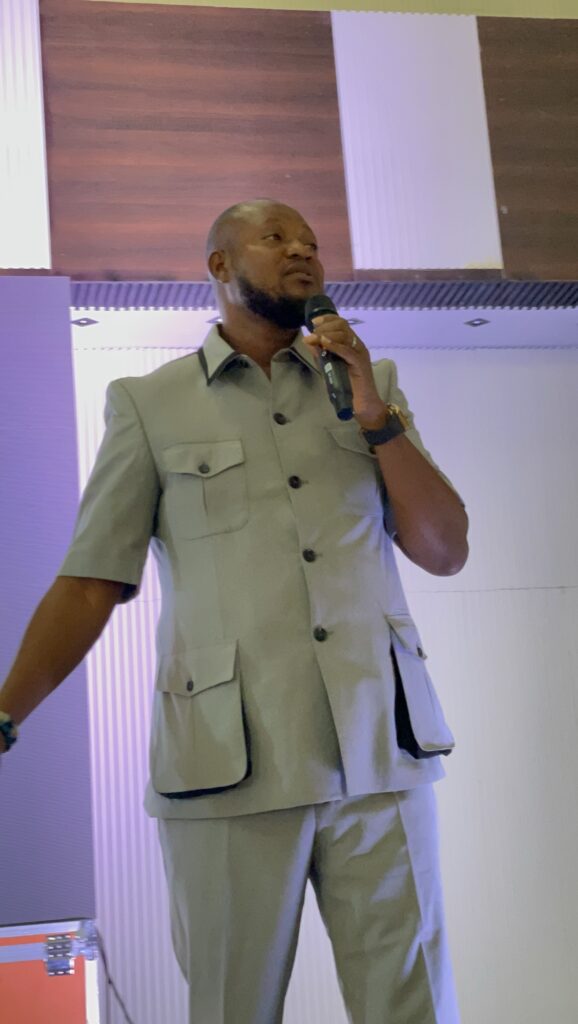
One of the most engaging addresses came from Dr. Adetunji Samuel Adebanjo, popularly known as Dr. Fish, MD/CEO of Sammadecom Global and host of the venue. Sharing his journey from arriving in Plateau State in 2004 as a National Youth Service Corps member to building a diversified enterprise through fish farming, he encouraged participants to adopt a long-term mindset rather than seek quick financial gains.
“The same business some people once underestimated opened doors I never imagined.”
The Honourable Commissioner for Science, Technology and Innovation, Cletus Bako Shurkuk, represented by Mr. David Ezekiel Gani, conveyed the state government’s full support, describing the programme as a practical expression of Plateau’s commitment to youth employability and innovation.
Similarly, Mr. David Jang Zoyong, Special Adviser to the Governor on Skill Acquisition, stressed that vocational training must evolve beyond simply distributing starter packs. He advocated for structured entrepreneurial systems and cooperative models to ensure sustainability.
Dr. John Iliya, Director of TVET at the Plateau State Ministry of Education, challenged the perception of vocational training as a secondary option.
“TVET is not a second choice; it is a strategic pathway to economic empowerment.”
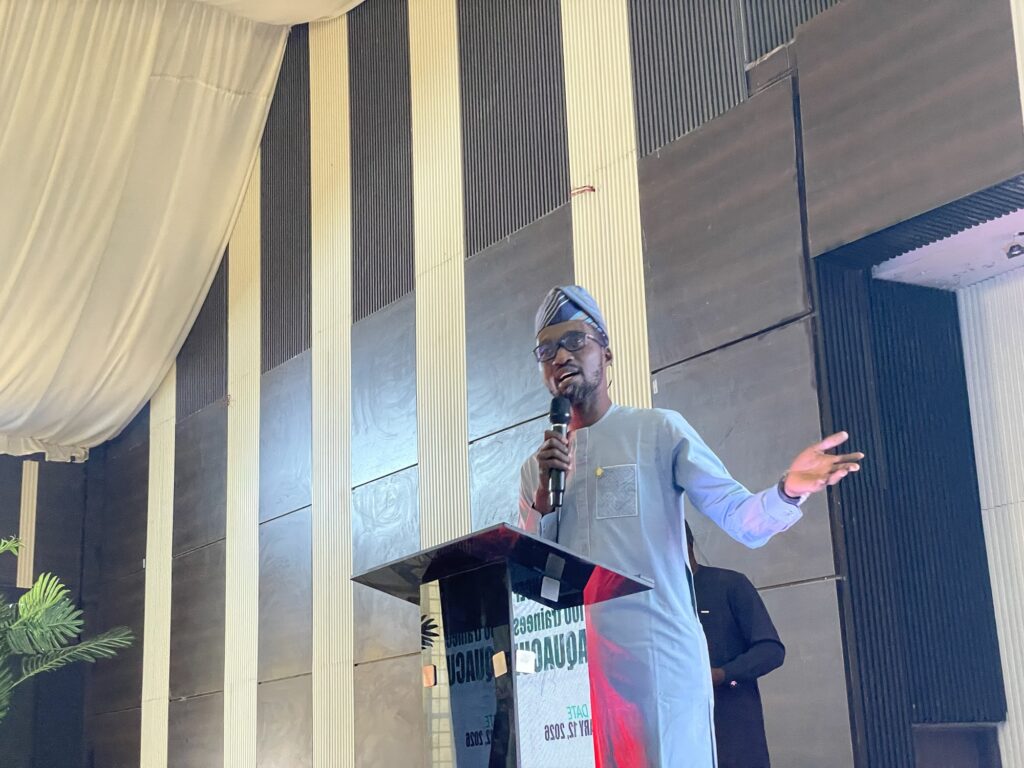
Providing an overview of the initiative,Bldr. Adedeji Adeleye Paul, representing the National Project Coordinator, Blessing Ogwu, explained that the IDEAS-TVET Programme is designed to bridge Nigeria’s skills gap by delivering market-relevant competencies to young people nationwide.
In Plateau State, about 17 centres have been accredited, with 13 participating in the joint launch ceremony—an unprecedented unified gathering of training providers in the state.
The 1,500 trainees will receive instruction in construction, crop production, agro-processing, media production, ICT, fashion, renewable energy, make-up artistry, and other trades. The programme runs for six months and concludes with the award of a National Skills Qualification (NSQ) Level Two Certificate, issued in collaboration with the National Board for Technical Education.
The accredited Training Service Providers include:
- BOLS N SELS Technologies Ltd
- Morene Ventures Limited
- Rescued Gem Foundation
- Zazina Corporate Service Nigeria Ltd
- Country Women Association of Nigeria
- Solap Furniture Limited
- Sammadecom Integrated Concepts Limited
- Zebra Multiservices Ltd
- Bloom Niche Prime Ventures
- Ray Pulse Media Nig Ltd
- University of Jos Consult, Centre for Entrepreneurship & Innovation
- EV Abwaih Blue Chip Ltd
- Netaccess Communications Nigeria Ltd
Trainees shared encouraging feedback. Awin Jilsin, studying make-up artistry, described the training as confidence-building and transformative. Olabisi Gideon expressed gratitude for the opportunity, while Nelson Dogara voiced optimism about his future in painting and interior decoration.
Tahuli Ofegal Sylvester acknowledged the programme’s impact but raised practical concerns about transportation costs for rural participants, calling for more hands-on sessions. His feedback reflected the engagement and ownership the initiative seeks to cultivate.
Mrs. Jessica Obadiah closed the ceremony with words of encouragement, noting the dedication of trainees who often arrive early at their centres.
“The skills you are acquiring will stand the test of time. Embrace them fully—they will serve you for life.”
The launch of the IDEAS-TVET Initiative in Plateau State represents more than the commencement of a training cycle. It signals a coordinated effort to empower 1,500 young people with nationally certified, practical skills—laying a foundation for entrepreneurship, employment, and long-term economic resilience.
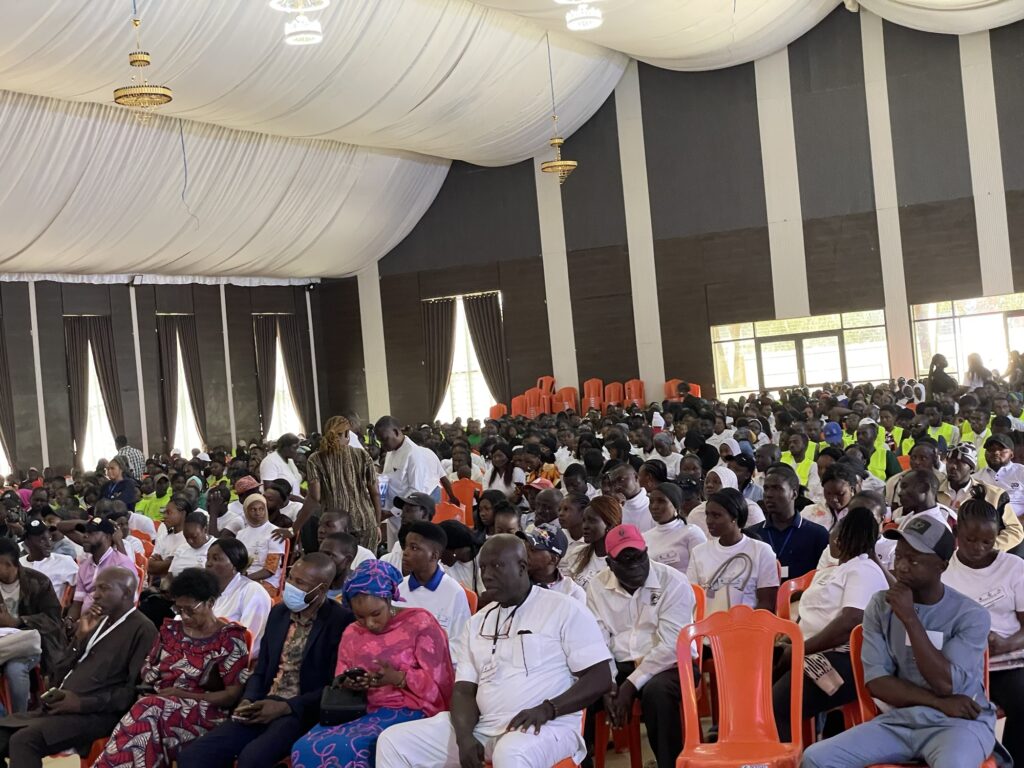
The atmosphere at Dr. Fish Event Centre, Kwang, along Lamingo Rafield Road in Jos, was charged with anticipation on February 19, 2026. More than a thousand young participants, trainers, government officials, and development partners gathered for what proved to be more than a ceremonial gathering it marked a strategic investment in the future of Plateau State’s youth.
The IDEAS-TVET Initiative, a partnership between the Federal Ministry of Education and the World Bank, officially launched its Batch V Skills Training Programme in Plateau State. The rollout brings together 13 accredited Training Service Providers (TSPs) tasked with training, certifying, and facilitating job placement for 1,500 young people across diverse vocational and technical fields.
Delivering the welcome address on behalf of the Training Service Providers, Mr. Ezekiel noted that training activities had already been underway for five weeks prior to the formal launch. However, he stressed that the official flag-off was critical to reinforcing the programme’s credibility and statewide coordination.
Addressing the trainees directly, he urged them to recognize the value of the opportunity before them.
“Many people spend hundreds of thousands of naira to gain the same skills you are receiving free of charge. Do not make the mistake of undervaluing this opportunity simply because it comes at no cost.”
He explained that the six-month programme is structured into three months of classroom instruction followed by three months of internship, emphasizing that previous cohorts across the country have demonstrated the programme’s capacity to deliver tangible results.
Speaking on behalf of the Honourable Commissioner for Livestock Development, Mandong Patrick Dung, Director of Livestock Services, highlighted agriculture as a pathway to economic independence. He encouraged participants to fully commit themselves, noting that agricultural ventures can generate significant returns with relatively modest capital.
Programme Manager of the Plateau Agricultural Development Programme (PADP), Ishaku Jilemsam, delivered an inspiring goodwill message centered on competence and innovation. He challenged trainees to look beyond certificates and focus on mastering practical, problem-solving skills.
Quoting advice from his father, he reminded them:
“If your certificate does not secure you a job, you must have something you can do with your hands.”
Dr. Chommi M. Stephen, Deputy Provost of the Federal College of Forestry, Jos, representing the Provost, reinforced the message that human capital remains the true engine of national development. According to him, equipping young people with relevant skills is more valuable than any natural resource.
One of the most engaging addresses came from Dr. Adetunji Samuel Adebanjo, popularly known as Dr. Fish, MD/CEO of Sammadecom Global and host of the venue. Sharing his journey from arriving in Plateau State in 2004 as a National Youth Service Corps member to building a diversified enterprise through fish farming, he encouraged participants to adopt a long-term mindset rather than seek quick financial gains.
“The same business some people once underestimated opened doors I never imagined.”
The Honourable Commissioner for Science, Technology and Innovation, Cletus Bako Shurkuk, represented by Mr. David Ezekiel Gani, conveyed the state government’s full support, describing the programme as a practical expression of Plateau’s commitment to youth employability and innovation.
Similarly, Mr. David Jang Zoyong, Special Adviser to the Governor on Skill Acquisition, stressed that vocational training must evolve beyond simply distributing starter packs. He advocated for structured entrepreneurial systems and cooperative models to ensure sustainability.
Dr. John Iliya, Director of TVET at the Plateau State Ministry of Education, challenged the perception of vocational training as a secondary option.
“TVET is not a second choice; it is a strategic pathway to economic empowerment.”
Providing an overview of the initiative, Biwuda Adele Adedijipol, representing the National Project Coordinator, Blessing Ogwu, explained that the IDEAS-TVET Programme is designed to bridge Nigeria’s skills gap by delivering market-relevant competencies to young people nationwide.
In Plateau State, about 17 centres have been accredited, with 13 participating in the joint launch ceremony an unprecedented unified gathering of training providers in the state.
The 1,500 trainees will receive instruction in construction, crop production, agro-processing, media production, ICT, fashion, renewable energy, make-up artistry, and other trades. The programme runs for six months and concludes with the award of a National Skills Qualification (NSQ) Level Two Certificate, issued in collaboration with the National Board for Technical Education.
The accredited Training Service Providers include:
- BOLS N SELS Technologies Ltd
- Morene Ventures Limited
- Rescued Gem Foundation
- Zazina Corporate Service Nigeria Ltd
- Country Women Association of Nigeria
- Solap Furniture Limited
- Sammadecom Integrated Concepts Limited
- Zebra Multiservices Ltd
- Bloom Niche Prime Ventures
- Ray Pulse Media Nig Ltd
- University of Jos Consult, Centre for Entrepreneurship & Innovation
- EV Abwaih Blue Chip Ltd
- Netaccess Communications Nigeria Ltd
Trainees shared encouraging feedback. Awin Jilsin, studying make-up artistry, described the training as confidence-building and transformative. Olabisi Gideon expressed gratitude for the opportunity, while Nelson Dogara voiced optimism about his future in painting and interior decoration.
Tahuli Ofegal Sylvester acknowledged the programme’s impact but raised practical concerns about transportation costs for rural participants, calling for more hands-on sessions. His feedback reflected the engagement and ownership the initiative seeks to cultivate.
Mrs. Jessica Obadiah closed the ceremony with words of encouragement, noting the dedication of trainees who often arrive early at their centres.
“The skills you are acquiring will stand the test of time. Embrace them fully they will serve you for life.”
The launch of the IDEAS-TVET Initiative in Plateau State represents more than the commencement of a training cycle. It signals a coordinated effort to empower 1,500 young people with nationally certified, practical skills laying a foundation for entrepreneurship, employment, and long-term economic resilience.