
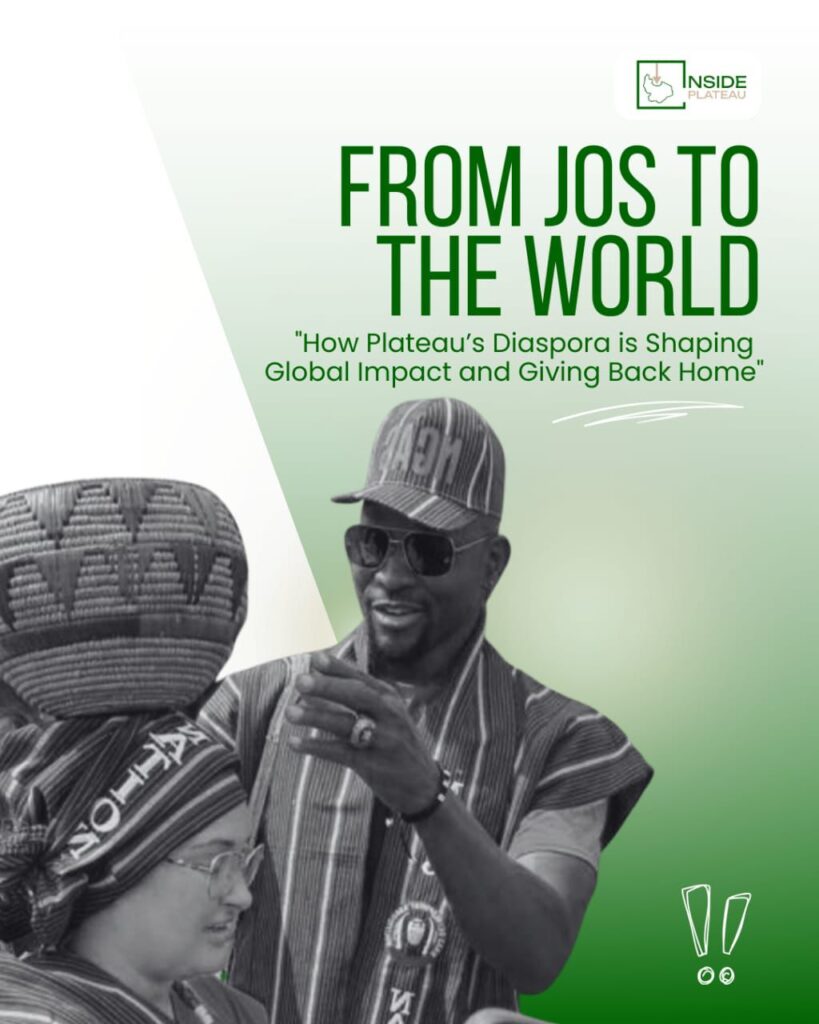
If you’ve ever lived outside the country with someone who’s from Jos and you’ve been really paying attention, one thing becomes clear: Plateau people don’t actually leave home. They just carry it with them. And no matter how far away they are, their hearts are always home. Almost always, Plateau State Diaspora is giving back home
You’ll find Plateau sons and daughters in the UK, the US, Europe, Asia—working in tech, medicine, education, construction, sports, and business. But even from thousands of miles away, the connection never really breaks. Calls are still made. Visits still planned. Projects still funded. And most importantly, impact very still intentional. That’s the real story of the plateau state diaspora. Not empty pride but steadily giving back.
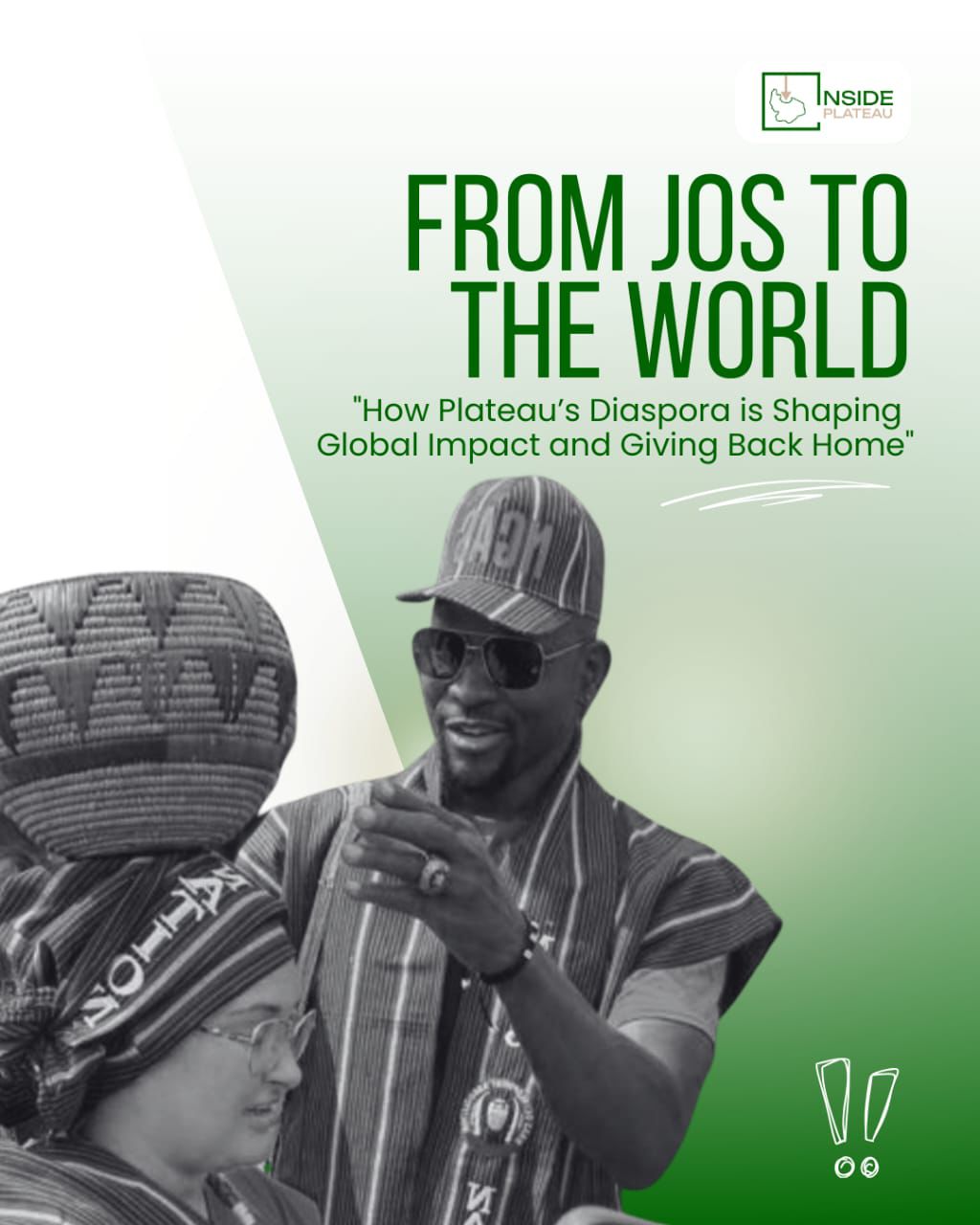
One name that keeps coming up in these kind of conversations is Paul Sati Gombwer. And for good reason.
Also Read: How Plateau State is Positioning its Youth for the Future of Work: https://insideplateau.com/plateau-is-positioning-its-youth-for-the-future-of-work
How a Plateau Son Turned Global Exposure into Purpose Within the Plateau State Diaspora
Paul Sati Gombwer’s story didn’t start with big headlines or large donations. It started small, personal, and above all human.
As a young Plateau State indigene living abroad, Paul Gombwer began his journey by visiting orphanages back home. He didn’t arrive with cameras or speeches. Just supplies—food items, toiletries, clothing—and time. Enough time to listen and understand the gaps that words alone don’t capture.
That early experience remained with him. And over time, it grew into something more structured.
In honour of his late mother, Alice Paul Gombwer, he founded the Alice Gombwer’s Foundation (AGF)—a non-profit organisation committed to supporting vulnerable communities across Plateau State and beyond.
This is actually where the plateau state diaspora story becomes concrete. The AGF is not an abstract charity operating from a distance. It is a foundation rooted in Plateau soil, run with local coordination, and focused on needs that are visible, measurable, and urgent.
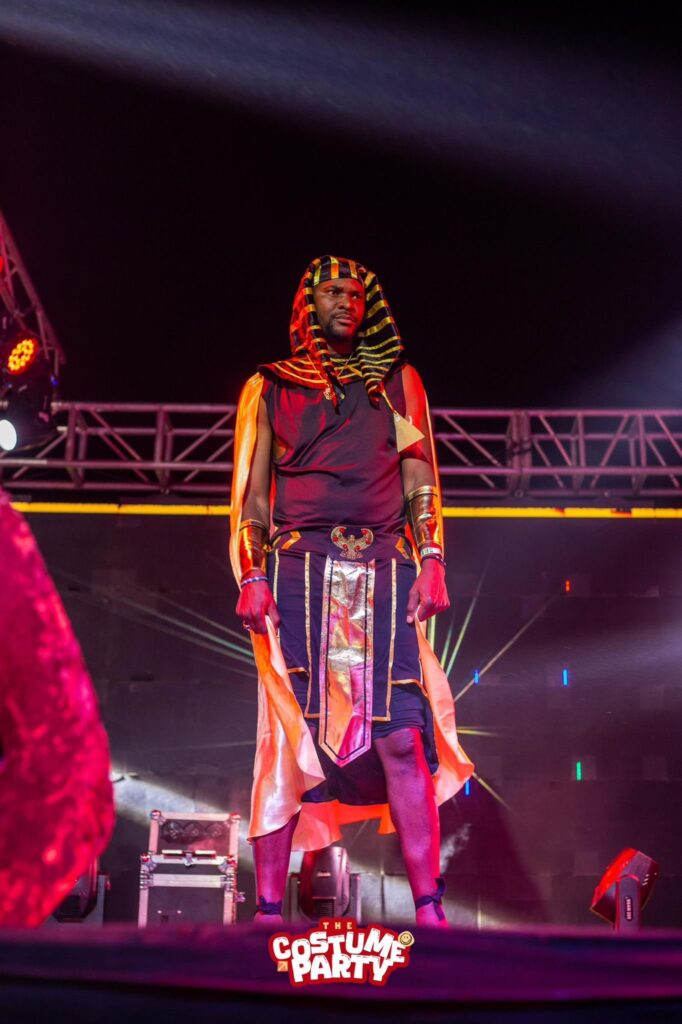
Giving Back Is Identity, Not Optics in the Plateau State Diaspora
One thing that stands out about Paul’s journey is how his mission is deeply rooted in culture.
His wife Beatrice (who is white) has fully embraced the Plateau identity. At public events, community gatherings, and foundation activities, she is often seen wearing Ngas traditional attire. Their children, too, are raised with an awareness of their Plateau roots. This might sound like a small detail. It isn’t.
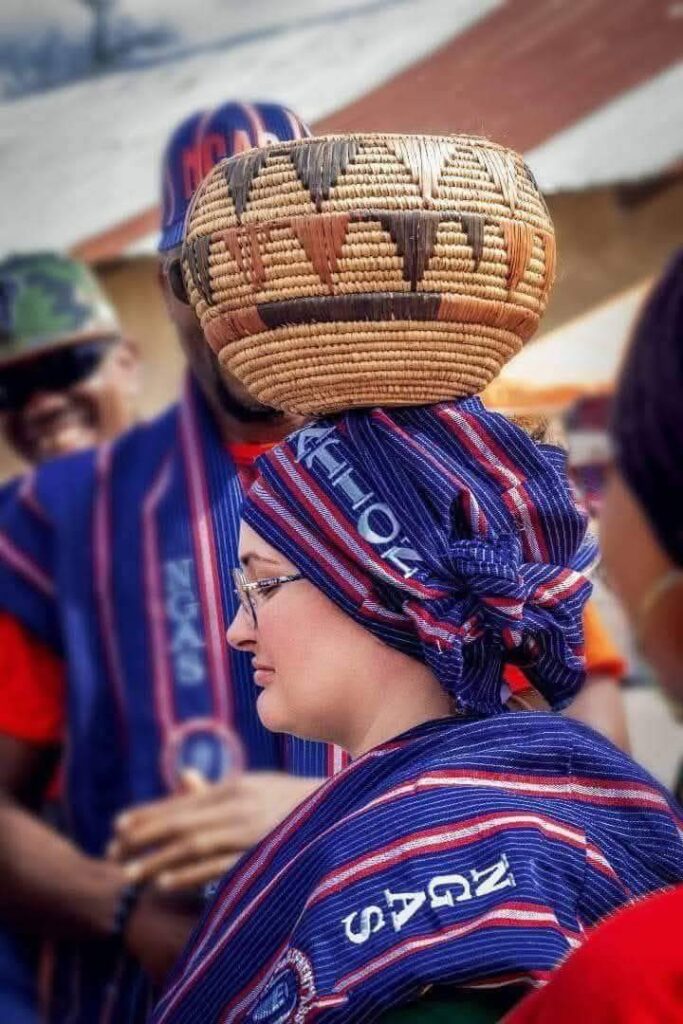
In a world where migration often dilutes identity, this kind of intentional cultural preservation matters. It sends a message—to the children, to the community, and to the wider plateau state diaspora—that global exposure doesn’t mean cultural erasure.
It’s also part of Plateau State’s growing global impact. Culture travels. And when it’s worn proudly, it reshapes how the world sees home.
AGF on the Ground: What Impact Actually Looks Like
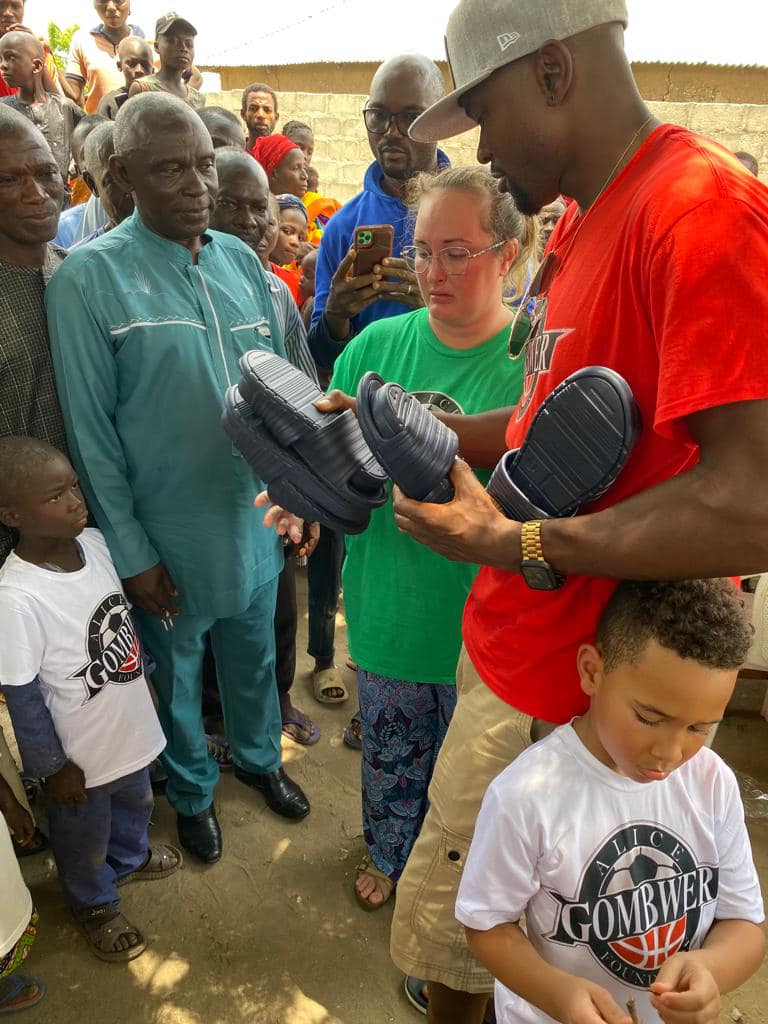
Pay attention to this. During the 2024 and 2025 Christmas season, the Alice Gombwer’s Foundation (AGF) distributed bags of rice to widows across Jos, Pankshin, and Kanke. This wasn’t symbolic giving. It was targeted, timely, and necessary—especially during a season when financial pressure is highest for vulnerable families.
However, the outreach was coordinated locally, ensuring the support reached those who genuinely needed it. Widows. Households without steady income. Women often overlooked by broader aid programs. This is how diaspora investment in Plateau works best. When it is focused, local, and respectful.
Beyond just support, The AGF has also organized community events, competitions, and empowerment-focused activities aimed at youth engagement and social cohesion. These programs may not always make national headlines, but they strengthen the social fabric in ways that matter in the long-term. This is impact you can measure—not in applause, but by easing lives and stabilising communities.
Why the Plateau State Diaspora Model Is Different
Why the Plateau State Diaspora Model Is Different
There’s something distinct about how Plateau state people living abroad approach giving back. It’s rarely transactional. Rarely political. And almost never preformative. Plateau state diaspora is modeled differently.
Most Plateau diaspora initiatives are grown from personal memories. From knowing what it means to struggle through school fees. From remembering communities where one opportunity can change an entire household’s trajectory.
That’s why plateau state diaspora contributions often show up in education support, food security, healthcare access, and youth development. Areas where small, consistent input creates compounding results. It’s not about saving Plateau. It’s about strengthening it.
Also Read: Joy in Plateau as 25 Kidnap Victims are Set Freehttps://insideplateau.com/joy-as-the-25-kidnap-victims-in-plateau-including-children-are-freed/
Other Plateau Voices Abroad Who Haven’t Forgotten Home
However, Paul Sati Gombwer is not alone. All over the world, Plateau indigenes continue to invest quietly but intentionally give back home. They consistently fund school projects, sponsor or support community programs, support churches and local initiatives, and they also mentor young people remotely.
Just like Paul Sati Gombwer, some of them operate foundations, others work one-on-one, while a lot of them choose to avoid publicity altogether.
However, they collectively form a growing network of plateau state diaspora actors shaping Plateau State’s global impact in real time. This is because, their influence doesn’t just come through money. It comes through real exposure—new ideas, global standards, and a strong belief that Plateau can compete anywhere when given the right tools.
Some of the plateau state diaspora worthy of mention includes the following:
Dr. Bartholomew Shepkong — United States: He is the leader of the Plateau State Association, USA, Inc. and has mobilised resources and relief materials to support internally displaced persons (IDPs) in Plateau State, including donating food and essential items to camps such as those in Bokkos LGA and launching a diaspora campaign fund to help resettle displaced communities across the state.
Mark Pelshak — United Kingdom: Pelshak has worked through the Plateau State Diaspora Development Association (PSDDA) to channel diaspora support into scholarships, healthcare, and small-business support for communities back home, helping to strengthen education and enterprise development.
Ahmed Musa — Europe: Ahmed Musa is a house-hold name and a Nigerian sports legend. Musa has always used his platform and personal resources to give back — including a major cash gift distributed to widows in Jos to support small business ventures. This reflects direct investment in social welfare and economic empowerment in Plateau State. (This was covered in press reporting on his philanthropic gesture.)
Plateau State Diaspora Investment Is Filling Critical Gaps
It is important to note that, the Government alone cannot meet every need. Also, our local businesses are still finding their feet. That’s where diaspora investment in Plateau plays a quiet but very vital role.
From education support to health outreach, diaspora-led initiatives often step in where bureaucracy slows things down. They test models. Pilot solutions. Support people directly.
And because most of the diaspora contributors still maintain very close family ties in Plateau State, accountability stays personal. If something doesn’t work, they hear about it. Quickly.
That feedback loop is very powerful. It’s one reason why diaspora-driven projects often remain effective over time.
Changing the Narrative, One Action at a Time
Often times, Plateau State is discussed only in the context of crisis. With headlines reducing it to conflict. However, the plateau state diaspora offers a counter-narrative rooted in progress, connection, and responsibility.
When people like Paul Sati Gombwer return home—not just to visit, but to build—they really remind us that Plateau’s story is still being written. And not just by those who stayed, but also by those who left and chose to remain connected.
This is what plateau state global impact actually looks like. Not slogans. Not hashtags. But Plateau State people using their global access to strengthen local foundations.
From Jos to the World, and Back Again
The journey from Jos to the world is no longer a one-way road. It also loops back. It’s actually, Jos to the world, and back to Jos again.
Through foundations like Alice Gombwer’s Foundation, our cultural pride is carried across borders. And through support giving to widows in Jos, Pankshin, and Kanke, the plateau state diaspora continues to prove one thing: You can live anywhere and still belong deeply to home.
And as long as that connection holds, Plateau State will keep benefiting—not just from what its people earn abroad, but from what they choose to give back.