When people think of Plateau State, tourism often comes to mind first. The cool weather, rolling hills and waterfalls have earned it the title Home of Peace and Tourism. But beyond the scenery, the crops grown in Plateau State reveal another major strength: agriculture.
From potatoes and tomatoes to maize, rice, yam, acha and a wide range of vegetables, farming is woven into life across the state. Different elevations, soils and climates mean that what thrives in the cool highlands isn’t always what grows in the warmer south. That makes Plateau State’s crop story one of both variety and geography.
A State That Grows a Little of Almost Everything
Agriculture in Plateau State is remarkably diverse. The state’s own agricultural profile groups production into cereals, root and tuber crops, horticultural crops, legumes and oilseeds, and tree and fruit crops. Cereals include maize, sorghum, millet, acha and rice, while the roots and tubers range from Irish potatoes to sweet potatoes, cassava, yam and cocoyam. Add tomatoes, carrots, cabbage, peppers, cowpeas, soybeans, groundnuts and sesame, and you get a sense of the spread. According to that same profile, cereals make up the largest category in its survey, followed by roots and tubers, then horticultural crops.
“Irish Potatoes”: Plateau’s Agricultural Star
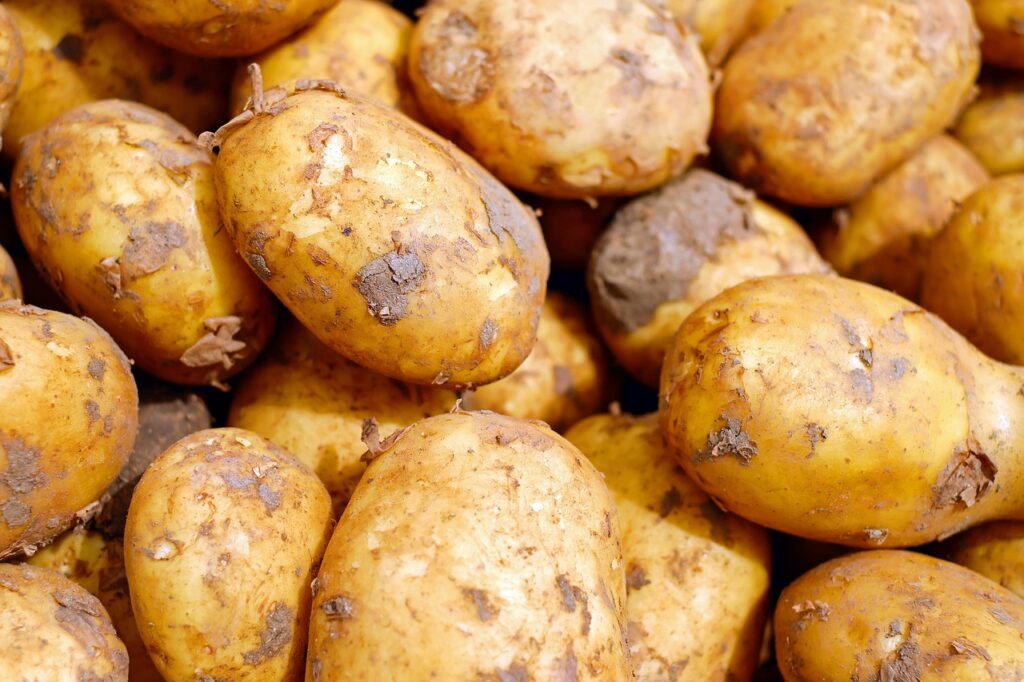
If one crop defines the major crops in Plateau State, it’s the Irish potato, though you may soon need to call it by a new name. Governor Caleb Mutfwang has recently renamed them “Plateau Potatoes”, arguing that the state deserves to be credited for a crop it grows so well. And it does grow well here. The potato thrives in the cool conditions of the Jos Plateau, and the state’s agricultural profile names Bokkos, Mangu, Bassa, Jos South, Barkin Ladi, Pankshin, Jos North, Jos East and Riyom as major producing areas, with Bokkos and Mangu especially prominent.
Potatoes are grown in both rainy and dry seasons, with irrigation extending production beyond the main rains. A 2026 state government project in Mangu is also focused on strengthening the potato value chain through improved seed production, mechanisation and processing. So when you see a sack of Plateau potatoes in a market elsewhere in Nigeria, there’s a good chance its story began in this highland belt.
Maize, Acha and Other Grains
Potatoes get the attention, but grains matter just as much to Plateau State agriculture. Maize is widely cultivated, from Barkin Ladi and Bassa to Mangu, Pankshin, Jos East, Kanam, Langtang and Wase, and it feeds both people and the state’s livestock-feed industry.
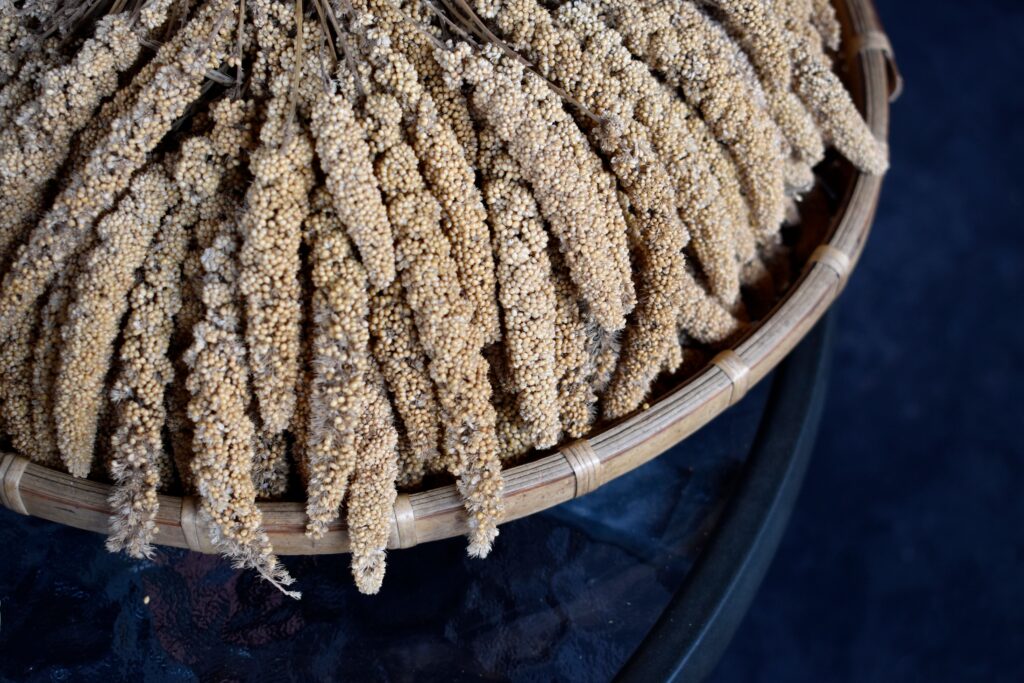
Acha, also called fonio, has a strong Plateau connection too. It’s grown in areas including Barkin Ladi, Bassa, Bokkos, Jos East, Jos North, Jos South, Kanke, Pankshin and Riyom, with Pankshin and Riyom particularly associated with acha production and markets. Millet and guinea corn are common across the central and southern parts, in places like Kanam, Langtang, Mikang, Shendam and Wase.
Rice, Yam and Cassava in the Southern Plateau
Head towards the warmer south and the picture changes. Rice is cultivated in Wase, Shendam, Qua’an Pan, Langtang North, Langtang South and Jos East. Shendam also produces yam, guinea corn, maize, cassava, millet and groundnuts, while Qua’an Pan grows rice, yam, maize, cassava, sorghum and Bambara nuts.
It comes down to geography. The land rises from warm, humid southern plains to the near-temperate high Plateau, creating several farming environments within one state.
Tomatoes, Carrots and the Vegetable Belt
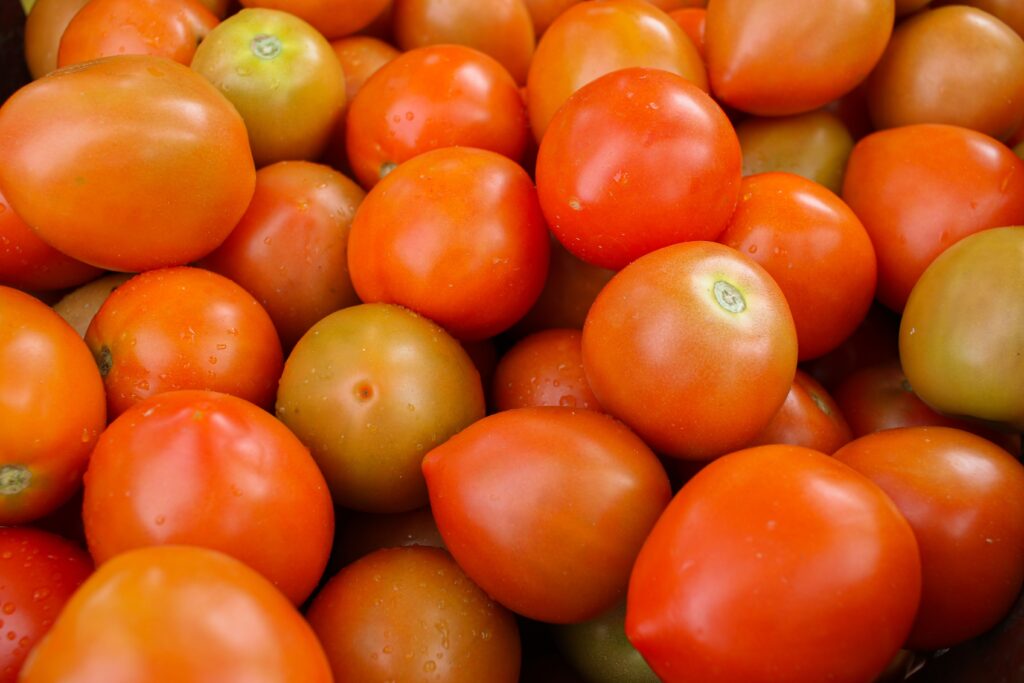
Then there are the vegetables that give Plateau markets their colour. Tomatoes lead the state’s horticultural crops, followed by pepper, sweet melon and carrot, and the cooler highlands suit many of them. Areas around Barkin Ladi, Bokkos, Mangu, Riyom, Jos North, Jos South and Pankshin are associated with vegetable production. With irrigation, crops like cabbage, lettuce, carrots, green beans and peas can even be produced through the dry season.
Fruits and Other Crops
The list goes beyond everyday dinner-table staples. Strawberries, apples, citrus, mangoes, avocado, coffee and olives are associated with the cooler highlands, and the state government points to areas like Jos South, Barkin Ladi, Riyom, Bokkos, Mangu and Pankshin for crops such as coffee, strawberries, apples and flowers. Mangu also stands out for tree crops, while atili, the local olive, is linked to places like Pankshin, Riyom and Bokkos.
From the Farm to the Market
Crop production is rarely confined to a corner of the state. A farmer in Bokkos may be growing potatoes and maize, while another in Shendam grows yam and rice, and someone in Wase cultivates maize, rice, beans or groundnuts. Those crops then move through local markets and beyond the state, supporting traders, transporters, processors and food businesses along the way. That’s why the agricultural products in Plateau State are about more than what’s grown on the farm.
More Than a Farming State
The variety of crops grown in Plateau State reflects its geography, and that diversity is what makes food production in Plateau State so significant. So while Plateau may be famous for its hills and waterfalls, it’s worth paying attention to the farms that turn those landscapes into food and livelihoods.