
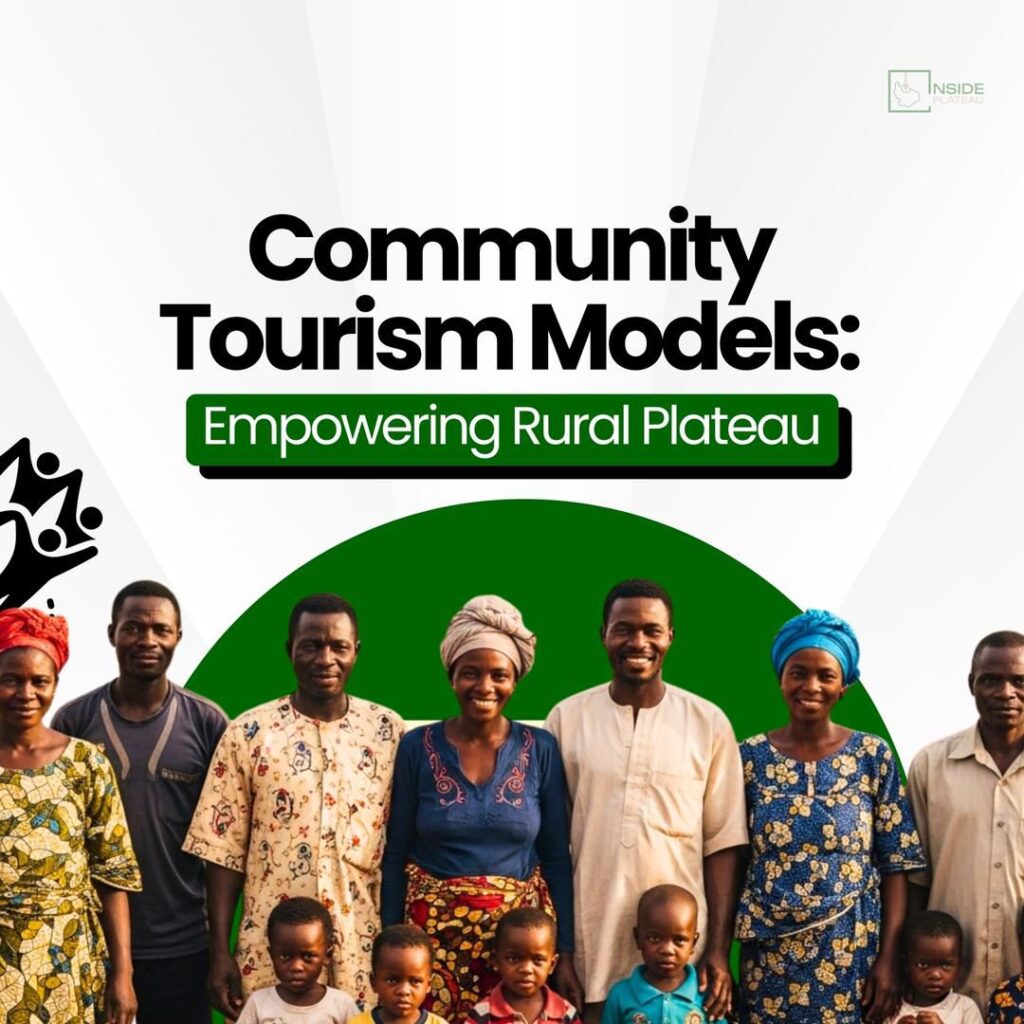
Community Tourism Models like Buhoma is a tranquil rural community situated at the edge of the renowned Bwindi Impenetrable National Park in southwestern Uganda. Characterized by cool forest air, towering ancient trees, and a serene pace of life, the village offers an authentic blend of natural beauty and cultural depth. Its red earth pathways, traditional homesteads, and surrounding banana groves form a harmonious landscape where daily life unfolds quietly. Mist-laden mornings, wood-scented evenings, and the distant echoes of wildlife create an atmosphere that reflects the region’s deep connection with nature. With a close-knit population and generations of families living alongside the forest, Buhoma stands as a significant gateway for wildlife tourism and an essential destination for travelers exploring Uganda’s ecological and cultural heritage.
ALSO READ: Exploring Pankshin’s Caves and Valleys. Mysteries Beneath The Surface
Where Beauty Wasn’t Enough
However, for all its beauty and all its closeness to one of Africa’s most extraordinary ecosystems, Buhoma was a place where tourism passed through but rarely stayed. Visitors came for the gorillas, marvelled at the landscape, and continued their journey while the community itself saw little economic change. Ring any bells yet? Before tourism transformed it, Buhoma was exactly what so many rural Plateau communities are today: beautiful, rich with natural wonders, occasionally noticed by outsiders, yet barely touched by the meaningful benefits their own environment could provide.
For years, Buhoma watched visitors come and go, and the community gained almost nothing from the experience. Until one day, they decided to rewrite their story
The Turning Point
In 1993, the residents of Buhoma created the Buhoma Community Development Trust. It was a simple but powerful idea built around a question Plateau State should also be asking: What would happen if local people took charge of the beauty the world comes to see? The answer changed everything. They did not invent strange customs or stage dramatic rituals for tourists; neither did they pretend to be something they were not. Instead, they opened their doors and said, “Come and see how we truly live.” And that authenticity became their strength.
But before strength came the trials. The community first had to build trust, organise, and sacrifice. Setting up the Buhoma Community Rest Camp in 1993 required months of consultations, agreement on revenue-sharing, as well as training of locals as guides and hosts, and volunteering land and labour. It took about two years of careful planning and collective effort before tourism income started flowing in and the real benefits (such as schools, clinics, clean water, and livelihoods) could begin to take shape. But the people of Buhoma did not use tourism as a spectacle; to them, it was a partnership.
Tourism Without Pretense
Visitors were welcomed into the real rhythm of community life through guided walks, storytelling, local crafts, and traditional performances. Slowly, steadily, and transparently, they invested the revenue back into themselves. And as the classrooms rose, clinics grew stronger and sanitation improved, families found new opportunities and the youth found reasons to remain in their rural community.
Today, Buhoma is celebrated across Africa as one of the continent’s most successful community-driven tourism models. And the truth is simple: everything they achieved is something Plateau can achieve too. Because when you look closely, the similarities are almost unsettling. Buhoma has Bwindi; Plateau has Wase Rock, Shere Hills, Assop Falls, Kurra Falls, Lamingo Dam, Riyom Rock, and dozens of untouched wonders. Buhoma had visitors passing through without leaving a meaningful trace; Plateau has the same. Buhoma had a choice to make; Plateau is standing at that same crossroads right now.
The question is whether Plateau will choose to act or wait until outsiders act first.
Global Lessons From Nepal to Costa Rica
Nepal faced a similar crossroad years ago. In Chitwan, a small community called Barauli lived beside a national park that attracted thousands of visitors. For decades, they watched as tourism blossomed, lodges sprang up, tour companies flourished, economies boomed but none of it reached the people of Barauli. They were spectators in their own land. That changed when they took a page from the same book Buhoma later perfected. The women of the Tharu community decided they would no longer stand at the sidelines. They started small, with authentic cultural evenings, home-cooked meals, and guided experiences that told their own story in their own voice. Today, Barauli is the gold standard for women-led community tourism in Nepal, and their work funds schools, health services, and family livelihoods.
Monteverde in Costa Rica was no different. It was a stunning landscape attracting people from around the world for its cloud forests but the turning point came when locals realised that without their involvement, tourism would grow around them, not with them. Hence they organised, planned, documented, and protected their interests. Today, Monteverde thrives not because it waited for outside investors to design its future, but because the community built the blueprint themselves.
Community Tourism Models: The Plateau Crossroad
Plateau stands on the same threshold. It is impossible to travel across our rural communities and not feel the weight of untapped potential. The hills, waterfalls, rock formations, wildlife, lakes, and cultural heritage are not just beautiful they are rare. They are the kind of assets that make nations famous. But beauty alone does not change lives. Beauty without structure becomes a missed opportunity. And when communities do not organise early, others organise on their behalf.
That is the danger Plateau must confront immediately: if communities do not shape their own tourism models now, they may soon become bystanders watching investors, outsiders, and opportunists extract profit from the wonders they have lived beside their entire lives.
Imagine Assop Falls managed by the surrounding community: not in a chaotic, unplanned way, but in a structured, accountable, well-documented system like Buhoma. Imagine Shere Hills with local guides certified by the community itself, earning sustainable income. Imagine Wase Rock with a community tourism cooperative that protects its story and reinvests profit into schools, healthcare, and youth development. Imagine Riyom Rock with trained storytellers, heritage centres, and youth-owned tour experiences. Imagine Lamingo Dam managed in a way that feeds families, not outsiders.
The truth is, Plateau does not lack beauty, it does not lack culture, neither does it lack story. What it does lack—and what it urgently needs—is organisation, Communities must come together and decide how they want visitors to experience their home. They must create structures that protect their interests. They must build small models that can grow into something strong. And they must do it before the world decides for them.
Because the world will come. The question is whether Plateau will be ready. This is not fantasy, it is precedent. It is already happening in Uganda, Nepal, Costa Rica, Kenya, Rwanda, and parts of Ghana. The blueprint exists, the results are documented, and the benefits are real. The only missing piece is Plateau’s decision to take the first step. If Plateau State chooses this path, the transformation will not be immediate, but it will be unstoppable. If it delays, the loss will not be theoretical but irreversible. The future is not waiting. The world is not waiting. Tourists are not waiting. Investors are not waiting.
The Choice is Ours, the Time is Now
But Plateau still has time. And perhaps that is the most important part of this entire story: it is not too late to put our best foot forward. The best time to act was years ago but the second best time is now. If Buhoma did it, if Barauli did it, if Monteverde did it, then rural Plateau can too. The models are ready, the map is drawn, the examples are clear. The only question is whether Plateau will step forward and claim what has always belonged to its people. And in the end that may be the real story: not what the world sees when it looks at Plateau, but what Plateau finally decides to see in itself.