
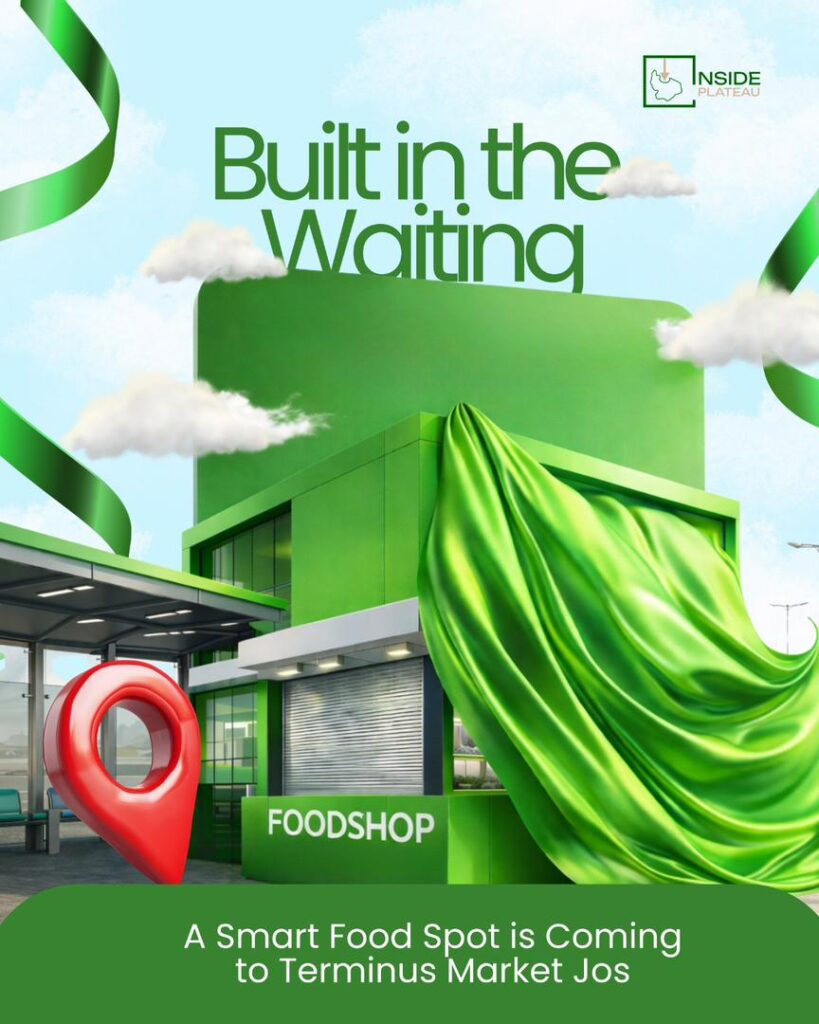
What if Waiting Time is Not Wasted Time?
Plateau State is not known for queues. Outside of banks, ATM gallerias, fuel stations during rare shortages, and the periodic rituals of election registration and voting, waiting in long lines has never been a defining feature of everyday life here. Movement across Jos and its surrounding towns is usually fluid, informal, and manageable. People arrive, transact, and move on. Perhaps, this is why the waiting at the TinCity Metro Bus Stop stands out. Not because it is chaotic or inefficient, but because it is deliberate in its difference.
These TinCity Metro buses run on a structured schedule, hence, commuters arrive early to make the ride. Because the demand is high, and the buses, by design, cannot carry everyone at once, the resultant effect is a calm, orderly queue that sometimes stretches into thirty minutes or more, but is made up of people who have chosen reliability over haste. The waiting here is not accidental; it is part of a system that works. And in the middle of all this waiting, something new is being cooked.
ALSO READ: How Transport Revamp Changes Tourism and Economy in Plateau
The Birth of Innovation
In a few days, as soon as February 16th, 2026, a smart new food idea will be born and launched in the heart of this buzz. This idea is not a policy intervention to change how transportation works or a transport reform to reorganize public space. On the contrary, it is a brilliant new food spot born as a solution to the human need to pass time more effectively and eat more affordably. Hence, the Jos Metro Food is one proof of the Plateau’s ability to be innovative in a way that solves problems and welcomes all.
Because when it comes to waiting, even when chosen, the stillness stretches minutes into moods, inviting hunger to the party, and boredom to the table. To this end, this solution does not remove the wait, but simply makes it more bearable. This distinction is what the creators promise in the form of the Jos Metro Food.
Opportunities Hidden in Plain Sight
Terminus is already one of Jos’ busiest hubs. Traders, commuters, workers, travellers, and first-time visitors pass through it daily. It is loud, energetic, and purposeful. People here are not idle; they are preparing to move. The queues that form are not signs of failure but of participation in a growing public transport system that many residents have embraced. Riding on this cause, Jos Metro Food positions itself squarely inside this reality, not as an attraction pulling people away from their plans, but as a companion to them.
There is no claim of collaboration with the bus system, and no attempt to reorganise how lines are formed. Contrarily, what the food spot offers is straightforward: a place to eat while you wait, somewhere to sit if you arrive early, and an option that turns idle minutes into a more comfortable experience.
In doing so, it highlights an often-overlooked truth about opportunity on the Plateau: it rarely announces itself loudly. It lives in routines, in shared experiences, and in spaces people already occupy every day.
This is not the first food business in Jos, and it will not be the last. What makes Jos Metro Food noteworthy is not novelty, but placement. It is built around presence: the people were already there, the waiting was already happening, and the need—though quiet—already existed.
By choosing Terminus, the idea leans into a rising trend rather than resisting it. More residents are adjusting their schedules to fit structured transport. More people are arriving early, planning ahead, and waiting together. This kind of waiting is not a burden most people complain about; it is a trade-off they willingly accept. But a smart entrepreneur knows opportunity when it sees it and Jos Metro Food simply harnessed one of such lush opportunities cradled on the Plateau and meets the needs where they are.
As Eyes Begin to Open, Doors Follow
The significance of this approach becomes clearer when viewed within Plateau’s broader development narrative. Much has been said about untapped potential in the state, often framed as something waiting to be discovered or imported. Yet many of the most promising ideas are not missing, they are simply overlooked. They sit quietly inside familiar patterns until someone chooses to look closely. Jos Metro Food is one such example.
Even its opening reflects this grounded approach. Meals are priced from as low as ₦2,000, signalling accessibility rather than exclusivity. The launch itself is designed to feel communal, complete with an eating competition that draws people together around shared experience rather than spectacle. These details suggest an understanding of the space and its users; people who value practicality, warmth, and ease.
Beyond serving food, the opening also signals economic movement. Before plates are cleared and seats filled, jobs are being created. Servers and POS attendants are being hired and roles are being defined. For a city that thrives on small and medium enterprises, these early signs of employment matter. Development often begins not with ribbon-cuttings, but with quiet calls for hands.
It is important, however, to remain clear-eyed. Jos Metro Food does not claim to solve transport challenges or eliminate waiting times. It exists alongside them. Its success will depend on how well it adapts to the rhythms of Terminus’ rush hours, lulls, and the unpredictability that comes with public spaces. Like every business rooted in a shared environment, it will have to listen as much as it serves.
Still, the thinking behind it is worth attention.
What if Plateau Looked Again?
If a food business can be built around the waiting time at a bus stop, what else is possible? What other everyday experiences have Plateau residents quietly accepted as part of progress, and what opportunities are hidden inside them? The question extends naturally beyond Terminus. The city’s train station, for instance, also involves structured waiting, driven by capacity rather than inefficiency. And beyond transport, there are countless shared moments of transitions, pauses, and routines that could inspire thoughtful enterprise.
Which raises a larger challenge: what is stopping more people from inventing businesses around the realities of Jos as it is, rather than as we imagine it should be? What is stopping investment that listens before it acts? Jos Metro Food does not position itself as an answer to all these questions. But it asks them by example.
It reminds us that progress on the Plateau does not always arrive with sweeping reforms or grand announcements. Sometimes, it arrives quietly, responding to habits people have already formed. Sometimes, it is built not in the rush, but in the waiting.
If Jos Metro Food succeeds, it will not be because it tried to control movement at Terminus, but because it respected it. No uniforms, no shouting, no enforcement. Just good food, clear seating, and natural flow.