Imagine you’re taking a walk through a farm in the heart of Plateau State, and the early morning sun rises over rows of maize, Plateau potatoes, tomatoes, or soybeans. But this time, the people doing the work aren’t the ageing ones we used to associate with farming. Instead you see young farmers in Plateau State, holding smartphones, checking market prices, measuring soil moisture, and discussing their farm yields like business executives.
Also Read: Plateau Potatoes: A Taste of Home, Pride, and Prosperityhttps://insideplateau.com/plateau-potatoes-a-taste-of-home-pride-and-prosperity/
And honestly, we’re beginning to see more of this in Plateau State today. The recent rise of young farmers in Plateau State is silently becoming one of the most important developments in Nigeria’s food economy. This is because, when you think about it deeply, the future of Nigeria’s food supply won’t just come from a fertile land — it will come from people who are willing to work that land with modern thinking. That’s where Plateau State agriculture is gaining a powerful edge.
How Youths in Plateau State Are Changing the Old Narrative Around Farming
Over the years, farming had a reputation problem. Not because farming wasn’t valuable, but because the society didn’t package it to us as something attractive.
In the past, agriculture was basically seen as “old people work.” We all know the stereotype: old men carrying cutlasses and hoes, women bending over in the sun, villages with small farms that barely produced enough to feed a household. No wonder most young people wanted nothing to do with that. They only wanted office jobs, banking jobs, Government jobs, and Tech jobs. Anything that sounded modern and clean.
But who can blame them? Back then, the image of farming wasn’t lucrative. It was real struggle. So the people in villages farmed, while those in the cities chased white-collar dreams. However, something has changed, and it’s changing very fast.
Today, the young farmers in Plateau State are venturing into agriculture not as a punishment or fallback option, but as a real career path. Many of them are going into it full-time, others are doing it part-time while building other businesses. But the key thing is this: the youth are now taking farming very seriously.
And we all know, when youth take something seriously, they don’t do it halfway. They innovate it, modernize it, and turn it into a business. That is why Plateau State agriculture is becoming one of the most promising sectors in the state.
Why Young Farmers in Plateau State Are Suddenly Seeing Agriculture as a Smart Business
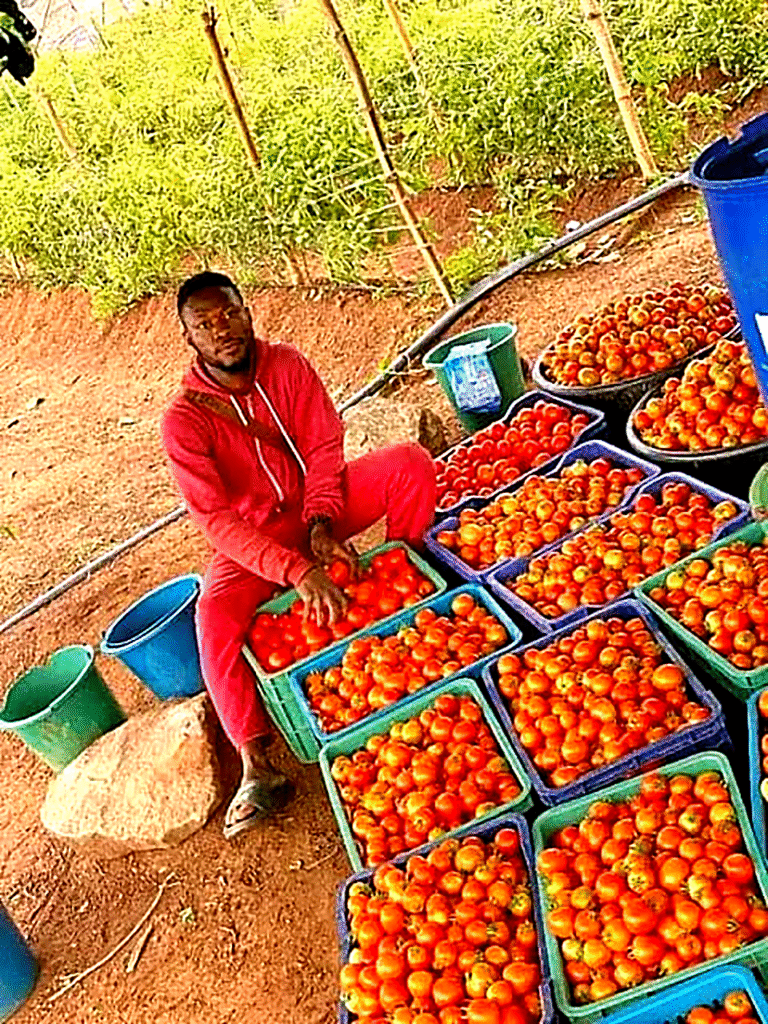
Let’s be honest, the major reason young people are now embracing agriculture is pretty simple: they’ve started seeing real results. Food is expensive now. And demand is rising, while supply is still struggling. And the truth is, if you can grow food and supply it consistently, you are sitting on a goldmine.
That’s the reason why young farmers in Plateau State are now going into poultry farming, fish farming, greenhouse vegetable production, irrigation farming, and crop cultivation. They’re not just doing it for fun. They’re doing it because it pays. And Plateau State is naturally positioned for this.
Plateau state has a cold weather, highly fertile soil, and a very strong agricultural history. From potatoes to cabbage, tomatoes, maize, rice, millet, and even livestock, Plateau has always had the capacity to feed beyond its borders.
However, with the rise of the young farmers in Plateau State, this capacity is becoming even more organised, more business-oriented, and easier to scale. This is exactly how a state becomes a food basket. Not by luck, but clear strategy
How Plateau State Agriculture Is Being Backed by Real Government Action, Not Just Talk
Another thing worthy of mention is the fact that the Plateau State Government does not only back agriculture with speeches. It is backing it with real programs that actually reduce the barriers young people face.
One big example is the Plateau Youth Agricultural Empowerment Program (PYAEP), a scheme that is designed to bring youths into farming with structure and real support.
This program saw 1,000 youths being deployed to BARC Farms, with each of the beneficiaries reportedly being allocated a hectare of farmland and given support in the form of seedlings, fertilizer, tractors, and other mechanized farming equipment.
That wasn’t “motivation, but real investment. And it’s exactly the type of intervention that changes mindsets. The fact is this, many youths are not afraid of farming — they’re just afraid of starting with nothing. But when the government provides land access, training, inputs, and even support systems, it becomes easier for the young farmers in Plateau State to embrace farming confidently.
This is why the conversation around Plateau State agriculture is changing from “subsistence farming” to “agribusiness.”
Young Farmers in Plateau State Are Being Supported With Training, Loans, and Agricultural Inputs
If you’re truly paying attention, you must have noticed something very interesting: more and more youths in Plateau State now talk about farming like it’s a profession. That didn’t happen overnight. Training actually played a very vital role.
Also, government initiatives and partnerships help the youths learn practical agricultural skills — not just theory. Skills like poultry management, fish farming, irrigation systems, crop disease control, greenhouse farming, and even agro-processing.
And when you combine training with access to agricultural loans, grants, and empowerment tools, you get what we are witnessing today: a new generation of young farmers in Plateau State who are not just farming, but building sustainable businesses.
Some are starting with a few hundred or thousand birds. While, others are starting with fish ponds. Some start by planting tomatoes and peppers on irrigated land. And some others choose to go into large-scale maize or rice farming.
Welcome to the new wave the new wave. This is modern Plateau State agriculture.
How Technology Is Helping Young Farmers in Plateau State Farm Smarter, Not Harder
Now here’s the part where things get even more interesting. The youths that are venturing into agriculture today are not doing it the same way their grandparents did. They are bringing a modern mindset into the process. For example:
- They use smartphones to track market prices.
- They create WhatsApp groups to connect with buyers and suppliers.
- They watch YouTube videos on fish farming systems and poultry vaccination.
- They take online courses.
- They learn greenhouse farming techniques.
- They experiment with improved seedlings.
- They understand packaging and branding.
- They understand profit margins.
This is why young farmers in Plateau State are not only producing food, but also reshaping the entire agricultural value chain.
And yes, advanced discussions around artificial intelligence and digital farming tools are beginning to join the conversation, with the government openly encouraging youth to embrace technology-driven agriculture.
That kind of thinking is what separates the ordinary farming from future-ready Plateau State agriculture.
Why Young Farmers in Plateau State Could Become Nigeria’s Biggest Food Security Advantage
The reality is this, Nigeria’s food challenges has never been about land. Nigeria has vast land, water, and manpower. But what Nigeria lacked is structured production and enough active farmers who can farm at scale.
That’s the reason why the emergence of the young farmers in Plateau State is such a big deal. It’s not just a Plateau story, but a national story. This is because if the Plateau’s youth can consistently grow food in large quantities, it means Nigeria’s food supply becomes more stable, food prices can reduce, markets in Abuja, Kano, Lagos, and beyond can rely more on Plateau State’s produce.
And this is already happening. Plateau State has always supplied vegetables, and potatoes to major markets across Nigeria. However, with more youths joining, the volume and consistency can grow even further.
That is how Plateau State agriculture is playing a great role in our national food security.
How Plateau State Agriculture Is Creating Jobs for Thousands of Youths
Here’s something that most people don’t always understand: agriculture is not only about the farmers. Agriculture is an entire economy. Agriculture automatically creates jobs for:
- tractor operators
- fertilizer distributors
- poultry feed producers
- fish feed sellers
- transporters
- market women and traders
- agro-processing workers
- packaging businesses
- storage and logistics providers
- cold room operators
- exporters and suppliers
So when the young farmers in Plateau State begin to farm seriously, they don’t just create jobs for themselves. They also create jobs for others. And that’s why agriculture is the most powerful tool for reducing unemployment.
So when young farmers in Plateau State begin to farm seriously, they don’t just create jobs for themselves. They create jobs for others. And that’s why agriculture is the most powerful tool for reducing unemployment.
So, the growth of agriculture in Plateau State is not just an economic story, but a social development story. It’s a youth empowerment story.
Young Farmers in Plateau State Are Making Agriculture Cool Again
Honestly speaking, one reason why farming is catching on among the youth is because it is now becoming lucrative. Not in the basic sense — but in the sense that people now see agriculture as something one can build a lifestyle around.
Young people now post their poultry farms online, others share harvest photos, and others showcase their irrigation systems. A few others create agribusiness pages on Instagram and talk about their farm expansion plans like real entrepreneurs. Some even dress in branded farm outfits, create logos, and treat farming like a real corporate business.
This cultural shift is important because once farming becomes something youths admire, it becomes easier for more youths to join. That’s exactly what we’re seeing with the young farmers in Plateau State. And that shift is one of the biggest forces driving the modern-day Plateau State agriculture.
The Plateau Government’s Bigger Vision: Scaling up Young Farmers in Plateau State
What’s even more encouraging is that Plateau State isn’t stopping at empowering just a few youths. The bigger plan is massive expansion.
Recent reports indicate that Plateau State is targeting the cultivation of 7,000 hectares of farmland by 2027, with projections to create 15,000 to 20,000 agribusiness jobs for youths.
That’s a very serious target. And if it is being achieved, it means thousands more young farmers in Plateau State will have access to farmland, training, and a real system that supports agricultural growth.
This is exactly how a state becomes a food basket — not by farming in small scattered pieces of land, but by building a structured agricultural economy.
That is the kind of vision that can turn Plateau State agriculture into one of Nigeria’s strongest economic pillars.
Why Investors Should Pay Attention to Young Farmers in Plateau State
One major thing investors seek is momentum. They want to invest where growth is already happening, where there is an active workforce, and where the government is creating an enabling environment. And gradually, Plateau State is beginning to tick these boxes.
The rise of the young farmers in Plateau State means there is a growing workforce that is ready to scale production. The government’s empowerment programs mean there is policy support. And Plateau’s climate and geography mean the land itself is naturally suitable for many crops and livestock.
For investors, this opens opportunities in:
- agro-processing industries
- fertilizer supply chains
- poultry and fish feed production
- cold storage facilities
- transportation and logistics
- food packaging and export
- mechanized farming services
In simple terms, Plateau State agriculture is not only about farming anymore. It is becoming an investment ecosystem.
Young Farmers in Plateau State Are Redefining the Future of the State’s Economy
This is the part most people outside Plateau state don’t fully understand. They still view Plateau only through the lens of crisis headlines. They assume progress is impossible and the state is stuck.
But when you come to Plateau State, you see something different. You see resilience, innovation, communities pushing forward, and young farmers in Plateau State building a future with their own hands.
This is not a minor trend. It’s a movement. Because when youths find purpose in a sector, that sector grows faster than anyone expects. And if Plateau State continues on this path, it won’t just be known for its tourism and natural beauty. It will be known as a major agricultural powerhouse — one that feeds Nigeria and even exports beyond the country.
That is the direction Plateau State agriculture is heading.
Conclusion: Why Young Farmers in Plateau State are the State’s Greatest Untapped Resource
If we are being real, the main story here isn’t just farming. It’s the mindset shift. Because, for decades, young people used to see agriculture as a last option. Something you do when you fail. Something you do when nothing else works.
But now, young farmers in Plateau State are proving that agriculture can be a first option, a smart option, and a profitable option. They are now bringing technology, energy, and ambition into the fields.
And government initiatives are supporting them with land access, training, mechanization, and empowerment. And the ripple effect is already being felt: more food production, more jobs, stronger local economies, and a new identity for the state.
If Plateau State continues to empower and support this movement, then it won’t be an exaggeration to say that Plateau is on track to become Nigeria’s next major food basket.
And the driving force behind it will be simple: they are the young farmers in Plateau State.