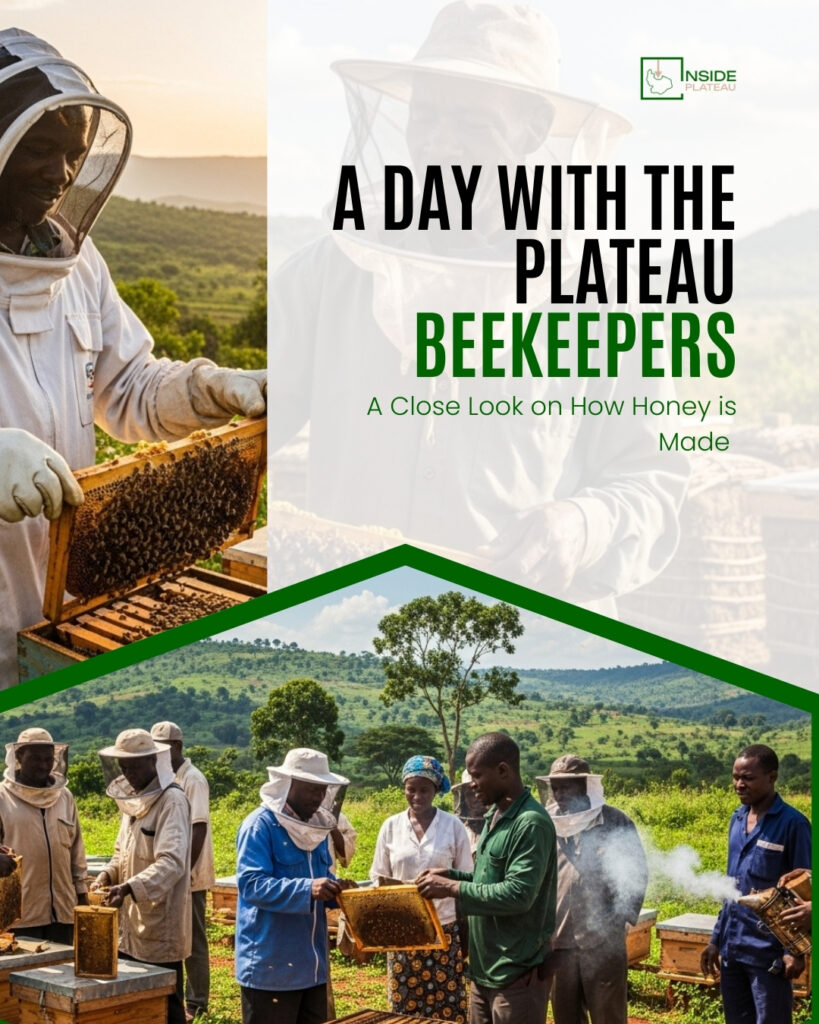
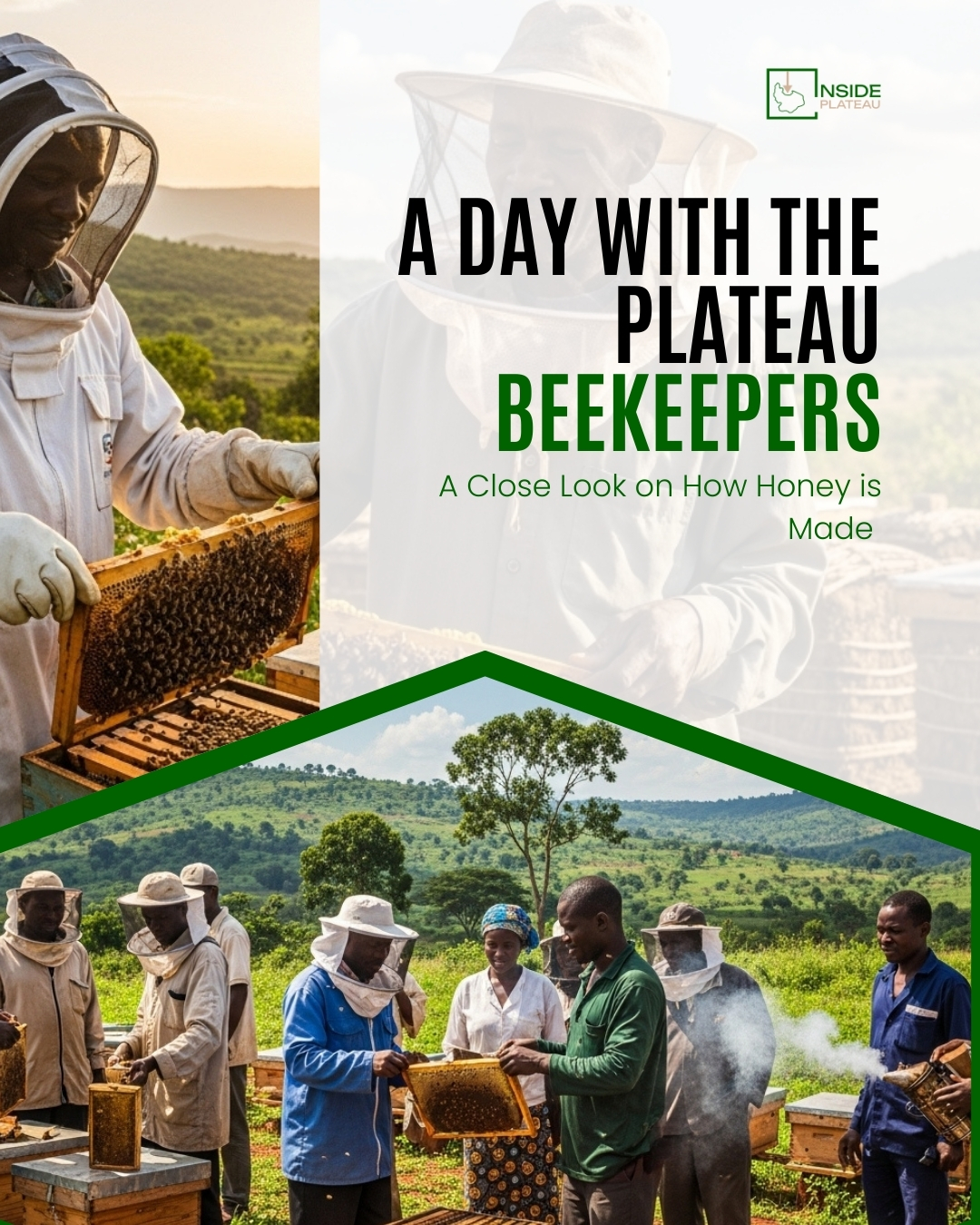
I want to tell you something very real. If you grew up in the north-central region in Nigeria, there’s a very good chance that you’ve seen the humble beekeepers of Plateau State. You might have seen them wandering near farms, forests, and fields, tending to their hives . Yet, most of us barely know who the real Plateau Beekeepers are. Today, that changes.
Pull up a chair because I’m going to walk you through a day in the life of these incredible people. We will see why their work matters big time, and, why honey production in Plateau state is a goldmine waiting to be tapped.
Also Read: The Black Olive_ The Untold Story of What Plateau State is Sleeping on. https://insideplateau.com/itili-the-black-olive-plateau-state-economic-potential/
Who Are The Plateau Beekeepers?
In Plateau State, beekeeping is both a tradition and a means for livelihood. In places like Jos North and Jos South Local Government Areas, you’ll find groups of men who call themselves the plateau beekeepers. They are the guardians of buzzing colonies of bees, and they know these insects with a deep familiarity most of us lack.
However, these beekeepers don’t wear suits and ties. They wear jungle boots and straw hats. Most of them inherited the craft from their fathers. The others stumbled into it by accident, or they were just fascinated by that golden sweetness called honey. Often times, you see them walking through fields in the early morning, checking frames, listening for the hum that tells them all is well. In areas like Mangu LGA, the plateau beekeepers battle pests and environmental threats just to keep their bees thriving. They are not just workers — they’re the stewards of one of nature’s most essential ecosystems.
A Day with The Plateau Beekeepers
First thing in the morning, before the sun gets strong and the heat presses down, you’ll catch The Plateau Beekeepers heading to their apiaries. They are aware that honey production in Plateau isn’t just about sticking boxes in the bush and waiting. The bees need flowers, water, and careful attention.
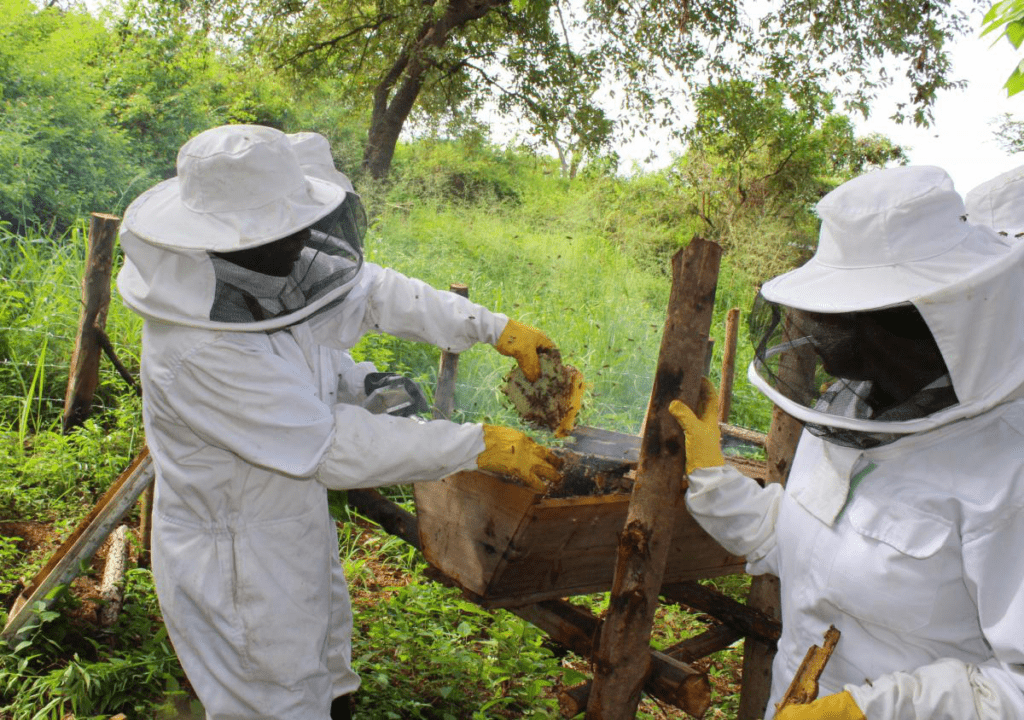
You sometimes see a beekeeper lighting a small puff of smoke near a hive entrance. That technique calms the bees so he can inspect the honey frames without getting stung. It’s the same method beekeepers all over the world use to gently encourage bees to eat honey and calm down
Under the hood of a traditional hive, worker bees are very busy. They gather nectar from flowering plants within a few kilometres of the hive— converting that nectar into honey through evaporation and enzyme activity. Watching them is like watching a living, breathing factory. The hum, the flow of bees, the glossy combs filled with honey. Actually, it’s mesmerising.
Why Bees Matter (More Than You Think)
When we talk about honey, we’re only scratching the surface of why bees are important. Bees are champion pollinators. Without them, a huge chunk of our food just wouldn’t even exist. Note that, close to a third of the food we eat depends on pollinators like bees. These insects help our plants produce fruits, seeds, and vegetables we take for granted
It’s actually funny because most people think, “Bees make honey. That’s it.” But that’s just the Genesis. Without bees, our farms wouldn’t flourish, our orchards wouldn’t yield fruit, and our vegetables wouldn’t set seeds. Pollination is the reason our tomatoes, peppers, cucumbers, and so much more come out full and healthy. The Plateau beekeepers contribute directly to this cycle. And their work does more than fill jars.
Honey — Nature’s Sweet Healer
Let’s focus on honey itself. We all think we know this stuff — but actually, real honey is something very extraordinary. Honey consists of simple sugars that your body absorbs easily. That’s one of the reasons traditional medicine values it — for wounds, sore throats, coughs, and more. Pure honey is antimicrobial, antioxidant, and nutrient-rich.
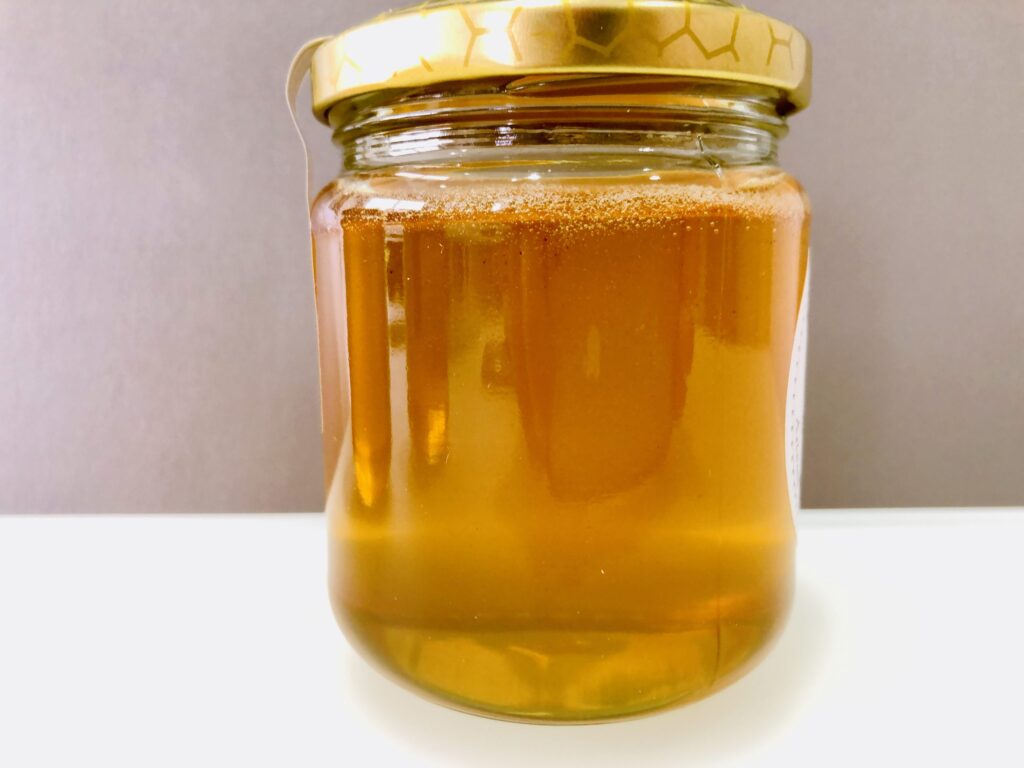
When you compare that to table sugar, which only contains calories and zero nutrition. Sugar spikes your blood glucose with no benefit. Honey? It feeds you, soothes you, and heals you. I always say: Using honey instead of sugar is like choosing whole fruit over candy. One nourishes, the other just satisfies a craving.
Also, honey has strong personality. It tastes like the flowers the bees visited. In Plateau State, the rich mix of vegetation — from guinea savanna blooms to woodland blossoms — gives honey from the region a distinct flavour profile.
Plateau Beekeeping Culture — A Quiet Powerhouse
The Plateau beekeeping culture might seem small-scale on the surface, but it actually has deep roots. Research shows that hives in Plateau State aren’t just for subsistence. These hives contribute to household income, especially in Jos North and Jos South, where beekeepers sell honey and beeswax to local markets.
Majority of these beekeepers are self-taught or learn from others in the community. The plateau beekeepers invest in hives, tools, and time, which is not capital-intensive compared to many other agricultural ventures. A few dozen hives can generate a steady income stream without huge upfront costs.
However, this culture holds even more potential, because, beekeeping in Nigeria only scratches the surface of what it could be. With proper training, extension support, and investment, the yield and quality of honey produced in Plateau could rival other high-yield regions.
The Economics of Honey — A Hidden Wealth
Let’s talk about economics for a second. Honey isn’t just a nice sweet substance you add to your tea. It’s truly an economic engine.
In Nigeria, beekeeping is a means of livelihoods. Especially in the rural areas with limited employment options. Beekeeping is a low-cost entry point into the agricultural enterprise. This is because, the bees feed themselves. In turn, you harvest honey, beeswax, propolis, pollen, and other products.
Also, honey sells very well. Even locally, a litre of pure honey can fetch one a good price. Mind you, we haven’t even started talking about export markets. Nigeria currently imports a lot of honey because our local production doesn’t meet demand. That’s billions of naira potentially leaving the country every year.
Beyond honey, beeswax has good value too — in cosmetics, candles, polishes, and even pharmaceuticals. Other substances like propolis and royal jelly are highly priced in high-end health and beauty products.
Imagine serious investment into processing facilities, cooperative marketing, training, better hives, and quality control. The beekeepers of Plateau could be at the forefront of a thriving industry. They just need support.
What Happens during Harvest
Honey harvest is something else. When the frames are capped with honey, the plateau beekeepers gear up. They put on a protective gear, use smoke to calm colonies, and gently remove honeycomb frames.
Extracting honey can either be done by pressing or by using a centrifugal extractor. When the honey is pulled from the comb, it’s filtered, jarred, labelled, and ready for market. Pure, raw, golden, and highly nourishing. But here’s the twist: many local honey producers still use traditional methods and that limit output. Modern techniques can increase yields, improve quality, and boost profits. However, they require training and investment.
A Call to Investors — Don’t Sleep on This
If you are someone who invests where there’s real potential, listen up.
The honey economy in Plateau State and across Nigeria is highly undervalued. We have the bees, the flora, the climate, and a committed community of beekeepers. What we lack is access to capital, structured markets, processing infrastructure, and broader support systems.
Imagine a honey processing facility in Jos that will take raw honey from small producers, package it for export and local premium markets, and create numerous jobs. Imagine training centers in Jos that help our beekeepers increase yields and quality sustainably. This is not unrealistic— it’s practical, profitable, and timely. The Plateau beekeeping culture already exists. It just needs proper scaling.
Final Thoughts — Why This Matters to All of Us
Finally, I’ll want you to take a deep breath and picture this: bees buzzing through fields, Plateau beekeepers tending hives at sunrise, honey jars glowing on market shelves. This is not just a rural vignette, but an economic transformation in action.
Bees are beyond just honey-makers. They are pollinators, ecosystem engineers, and silent contributors to our food systems. The honey they produce is nutritious and very valuable. The people who keep them are the stewards of land and culture. The industry they sit in could be transformed into an export success story.
In my opinion, supporting these beekeepers, celebrating their craft, and encouraging investment into honey production in Plateau isn’t just a smart move. It’s essential for a sustainable rural growth and a healthier future.
So next time you add honey into your tea, raise your cup and toast to The Plateau Beekeepers. These are the heroes turning blossoms into gold — one jar at a time.