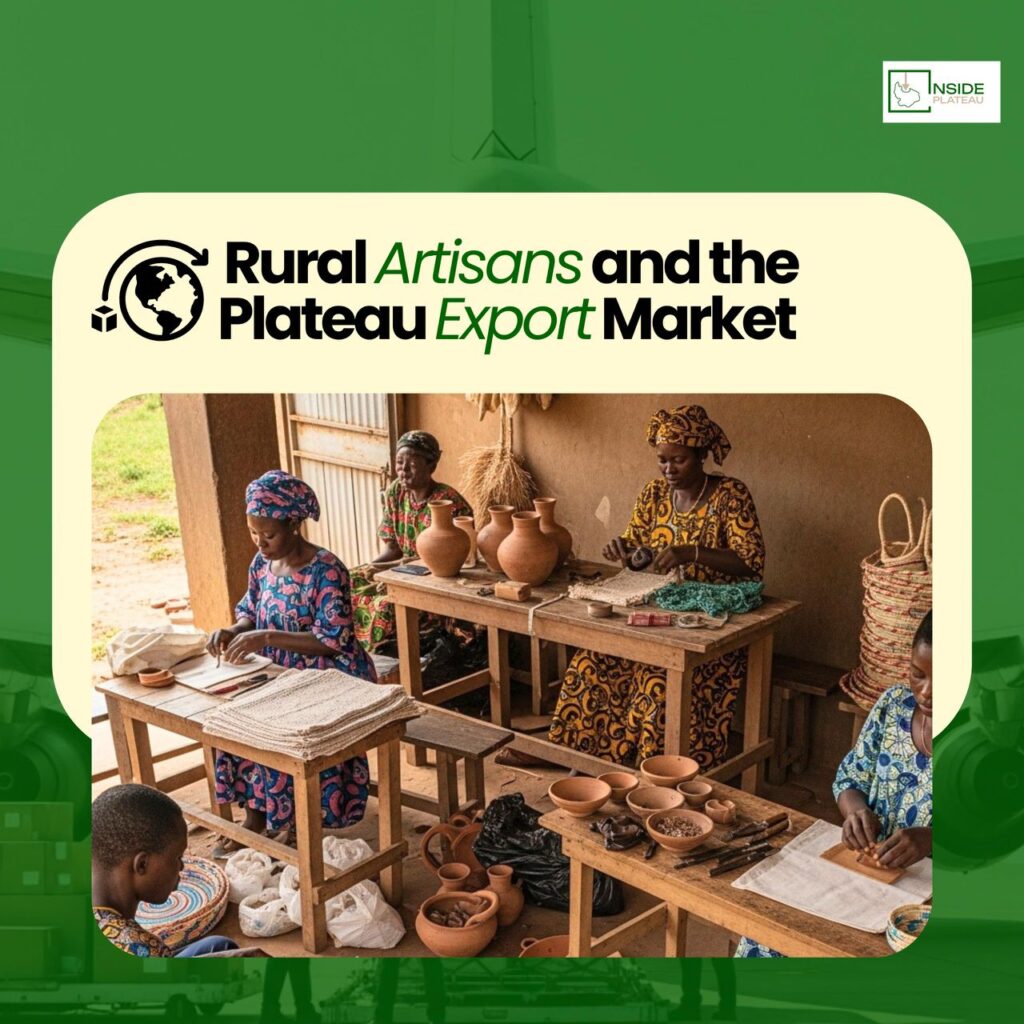
When people talk about Plateau State, the first things that come to mind are the beautiful hills, the cool weather, and the serenity of the environment. However, when you pay close attention to our rural communities, you will find out that something interesting is going on quietly. There is a silent revolution taking place. No loud machines or giant factories. Just the steady sound of creativity from the special hands of hardworking artisans.
For years, the world only saw Plateau State through the lens of tourism and tin mining. But today, a new chapter is unfolding. Our rural artisans are becoming the backbone of a growing export market. Their handmade products are beginning to attract attention globally. As the world is shifting toward sustainability and natural materials, Plateau State is finallly stepping into the spotlight.
ALSO READ: Best tour groups in Plateau State
Naraguta and the Leather Story
When we talk about Plateau State and our export potential, leatherwork comes first. Naraguta’s leather history is beyond just a story; it is indeed a legacy. The leather produced in this region, using ancient and natural tanning methods, is known for its strength and smoothness.
Many people won’t know this, but long ago, what Europe called “Moroccan leather” was actually produced in the Northern part of Nigeria. Plateau artisans have always been part of that heritage. Today, rural craftsmen make handbags, sandals, wallets, ottomans, and jackets that can stand shoulder to shoulder with the luxury Italian brands.
With proper packaging and steady access to the market, a leather bag made in Jos North can be found in boutiques in London, Milan, or New York. This is not charity but business. High-value business.
The Clay Economy: Turning Earth Into Global Decor
Bassa Local Government and other parts of Plateau State are blessed with some of the finest clay deposits in Nigeria. For generations, potters have transformed this clay into beautiful wares. But the world’s needs today goes far beyond cooking pots.
Interior designers are now obsessed with natural colors, earthy tones, and handmade textures. This is good news for Plateau State. Our clay can be shaped into giant ceramic planters, decorative vases, wall pieces, tiles, and sculptures that can compete globally.
Imagine a potter in Bassa crafting a piece that would finally end up in a hotel lobby in Dubai or a home in California. That is the Plateau Export Market at work—transforming simple earth into wealth.
Weaving Wealth in the Southern Plateau
In places like Shendam, Langtang, and other southern parts of the Plateau, weaving has become a lifestyle. Raffia, palm fronds, and cotton are turned into baskets, mats, hats, and wall art. These items are not only beautiful; they are environmentally friendly.
With the world campaigning against plastics, woven products can be the perfect alternative.
There is global demand for the following:
– Reusable shopping bags
– Biodegradable hampers
– Decorative wall pieces
– Table mats and storage baskets
Our artisans are already into making all these. They only need a big platform that will connect their craft to the international market.
The Digital Bridge: Art Meets Technology
One major question is: “How can we move a basket from a small village in Plateau State to a buyer in Berlin?” The answer is simple and just one word—technology.
Young people in Jos are serving as bridges between the local artisans and global customers. They travel to rural areas, handpick the best products, take clear and clean photographs, and upload the photos on platforms like Etsy, Anka, and Instagram.
This teamwork is powerful. It enables the rural artisan to focus on the craft, while the youth focuses on branding, logistics, and online sales. Together, they sell Plateau State to the world. A weaver who may have never left her local government area can now sell to someone thousands of miles away.
AfCFTA and Plateau’s Advantage
With the African Continental Free Trade Area (AfCFTA) now active, the timing is perfect. Plateau State can become a major hub for handmade goods within Africa. Our central location makes transport easy. Our climate makes year-round production comfortable. All that is needed is structure—cooperatives, training, and quality control.
If done right, Plateau State can supply premium handmade products to Ghana, Kenya, South Africa, and beyond.
Preserving Culture Through Profit
One beautiful thing about this export push is how it helps preserve our culture. When artisans realize that their skills can put food on the table, they pass those skills to their children. Weaving becomes a career, not just a hobby. Leatherwork becomes a legacy. Pottery becomes a pathway to global relevance.
By selling our culture, we are saving it.
Conclusion: Plateau’s Golden Opportunity
Plateau State is sitting on a goldmine—one made of clay, leather, fibers, and creativity. The rural artisan is no longer a symbol of the past. They are the key to our economic future.
The Plateau Export Market is real and achievable. The products are ready. The skills are ready. The world is ready. What we need now is consistency, organization, and visibility.
The hands of rural artisans in Plateau State are shaping more than products. They are shaping a future where Plateau State is known across the world for beauty, creativity, and craftsmanship.