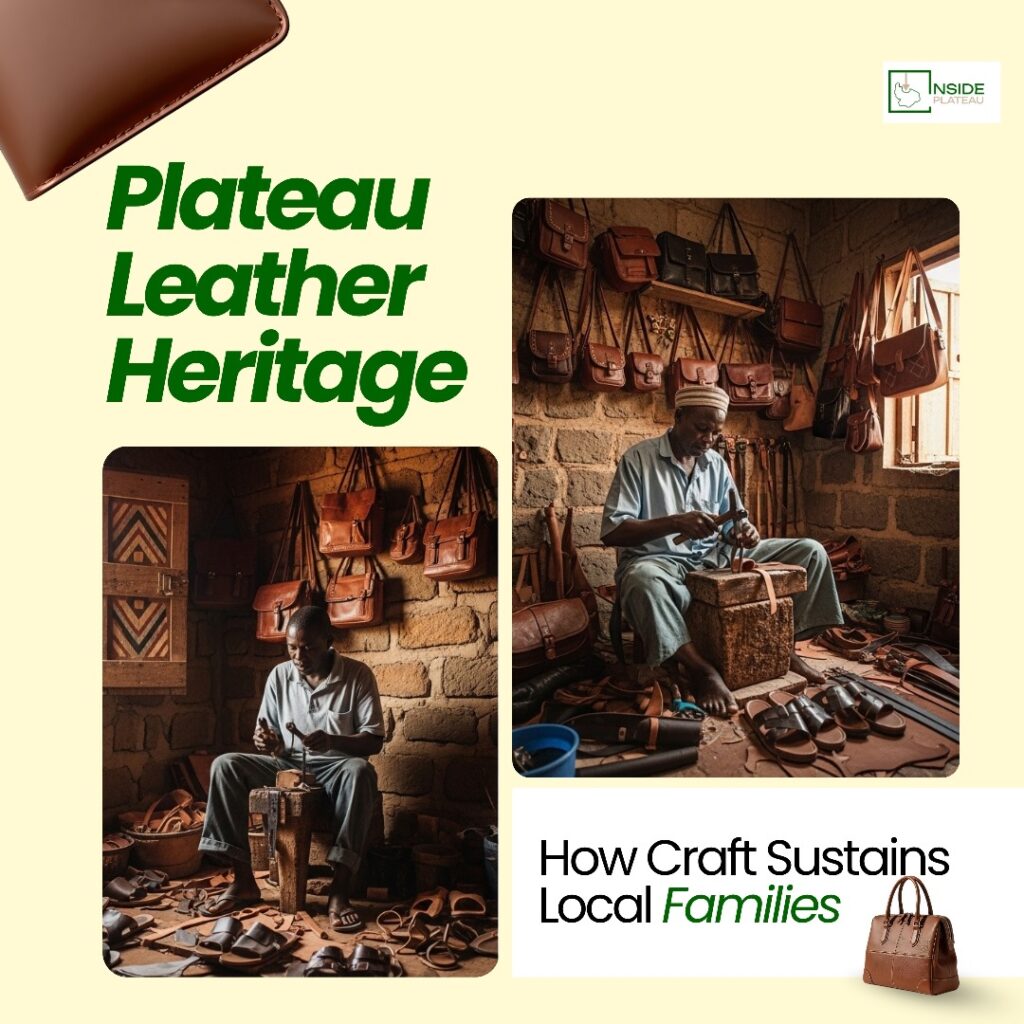
The high plains of Plateau State, which is nicknamed the “Home of Peace and Tourism,” possess a very rich history goes way beyond its beautiful landscapes. In communities like Naraguta in Jos, a century-old tradition thrives—the resilient heritage of leather craftsmanship. This leather industry goes beyond just trade; it serves as an important economic lifeline and also as a proud cultural identity, skillfully woven into the fabric of local families. For generations, the art of leatherwork has sustained lives, built communities, and positioned Plateau State as a secret source of Nigeria’s finest leather products.
🌄 The High-Altitude Advantage: Quality and Climate
The unmatched quality of leather produced in Plateau State is by no means an accident; it is a gift gotten directly from the unique geography of the state.
The Jos Plateau’s Natural Tannery
The city of Jos, sits high up at over 1,200 meters above sea level. So, it boasts a distinctly cool and dry climate, with the city’s temperature hovering around 20°C to 25°C. This natural advantage is highly crucial for the traditional process of leather tanning (converting raw animal hides into finished leather).
Slow Curing: The air temperature is moderate and humidity is low. This facilitates a slow but steady curing of the animal hides, mostly sourced from cattle, sheep, and goats.
Superior Durability: This natural process results in leather highly renowned for its thickness, strength, and exceptional durability. Plateau leather is famous for its resilience, it is known to resist cracks even when it’s faced with Nigeria’s hot and wet weather. This distinguishes it from most quick-cured foreign imports.
This natural advantage permits Plateau artisans to always produce high-quality raw material, making products that are not just beautiful but genuinely long-lasting. This is a testament to the state’s unique geographical contribution to Nigerian commerce.
📜 A Deep-Rooted History: Naraguta Leather Works
The history of leatherwork in Plateau State is personified by some key industrial hubs, with Naraguta Leather Works standing out as a legendary institution.
Generations of Craftsmanship
The Naraguta Leather Works, which has been in operation since 1935, is a sign of this heritage. It was founded by the visionary Late Abdullahi Dawud, and it marked the start of a legacy that has continued for about a century. Today, the skills, secrets, and techniques are being passed down through family lines. This ensures the tradition maintains its authentic form.
From Colonial Bags to Modern Footwear: The leather business started by crafting simple leather goods for the colonial masters that were residing in Jos. This early exposure led to the development of a diverse product range, that includes sandals, shoes, bags, belts, pillows, and decorative mats.
The Full Value Chain: One thing that makes Naraguta, and many Plateau artisans, unique is their total control over the entire leather value chain. The Artisans manage everything from the purchase of raw hides from markets like Mangu and Kano, the multi-stage traditional tanning process (soaking, liming, scraping, dyeing in pits using natural materials), to the final stage which includes, cutting, designing, and stitching of the finished product.
This complete, control guarantees quality and preserves the traditional methods, making Plateau leather an authentic craft.
👨👩👧👦 Sustaining Families: The Economic Backbone
The leather craft industry in Plateau State is a very powerful engine of economic empowerment. It highly impacts the livelihoods of thousands of local families, and effectively turns raw material into recurring wealth.
Job Creation and Skills Transfer
This sector provides direct and indirect employment significantly, encompassing tanners, cutters, designers, stitchers, and marketers.
Apprenticeship Culture: The leather industry thrives on a massive apprenticeship system. Institutions like Naraguta have trained over 5,000 people in the business of tanning and leather crafting over the decades. These certified trainees also go ahead to establish their own small-scale enterprises. This spreads the craft and its high economic benefits across the state and beyond.
Empowering Women: The Leather Industry is traditionally a male-dominated field, but the craft is undergoing a welcome transformation with the rate of women joining increasing rapidly. They create beautiful masterpieces that blend traditional skills with modern style. This challenges old perceptions and boosts household income.
Income Generation: The production and sale of different leather products and souvenirs—particularly at tourist hubs and local markets—generate a stable stream of income. Reports suggest that families involved in this special craft can realize a significant monthly income, thereby providing a sustainable means of catering for their children’s education, housing, and general well-being.
Boosting the Regional and National Economy
Plateau State’s contribution to the national leather economy is very substantial. The Nigerian leather industry, employs over 750,000 workers nationwide. It is heavily dependent on the quality and volume of hides and skills from its northern and central regions.
Plateau State helps contribute to Nigeria’s highly ambitious goal of generating over $1 billion annually from leather exports. This is generated by exporting semi-finished and finished leather products—which records high patronage in international markets like Italy and Spain—Plateau State is contributing to Nigeria’s goal of generating over $1 billion annually from leather exports.
🌍 A Cultural and Tourism Magnet
The leather heritage is a special draw for culture and tourism. It offers a unique and authentic experience for visitors.
Artistry Meets Tourism
The workshops and tanneries in Jos, especially in Naraguta, have become very notable tourist sites. Visitors can engage with artisans, witness the hand-stitched process firsthand, and also purchase authentic, high-quality products.
Cultural Souvenirs: Leather works—ranging from bags and wallets to traditional slippers and belts—serve as souvenirs. This directly injects money into the local economy of the state and empowers the host communities.
Festivals and Events: Local events, like the annual Leather & Arts event held in Naraguta, attract both national and international tourists. The events are used to showcase the best homegrown or local designs. This puts Plateau State on the global map for authenticity, and handcrafted luxury.
The Plateau State leather heritage is a shining example of how a deeply- rooted craft, nurtured by a unique environment and upheld by dedicated families, can become a powerful force for economic stability, skill development, and cultural pride. The Plateau Leather Heritage is a story of resilience, quality, and the true value of “Made in Plateau” craftsmanship.