
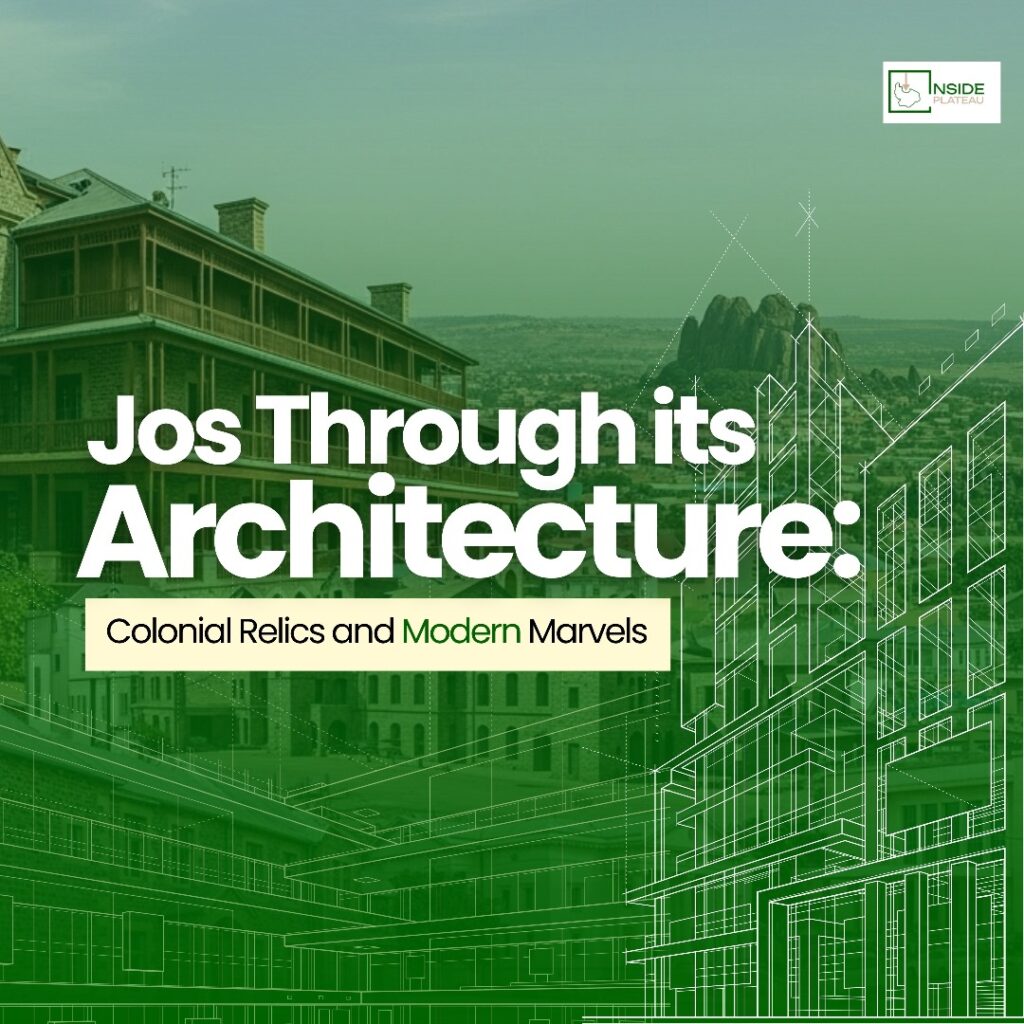
The city of Jos, fondly called “J-Town” or the “Tin City,” is more than just a state capital lying comfortably on a high plateau; it is undoubtedly a living museum of rich architectural history. Unlike the other major cities in Nigeria, the urban narrative of Jos is told through its buildings. This offers an appealing contrast between the sun-baked Relics of the tin-mining era and the bold, contemporary statements of Modern Marvels. This duality in architecture is a very powerful attraction for tourists seeking for cultural depth and an appealing signal for investors recognizing a city built to last.
The Colonial Foundations: Echoes of the Tin Rush (1903 – 1960)
The unique architecture in the central part of Jos is purely a legacy of the colonial British administration and the tin mining boom that started in the early 20th century. The high-altitude-climate made Jos to be often referred to as a “miniature Europe”. This made Jos the preferred settlement for the colonialists, and it influenced the distinctive and highly enduring building styles.
The Plateau-Colonial Style: Function and Fortitude
Initially, the colonial architecture was mainly driven by function and the dire need for climate adaptation. This evolved into what is termed the ‘Plateau-Colonial Style’.
Materials of Necessity: The most important feature is the use of local stone and laterite bricks (which gives many old buildings their deep-red hue signature), and use of corrugated iron sheets for roofing. This provided an incredible thermal mass, that keeps the interior of the building cool during the day, and warm at night. This was a necessity given Jos’s sharp temperature swings.
Austerity and Symmetry: Many buildings in Jos, especially administrative offices, residential bungalows in areas like Tudun Wada and Rayfield, and infrastructure like the old Nigerian Railway Corporation (NRC) quarters, places very clear emphasis on symmetry, solid walls, wide verandas (or dakali in the Hausa style), and high ceilings to encourage cross-ventilation.
Landmark Relics: Some iconic colonial structures include the Post Office Headquarters, some old banks, and the original buildings around the Central Business District in Jos(CBD). These structures are not just old buildings; but are markers of history. They tell the story of Nigeria’s industrial past and serve as important heritage sites, ripe and ready for conservation and cultural tourism.
The nature of which these colonial-era structures, have endured and stood firm for over a century, is a quiet, but powerful testament to the structural integrity and foundational strength of construction in Jos. This is a key factor for future investors.
The Cultural Bridge: Vernacular Architecture and Heritage Preservation
Beyond just colonial imprints, the city of Jos serves as a very crucial centre for understanding Nigeria’s indigenously built environment, therefore forming a bridge between the past and the present.
The Museum of Traditional Nigerian Architecture (MOTNA)
At the very heart of this cultural bridge is the Museum of Traditional Nigerian Architecture (MOTNA). It is situated within the National Museum Complex. This significant attraction is an architectural marvel. It showcases exact replicas of important buildings from across Nigeria, including:
The detailed Zaria Mosque style.
The tall Kano Walls replica.
The distinct Tiv-style settlement.
This museum provides a direct education on how the different ethnic groups of Nigeria utilized local materials, adapted to climate, and added cultural values into their homes. For tourists, it’s like having a ‘mini-Nigeria’ tour in one city. While for investors, it highlights the rich, localized architectural pool of talent and the potential for culturally-informed development projects.
The Modern Marvels: Looking Towards the Future
In the modern or post-independence era, the architecture in Jos has adopted a varied and contemporary language. This moves beyond mere functionality and embraces bold design and development.
Tropical Modernism and Contemporary Design
In the mid 20th century, the city of Jos witnessed the introduction of Tropical Modernism—a style that consciously fuses the modern global principles with the local climatic needs (sun shading, open spaces, and natural ventilation).
Public and Institutional Statements: The Key buildings from this era, most especially the government offices, schools, and religious centers, started using reinforced concrete and glass. This creates structures that are more dynamic and forward-looking.
The New Skyline: The growth of Jos South today, and other commercial areas showcases sleek, modern commercial buildings and high-end residential estates. These new developments are characterized by creative facades, sufficient space planning, and contemporary amenities. These demonstrate the city’s readiness to accommodate the demands of a fast growing, cosmopolitan population and modern businesses.
The Aesthetic of Resilience: These modern buildings, mostly constructed with locally sourced, high-quality granite and quarried stone, convey an aesthetic of enduring permanence and rugged beauty that mirrors the surrounding rock formations of the Jos Plateau.
An Architectural Pitch: Why Jos is a Prudent Investment
The unique architecture of Jos is more than just a historical study; it’s a prospectus for investors and also a tourist journey rolled into one.
Architectural Feature: Tourism & Investment Value
Colonial Relics (Stone/Laterite) : This offers unique tourism heritage. It also signals structural stability and history.
High-Altitude Climate: This ensures Low maintenance costs for buildings. It provides natural cooling and reduces utility bills.
The architecture of Jos tells a compelling story. A story of a city founded on industry, naturally preserved by unique geography, and carefully prepared for the future. From the resilience and strength of its colonial-era stones to the very ambitious heights of its modern commercial plazas, the city of Jos offers a unique blend of heritage and opportunity.
Come, invest in the architecture of Jos, and be a part of building the future on the solid foundations of an incredible past.