While hiking through Pankshin, I once ran into a herder. I knew him back in Wamba, Nasarawa State. Curious, I asked what brought him all the way to Plateau State. He told me something simple but powerful. Something that pushed me towards animal farming: Plateau has the best grass for his cattle, and the best weather to go with it. Every dry season, when other places run dry and brown, Plateau’s mountains stay green. Breeding a special kind of grass that grows nowhere else nearby. He did not come here by accident. He came because Plateau already has what his animals need.
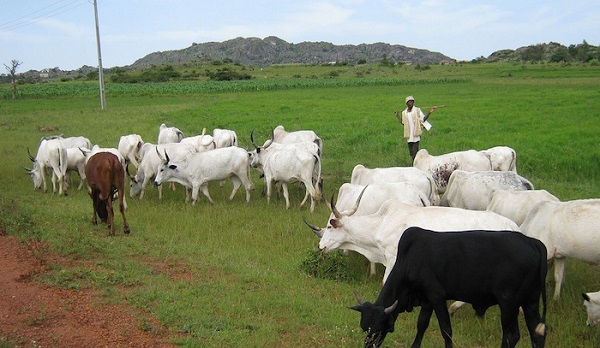
That conversation stayed with me. It is the clearest possible proof that animal farming in Plateau is not a theory. It is already happening, quietly. And led by people who understand this land better than most of us who were born here.
What Nature Already Gave Us
Plateau’s advantage starts with something nobody built: its climate. Sitting at a much higher elevation than most of Nigeria, temperatures here stay far cooler than in the hot lowlands. That matters more than it sounds. Animals under constant heat stress eat less, grow slower, and produce less milk. Plateau’s cooler air spares livestock much of that stress. This is part of why cattle and dairy breeds that struggle elsewhere in Nigeria tend to do noticeably better here.
Add to that Plateau’s water. Rivers, dams, springs, ponds, and underground water run through the state in abundance. In fact, much of Northern Nigeria’s water begins right here on this plateau. Combine cool weather, steady water, and wide stretches of land, and you get exactly the kind of environment that supports serious animal farming. I’m not talking about just backyard chickens and a few goats.
Also Read: Plateau Potatoes: A Taste of Home, Pride, and Prosperity
To be fair, it is not a perfect picture. Some low-lying valleys still deal with seasonal disease risks, and certain farmlands scarred by old tin mining need proper restoration before they can be farmed safely again. But taken as a whole, Plateau’s natural conditions for animal farming remain some of the strongest in the entire country.
Proof It Already Works
This is not just potential on paper. Real animal farming businesses in Plateau already prove the model works.
P-OGAS Farm and Industries, based right here in Plateau, has grown into the largest pig farm in the state, raising healthy livestock at real commercial scale. Businesses like this show that animal farming in Plateau is not a distant dream. It is already producing, already selling, and already succeeding, proof that livestock farming here can compete at a genuinely commercial level.
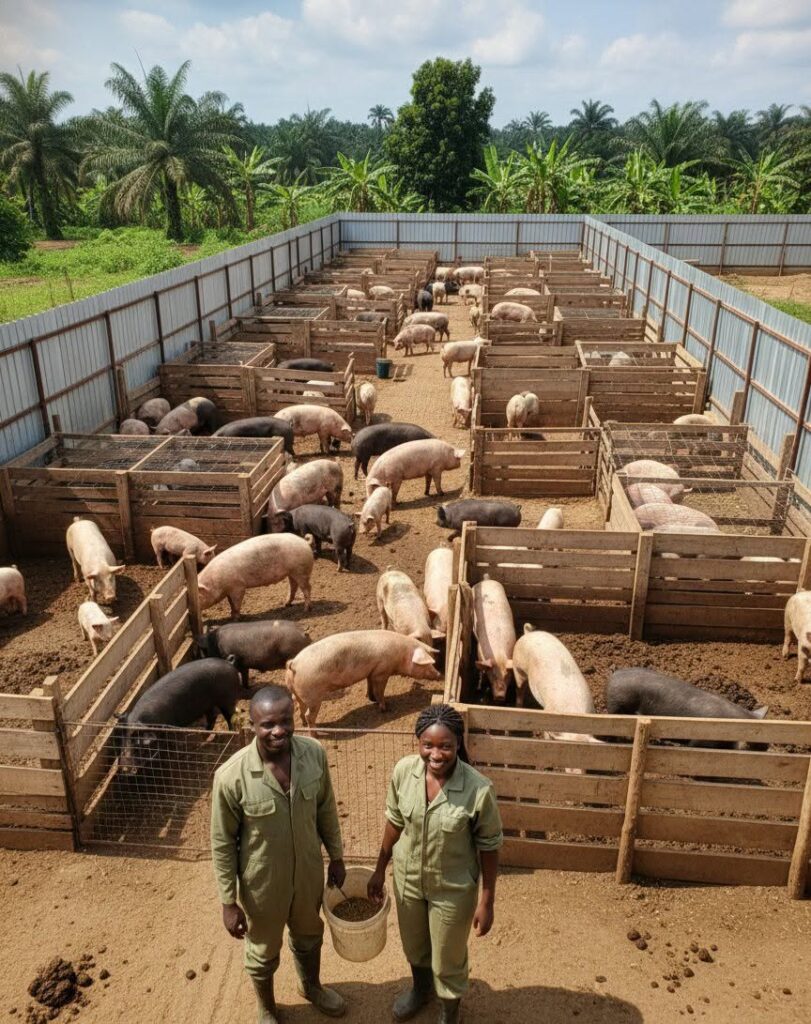
The federal government has taken notice too. Officials have openly described Plateau as Nigeria’s livestock knowledge capital, a status built over more than a century thanks to institutions like the National Veterinary Research Institute and the Federal College of Animal Health and Production Technology, both based right here.
In 2026, the Federal Ministry of Livestock Development unveiled a full roadmap to turn Plateau into the country’s leading livestock production and research hub, backed by real infrastructure. The Wase Grazing Reserve alone holds more than 100,000 hectares of usable land, with roughly 30,000 hectares already earmarked for a modern ranch. In Heipang, a new abattoir is being built to process up to 500 cattle and 500 pigs every single day, replacing outdated, unsafe slaughter methods with a proper, modern system.
This is what serious animal farming infrastructure looks like when a government finally decides to invest in it.
Also Read:BARC Farms Project Yields Bumper Harvest Under Governor Mutfwang’s Youth Empowerment Scheme
The Honest Gap
Here is the part worth being honest about. Despite everything working in Plateau’s favour, the state is not yet Nigeria’s top livestock farming producer. States like Kano, Sokoto, Katsina, and Kaduna currently lead the country in milk output. Plateau ranks strong in pigs and holds solid numbers in sheep and poultry, but it has not yet claimed the national lead the way its natural conditions suggest it should.
The gap is not really about land, weather, or water. It is about people. Too many young Plateau natives quietly chase white-collar jobs in offices, banks, and government, and leave livestock farming to be someone else’s work. Farming is still seen by some locals as a dirty, undesirable job, rather than the serious, profitable business it actually is. Meanwhile, herders from as far as Nasarawa State recognise Plateau’s advantage and act on it, moving their own cattle here every dry season, while many Plateau natives overlook what is sitting right under their feet.
What Closing That Gap Would Take
Turning Plateau’s potential into real national leadership does not require a miracle. It requires a choice.
The clearest starting point is investing seriously in young people. If the state government and private investors put real resources into training and empowering youth in animal farming, rather than pushing everyone toward white-collar jobs that don’t exist in enough numbers anyway, the shift could happen quickly. Livestock farming rewards patience in a way few other businesses do. One goat today can become four within a year. That kind of growth, multiplied across thousands of young farmers instead of a handful of large operators, is how a state builds a real livestock farming economy from the ground up.
What It Would Mean
If Plateau ever fully claims this title, the impact would go beyond money, though the money would be real too. A stronger animal farming sector means higher internally generated revenue, more exports leaving the state instead of imports coming in, and thousands of new jobs across feeding, processing, transport, and trade.
But there is something deeper at stake as well. For generations, many Plateau communities have quietly undervalued the wealth already sitting in their own hands, herds, hills, and pastures. Becoming known nationally as Nigeria’s animal farming capital would not just grow the economy. It would remind Plateau people themselves that they are already sitting on real wealth, not something to import or wait for, but something to raise, multiply, and be proud of.
The perfect conditions really are already here. The only question left is whether Plateau chooses to build on them, or keeps letting someone else’s herder notice first.