
Lot Sunday was living in Lagos when he decided to build a ticket -selling and Event Management App. Most people in his position would have stayed there, close to clients, investors, and the noise of Nigeria’s biggest tech scene. Instead, he came home to Jos and locked in for seven months, building an event app that lets planners sell tickets with ease. No shortcuts, no distractions, just focused work in the city he grew up in. Jos is truly Nigeria’s Digital frontier.
EventLot is a next-generation ticketing and event management platform that lets planners anywhere in the world sell tickets in naira or dollars, receive payments securely and instantly via Paystack or PayPal straight into their own accounts, and check guests in effortlessly with fast, built-in QR code scanning at the door. To use Lot’s app for free, visit: https://www.trueup.io/nigeria
Lot has built websites and apps for multiple brands and businesses. He is a full-stack software developer. His fast growing Company, Lot Consults specializes in developing modern web and mobile applications. For more information, visit: https://LotConsults.Com
Around the same time Lot was building his apps, another young Plateau builder, Divine Favour Yusuf, was pouring his own time and savings into Sausy and Swift. It’s an app connecting customers to restaurants and dispatch riders, now nearly ready to launch.
Neither of them needed Lagos to build something real. That, in a single sentence, is the story of Nigeria’s digital frontier quietly forming in Jos, one that is starting to look less like an accident and more like a pattern.
Why Jos, and Why Now
Jos was never supposed to be a tech story. It is better known for cool weather, tin mining history, and quiet hills. But a mix of low cost of living, a large student population, and a growing appetite for digital skills has slowly turned the city into fertile ground for young builders.
The University of Jos has become a real talent pipeline, with an active Computer Science department and an entrepreneurship centre offering business incubation and robotics training. Alongside it, PICTDA, the state’s ICT development agency, runs Code Plateau, a bootcamp that has trained residents in software engineering and data science and placed many of them directly into tech company internships.
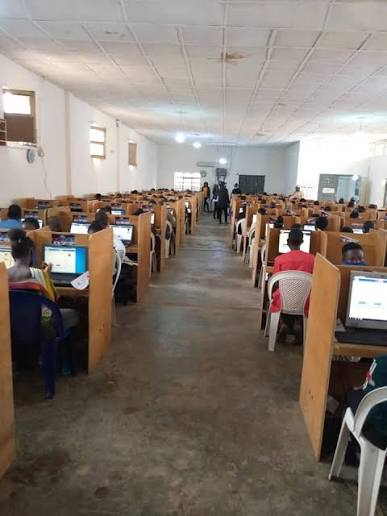
Government policy has followed the same direction. In 2023, Plateau signed a Right-of-Way executive order waiving fees for broadband companies, an attempt to make the state one of West Africa’s most connected ICT hubs. The Digital Bridge Institute is also reportedly building a dedicated ICT campus in Jos, focused on training, research, and job creation.
None of this happened by accident. It is the quiet infrastructure behind Nigeria’s digital frontier taking shape in a city few outsiders associate with technology. Every policy signed and every classroom opened is another small brick in that foundation.
The People Making It Real
Infrastructure means little without people willing to use it, and Jos has no shortage of them.
nHub, based at the TAEN Business Complex, is Northern Nigeria’s pioneering technology centre, recently marking ten years of training developers and incubating startups. A short distance away, Axia Hub in Rayfield has trained over 200 students and helped incubate more than ten startups, focused on web development, UI/UX, and data science. Moses Amama, a faculty member at Startup Lab, mentors founders and works to connect young builders who might otherwise be working in isolation. On the more experimental end, Blockfuse Labs, a genuine Jos-based company, trains blockchain developers and works to grow Nigeria’s Web3 community from right inside Plateau State.
These are not isolated success stories. They are starting to look like an ecosystem, exactly the kind of pattern that separates a real tech hub from a handful of lucky individuals, and exactly the kind of pattern that turns a quiet city into a genuine piece of Nigeria’s digital frontier.
Remote Jobs in Jos: The Quiet Engine
Ask any young person building a digital career in Jos what they actually do day to day, and the answer is rarely software alone. Social media management, content creation, remote writing, graphic design, and web design have become common, accessible entry points into the digital economy. An average young person in Jos now often has at least one digital skill they can sell, frequently to clients who are not even in Nigeria.
This is where remote jobs in Jos matter most, and where Nigeria’s digital frontier stops being a slogan and starts being someone’s actual monthly income. A young person no longer needs to move to Lagos or Abuja, or even leave the country, to earn from international clients. Lower living costs stretch further, meaning income earned from remote jobs in Jos, even modest income, goes noticeably further than the same amount would in a bigger, more expensive city.
Content creation in particular has grown into something close to a small local industry of its own, alongside steady freelance work in writing and design. For many young Plateau residents, remote jobs in Jos are no longer a backup plan. They are the plan, and they are quietly becoming one of the clearest proofs that Nigeria’s digital frontier does not begin and end in Lagos.
Also Read: Plateau IS Positioning Its Youth for the Future of Work
The Honest Reality Check
None of this means Jos has arrived. It hasn’t, and pretending otherwise would do the story a disservice.
Internet reliability remains a real problem. One visitor to the city described trying three different network providers, with none proving dependable. Power supply issues still force digital workers to plan their day around outages rather than deadlines, a small daily tax on anyone trying to hold down remote jobs in Jos. Jos also does not yet have a strong local corporate economy to support mid-sized software companies. Most local income still comes from agriculture, trading, and civil service work, not enterprise tech spending, which means many young digital workers are earning from outside the state or outside the country entirely, rather than from local businesses.
There is also a quieter worry among people who run local training programmes. Many graduates of local bootcamps eventually leave for Lagos, Abuja, or fully remote international roles once their skills reach a certain level, a familiar brain drain pattern many secondary cities face. The honest picture is one of real, growing capability running slightly ahead of the local opportunities and investment needed to fully hold onto it. That gap is precisely what will decide whether Jos becomes a lasting part of Nigeria’s digital frontier or simply a place gifted talent quietly passes through.
A Symbol Worth Watching
If Jos’s digital frontier needs one symbol, it might be NASENI’s InnovateNaija Challenge, a nationwide competition inviting young Nigerians to build real engineering and manufacturing solutions, with a state-level winner selected from each part of the country, Plateau included.
Locally, Jos Tech Fest has already pulled in a large, visible crowd of young innovators, developers, and founders, the kind of turnout that makes it obvious this is not a handful of exceptional individuals working alone. Step into spaces like nHub on an ordinary afternoon, and it becomes hard to argue that Jos’s youth are anything less than serious about building. Moments like these are what make the idea of Nigeria’s digital frontier feel less like a headline and more like something happening in real time.
Also Read: Jos Tech Ecosystem: Building The Next Generation of Inventors
The Verdict
Jos is not the next Lagos, and it does not need to be. What is forming here is something more specific: a low-cost, high-talent corner of Nigeria’s digital frontier, exporting skill and service to the rest of the country and the world, one freelancer, one app, one small team at a time. It may not yet be the loudest part of Nigeria’s digital frontier, but it may well be one of the most durable.
Somewhere in Jos right now, Lot Sunday’s app is either live or close to it. Divine Favour Yusuf’s app is preparing to launch. Neither of them waited for Jos to become famous for technology before deciding to build here anyway. That, more than any statistic, is what a digital frontier actually looks like in its early days. Not a finished success story, but a city quietly filling up with people who decided not to wait.
For Rempote Jobs in Jos, visit: https://www.trueup.io/nigeria