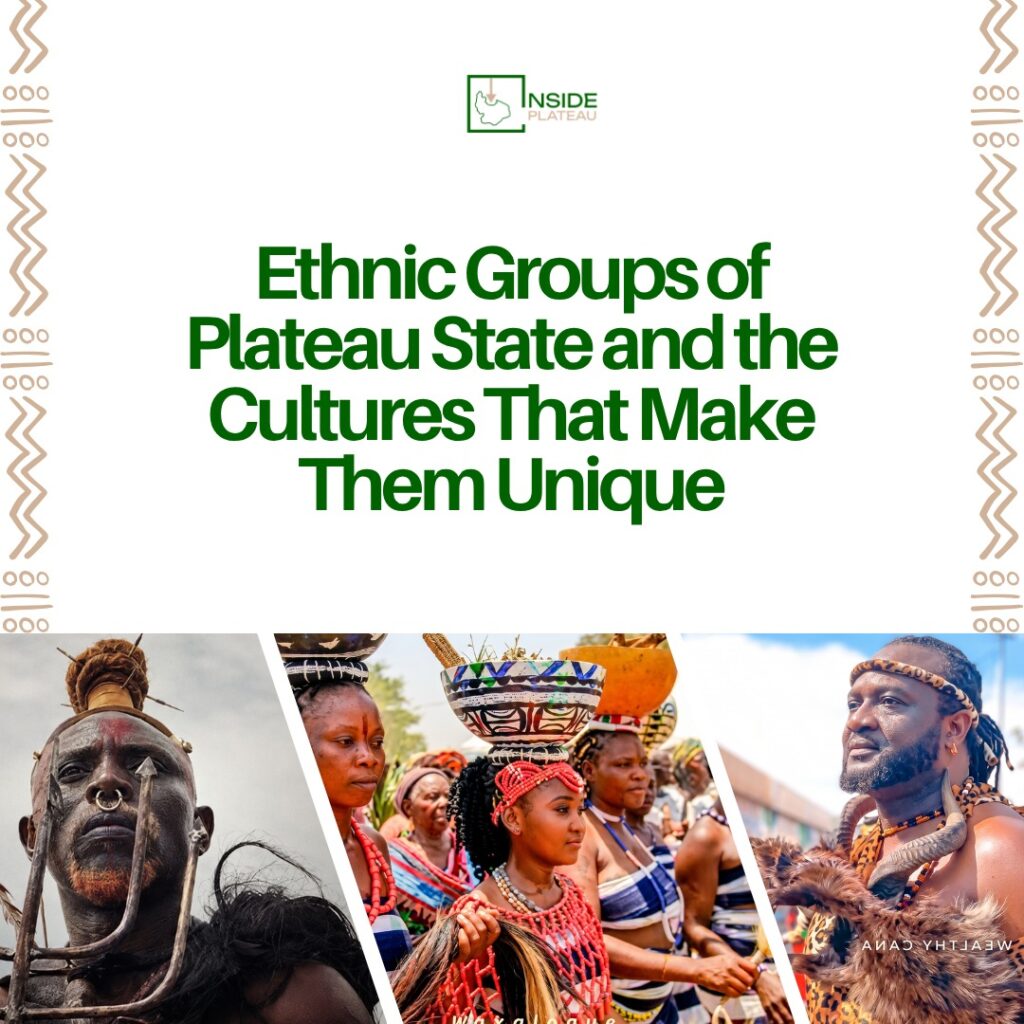
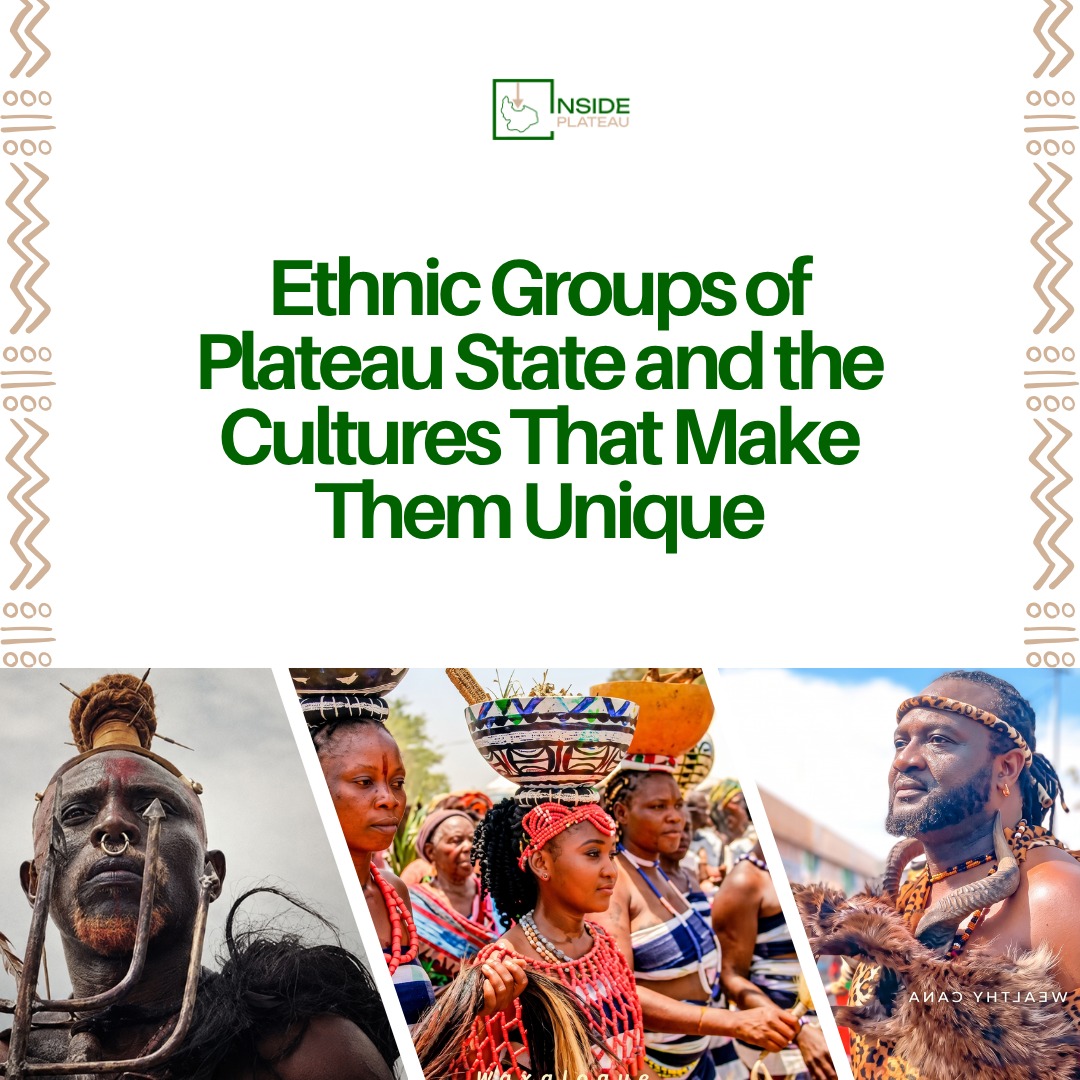
To outsiders, Plateau State, is beautiful, with over 50 ethnic groups, cool weather and rocky hills. To those who live there, it is a living museum of nations within a nation.
Also Read: Hilltop Hotel Pankshin: Tourism Asset Faces Decline
With over 50 distinct ethnic groups sharing one state, Plateau is unlike anywhere else in Nigeria. Historians and anthropologists have long marvelled at how such a dense concentration of peoples — each with their own language, traditions, festivals, and identity — could coexist in such a compact highland geography. Some have jokingly called it the place where the peoples of the Tower of Babel came to settle. And yet, what is most remarkable about Plateau State is not its diversity. It is its peace.
This is the story of what makes each of those peoples unique — and what quietly binds them all together.
The People of the Highlands
The Jos Plateau rises dramatically from the surrounding lowlands, its cool temperatures and rocky terrain shaping everything from architecture to agriculture, from spiritual belief to social organization. Long before colonial boundaries were drawn, the Plateau’s highlands had already become home to dozens of distinct peoples — the Berom, Afizere, Anaguta, Mwaghavul, Ngas, Tarok, Goemai, Ron-Kulere, Irigwe, and many more — each carving out a civilization adapted to this unique landscape.
The Berom are perhaps the most widely recognized of Plateau’s indigenous groups, spread across Barkin Ladi, Jos South, Jos North, and Riyom. Their traditional institutions are anchored by the Gbong Gwom Berom — the paramount ruler — supported by district heads and councils of elders. The Afizere, concentrated in Jos East and Jos North, carry their own proud lineage under the Etsu Afizere leadership structure. The Anaguta, one of the original settler groups of the Jos area, maintain a compact chiefdom in Jos North with deep roots in the city’s identity. Further north, the Mwaghavul dominate Mangu and Pankshin, while the Ngas hold strong in Kanke and Pankshin. To the south, the Tarok — one of the largest groups in the state — span Langtang North, Langtang South, Mikang, Kanke, and Wase, led by the Long Taarok alongside powerful lineage councils.
What these groups share is a landscape that demanded ingenuity. The rocky terrain that made large-scale conquest difficult also became a canvas for terrace farming, a fortress for cultural survival, and a spiritual home. Mountains are not just geography on the Plateau — they are identity.
Festivals: Where the Culture Comes Alive
There are moments that remind you why culture is worth preserving. One of those moments happened in Pankshin during the Morgi Festival of the Ngas people.
The masquerades arrived in waves — some towering and draped in dry brown leaves, others smaller and dressed in vivid green. Children did not run away. They ran toward the masquerades, calling out for them to give chase, laughing and scattering before circling back for more. Around them, true traditional worshippers stood in reverent silence, seeing in the masquerade the faces of their ancestors. Others danced freely, wearing customized headbands with “Morgi” printed across them. And in the crowd, among the dancing and the drumming and the dust, were visitors who had flown in from overseas — people who had crossed continents just to witness this festival.
Standing in that crowd, one thought was inescapable: these people love their culture.
The Ngas are not the only ethnic group in this devotion. Across Plateau State, festivals are living institutions. The Nzem Berom, held annually in April, is a major celebration of Berom cultural identity — featuring colorful traditional dances, warrior displays, and the showcasing of their signature maroon, red, and dark blue attire. The Mandyɛng pre-planting festival ensures the farming season begins with spiritual alignment. The Ichen Festival of the Tarok brings the community together through drumming, dance, and storytelling. The Pang Mat Long Festival of the Qua’an Pan people involves a sacred barefoot ascent of a mountain to seek ancestral blessings for the harvest — a ceremony so solemn that, according to tradition, those with evil in their hearts will not survive the climb.
In 2026, the state government announced plans for a mega Plateau State Festival of Arts and Culture, aimed at uniting all ethnic nationalities under one celebration and positioning the state as a cultural tourism destination. It is an ambition that the richness of Plateau’s traditions more than justifies.
What Plateau Sounds and Looks Like
There is a sound unique to the Plateau. It begins with the deep, haunting call of the Vwong — the long traditional wooden horn played by the Afizere and Berom — designed to carry across rocky valleys. It layers over the frantic beat of skin-headed drums, the metallic shimmer of ankle rattles called Ishgili, and the thunderous resonance of the Irigwe’s biange and ishinge drums. In Horom communities, xylophones add an entirely different texture. Taken together, the soundscape of Plateau’s festivals is unlike anything else in Nigeria.
The visual identity is equally striking. Berom warriors in traditional attire — the Shuga Berom — appear at cultural events carrying locally made weapons, their colors a bold combination of maroon, red, and blue. The Ngas flaunt their cultural colors at every opportunity, not waiting for festivals to do so. Even on an ordinary day in Jos, you will spot an Ngas person in their signature colors — a cap, a scarf, a fabric detail that quietly says: I know where I come from.
The Afizere have found a powerful contemporary ambassador in Arin Izere, one of Plateau State’s most celebrated artists, who consistently appears in public wearing beautifully crafted Afizere traditional attire. In an era when many young Nigerians are distancing themselves from indigenous dress, Arin Izere makes it aspirational. Culture, when worn with pride, becomes its own form of advocacy.
Food, Fire, and the Taste of Home
No culture reveals itself more honestly than through food. On the Plateau, what people eat tells you everything about who they are, where they came from, and what they value.
Acha — the ancient grain also called fonio or hungry rice — is perhaps the Plateau’s most culturally significant food. It grows in poor, rocky soils where other grains fail, and harvesting it demands intense communal labor. For the Berom, Ngas, and Irigwe, serving acha to a guest is among the highest signs of respect — you are giving them something that cost your community real effort. It can be prepared as Tuwon Acha or cooked like jollof, but its deeper meaning is always the same: resilience, community, and pride.
Gwete — a thick savory porridge made from roughly ground acha, garden eggs, sorrel leaves, and local spices — is a Berom staple that is almost always prepared in massive clay pots, meant to feed entire extended families and neighborhoods after a harvest. It is inherently a communal food. You cannot eat Gwete alone.
Then there is Bubal — a dish rooted in Bokkos and Mwaghavul tradition that deserves far wider recognition than it currently receives. Rich, distinctive, and deeply satisfying, Bubal is the kind of food that should have crossed ethnic borders long ago. Interestingly, Gote — once a dish closely associated with the Berom — has already made that journey. Today, all Plateau tribes eat Gote. It is a quiet story of cultural exchange, one plate at a time.
Burukutu and Pito — local beverages brewed from fermented sorghum or millet — carry social and spiritual weight across Tarok, Goemai, and Ngas cultures. A shared calabash of Burukutu at the village square is how disputes get resolved, alliances are sealed, and community consensus is reached. It is less a drink than an institution.
The Truth About the Mwaghavul Bride Price
Few aspects of Plateau culture attract as much outside commentary as the Mwaghavul Ethnic group’s bride price tradition. The criticism is familiar and loud: the Mwaghavul ask for too much. It is, many claim, an excessive financial burden placed on the groom’s family.
What those critics rarely mention — and what those closest to the tradition know well — is what happens next.
The Mwaghavul bride’s family gives back more than they receive. Bedroom furniture. Kitchen equipment. Sitting room furniture. Enough food to last a year. The gifts flow generously toward the new couple, often exceeding in value whatever was paid as bride price. No other ethnic group on the Plateau gifts a bride and groom as lavishly as the Mwaghavul. The complaint is loud; the generosity is quiet. But those who have witnessed a Mwaghavul traditional marriage know the full picture — and it is one of extraordinary communal investment in a new family’s foundation.
The Farmers Who Feed a Nation
There is a region of Plateau State that does not make headlines often but feeds the country quietly and consistently. Southern Plateau — spanning Shendam, Qua’an Pan, Mikang, and the broader lower Plateau regions — is home to some of the greatest farmers in Nigeria.
The Tarok, Goemai, and other southern Plateau peoples have cultivated this land across generations, producing millet, guinea corn, yam, and a range of vegetables on terrain that demands skill and patience. The Jere people are particularly known for their traditional terrace farming techniques, adapting centuries-old methods to the hilly landscape. The Irigwe of the middle belt take advantage of the plateau’s unique climate to grow Irish potatoes, maize, and vegetables that supply markets across the north.
In these communities, land is not just an economic resource. It is ancestry. It is memory. It is identity. The farming traditions of southern Plateau are inseparable from the spiritual beliefs, seasonal festivals, and social structures of the people who practice them. For an investor looking at Plateau State’s agricultural potential, this is not just heritage — it is a proven foundation for agribusiness at scale.
Over 50 Ethnic Groups. Remarkable Peace.
It would be dishonest to write about Plateau State’s ethnic diversity without acknowledging the tensions that have occasionally surfaced — political rivalries, land disputes, the pressures of identity in a complex federal system. These are realities that the state, its people, and its government continue to navigate with seriousness.
But here is what is equally true, and far less often acknowledged: Plateau State, with over 50 distinct ethnic groups sharing one geography, has not experienced a major ethnic clash between its indigenous peoples. That is a remarkable achievement. In a country where ethnic fault lines have torn communities apart, Plateau’s diverse peoples have — through hospitality, intermarriage, shared markets, and deeply rooted respect for one another — built something worth protecting.
Walk through any Plateau market and you will hear Hausa, English, Berom, Ngas, Tarok, and several other languages blending fluidly. Attend any significant funeral, wedding, or festival and you will find food from multiple ethnic traditions on the same table. The diversity of Plateau is not merely demographic — it is practiced, daily, in the warmth with which strangers are received.
Every ethnic group on the Plateau, regardless of size or prominence, shares one defining trait: hospitality. It is perhaps the single most consistent cultural thread running through all 50-plus peoples. You are always welcome on the Plateau. That is not a tourism slogan. It is a way of life.
A Living Museum, Still Writing Its Story
Somewhere in Plateau State tonight, a drumbeat, a church hymn, and a cattle bell are sounding at the same time — and together, they tell the story of a place unlike anywhere else in Nigeria.
The cultures of the Ethnic Groups inPlateau State are not museum pieces. They are living, breathing, evolving traditions — worn on the body, cooked in the pot, danced in the street, sung at the graveside, and passed quietly from grandparent to grandchild in languages that the rest of the world will never fully know. They are practiced by farmers who have never stopped feeding their neighbors, by masquerade dancers who still know what the leaves mean, by artists like Arin Izere who dress in their heritage like armor, by Mwaghavul families who quietly furnish an entire home for a newly married couple and say nothing about it.
Plateau State does not need to invent a cultural identity for investors, tourists, or the world. It only needs to open the door — the way it always has — and let people in.
The rest speaks for itself.
https://www.elexbio.com/culture-plate-types-and-usage-considerations.htmlAlso Read