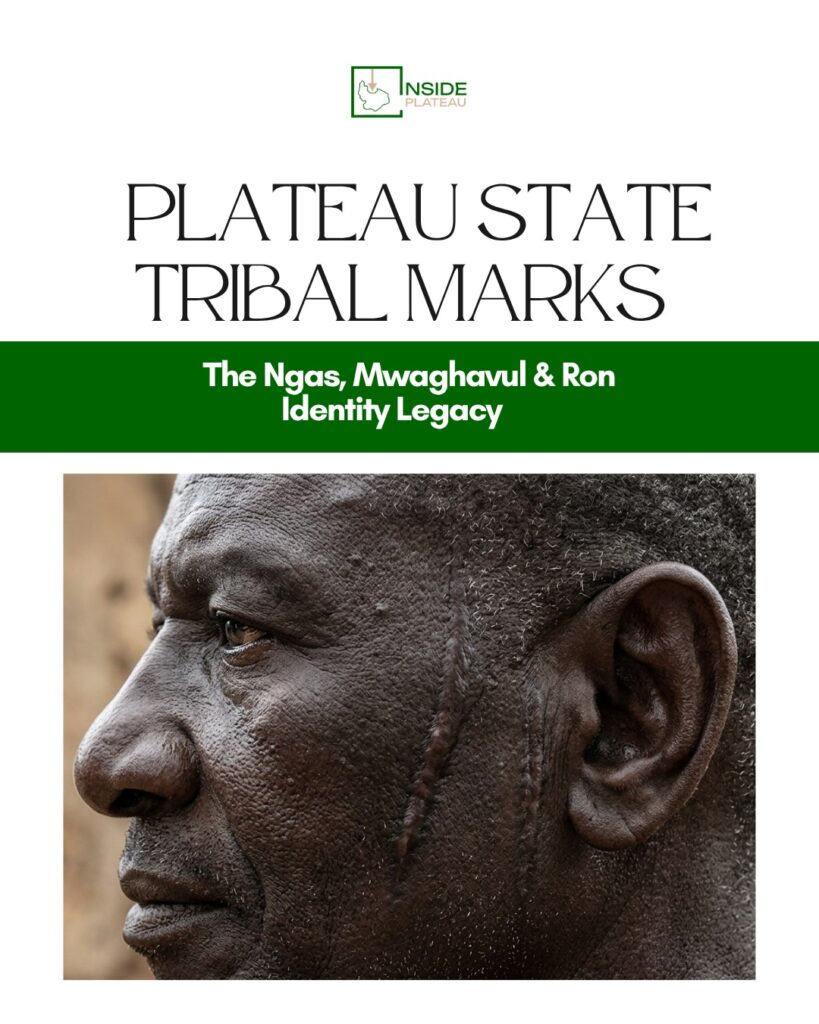
In Plateau State tribal marks were not put on the face to scar, but were put there to say: I know who I am, and the world will know it too. Even before a word was spoken, the face had already spoken.
On the Plateau, you could meet an elder on the road, and when you study the lines on his cheeks, you’ll know exactly where he came from. I mean; his people, his history, even his place in the world. Long before passports and identity cards, Plateau State tribal marks carried identity in its purest form.
The world has long admired the markings of distant cultures; from Polynesia to East Africa to southwestern Nigeria. But here on the Jos Plateau, among the Ngas, Mwaghavul, and Ron, exists a system just as profound. A system that deserves a place on that global stage. Plateau State tribal marks are not relics of the past; they are living expressions of memory and belonging.
These tribal marks were never just decoration, but a language. They functioned as an identity passport, a clan registry, and spiritual protection that is carved into the body in a way that could never be forged. At their core, Plateau State tribal marks were a declaration: we belong.
Also Read: Acha (Fonio): Plateau’s Special Grain
What Are Tribal Marks?
It is important to note that before the blade ever touched the skin, the meaning had already been agreed upon.
What many today call scarification, our people understood as something deeper. They understood it as a binding between the living, the ancestors, and the land itself. In this sense, Plateau State tribal marks were not random cuts but intentional symbols rooted in memory and meaning.
Across the Plateau, among Chadic-speaking communities with shared ancestral ties to the Lake Chad and old Bornu regions, these marks formed part of a wider identity system—one that traveled with the people and found refuge in the highlands.
To wear them was to carry your origin with you. Not in your mouth, but on your face.
Ngas Tribal Marks: Geography Written on the Skin
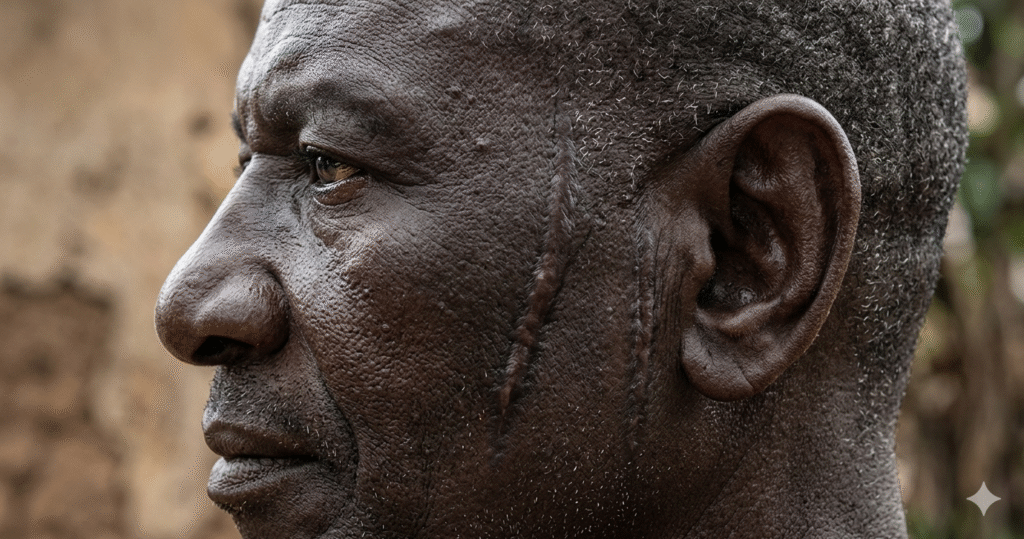
Among the Ngas people that are spread across Kanke, Pankshin, and Kanam, the face became a map. Their contribution to Plateau State tribal marks reveals just how precise identity could be.
Their traditional marking, known as bak chal, often appeared as distinct lines running from the ear toward the jaw. To the untrained eye, they were simple cuts. But within the system of Plateau State tribal marks, each line spoke clearly.
There is a saying among the Ngas: “One mark, one word.” Each incision communicated something. Either your settlement, your lineage, your belonging.
In a region of over 50 ethnic groups, these marks removed uncertainty. You didn’t have to ask, “Where are you from?” The answer was already there. Clear, permanent, and unmistakable.
Mwaghavul: A 900-Year Journey Etched in the Face
If the Ngas marks mapped geography, the Mwaghavul dimension of Plateau State tribal marks carried history.
The Mwaghavul ethnic group trace their roots to a migration from the Lake Chad basin between the 12th and 14th centuries. That journey lives on through their markings and is preserved as part of the broader story of Plateau State tribal marks. It was an epic movement of horsemen.
The Mwaghavul ethnic group arrived not just as settlers, but as skilled riders and warriors, passing through territories, including Ngas lands, before establishing themselves. Their experience became embedded in identity.
Often represented by three long horizontal or slightly curved lines across the cheek, these marks are more than identifiers. They are monuments.
To see them is to witness the end of a journey that began nearly 900 years ago. A journey carried not just in stories, but in flesh.
Ron: The Ceremony Behind the Scar
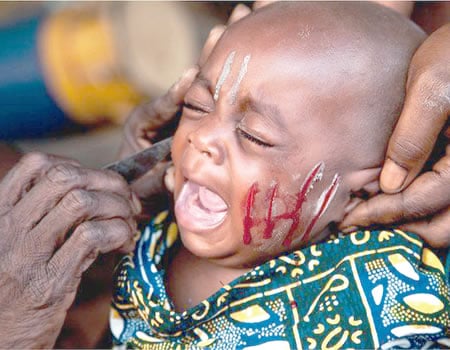
For the Ron people of Bokkos, tribal marks were never just about identity but about transformation. You did not simply receive the mark. You entered into it.
Marking was tied to initiation into adulthood, responsibility, and into community. Within the wider meaning of Plateau State tribal marks, the Ron tradition emphasizes preparation, endurance, and acceptance.
Pain was not avoided; but was embraced as proof of strength. And after the blade came something just as important: community, celebration, recognition, and belonging.
Oral traditions speak of communal gatherings, songs of encouragement, and feasting that followed. Events like Nahwai still reflect that same spirit of unity.
The mark, then, was not just protection, but a passage.
Beyond Plateau: A Shared Nigerian Language of Identity
Across Nigeria, different cultures developed their own systems of marking identity on the body. Within this broader context, Plateau State tribal marks hold a distinct place.
For instance, among the Yoruba people, facial ilà served as lineage identifiers. In parts of the north, scarification also played roles in identity and protection.
However, the Plateau’s expression stands out. This is because, it is rooted in shared Chadic ancestry and shaped by migration, terrain, and community life.
They are quieter in global conversation, but no less meaningful.
The Modern Question: When the Mark Fades, What Remains?
Today, a shift is visible. When you walk through Jos, Bokkos, or Pankshin, you will see fewer physical expressions of Plateau State tribal marks. The practice is fast fading.
Modern education, religion, and evolving perspectives have slowed it. Many young people no longer carry these markings on their skin.
But identity has not disappeared. It has simply shifted.
You see it in names, language, music, fashion, digital expression, and in the way young people still say, “This is where I’m from.”
So the question is not whether the mark is dying.
The big question is: Is it evolving?
Also Read: https://tribuneonlineng.com/tribal-marks-art-caught-tradition-modernity/
A Legacy That Cannot Be Erased
Honestly speaking, Plateau State tribal marks were never just about the cuts, but the meaning behind them.
And meaning does not disappear. It evolves, adapts, and it finds new ways to live.
So even if fewer people wear these marks today, the identity they represent remains unbroken. It is carried in memory, in pride, and in belonging.
We may no longer all wear the mark on our skin, but we still carry it. And in the end, that is what matters most
Also Read: Plateau Potatoes: A Taste of Home, Pride, and Prosperity