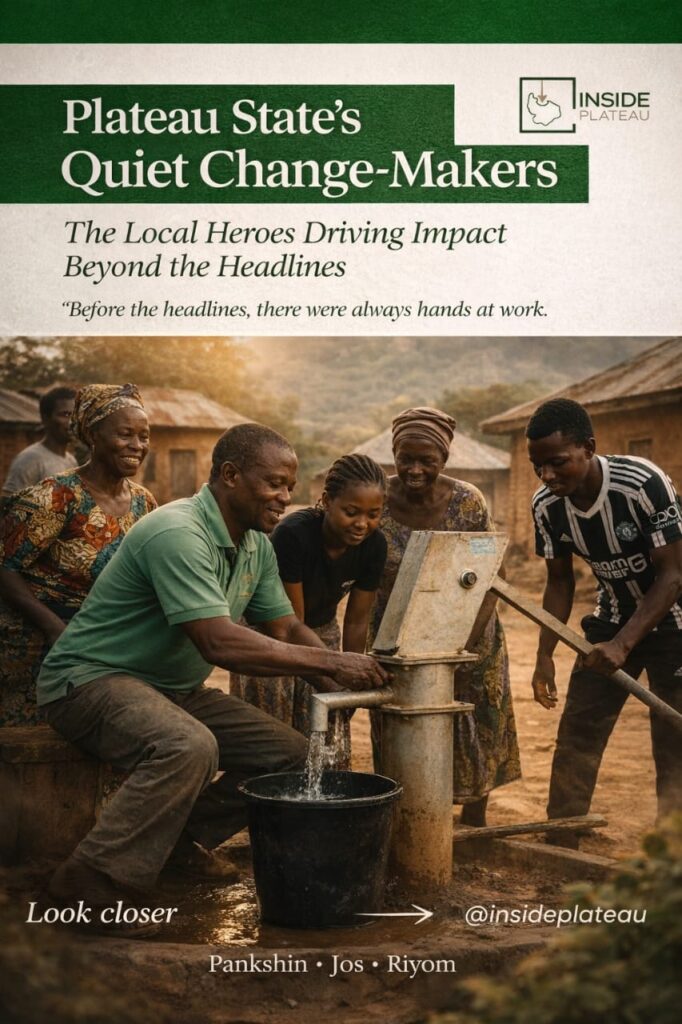
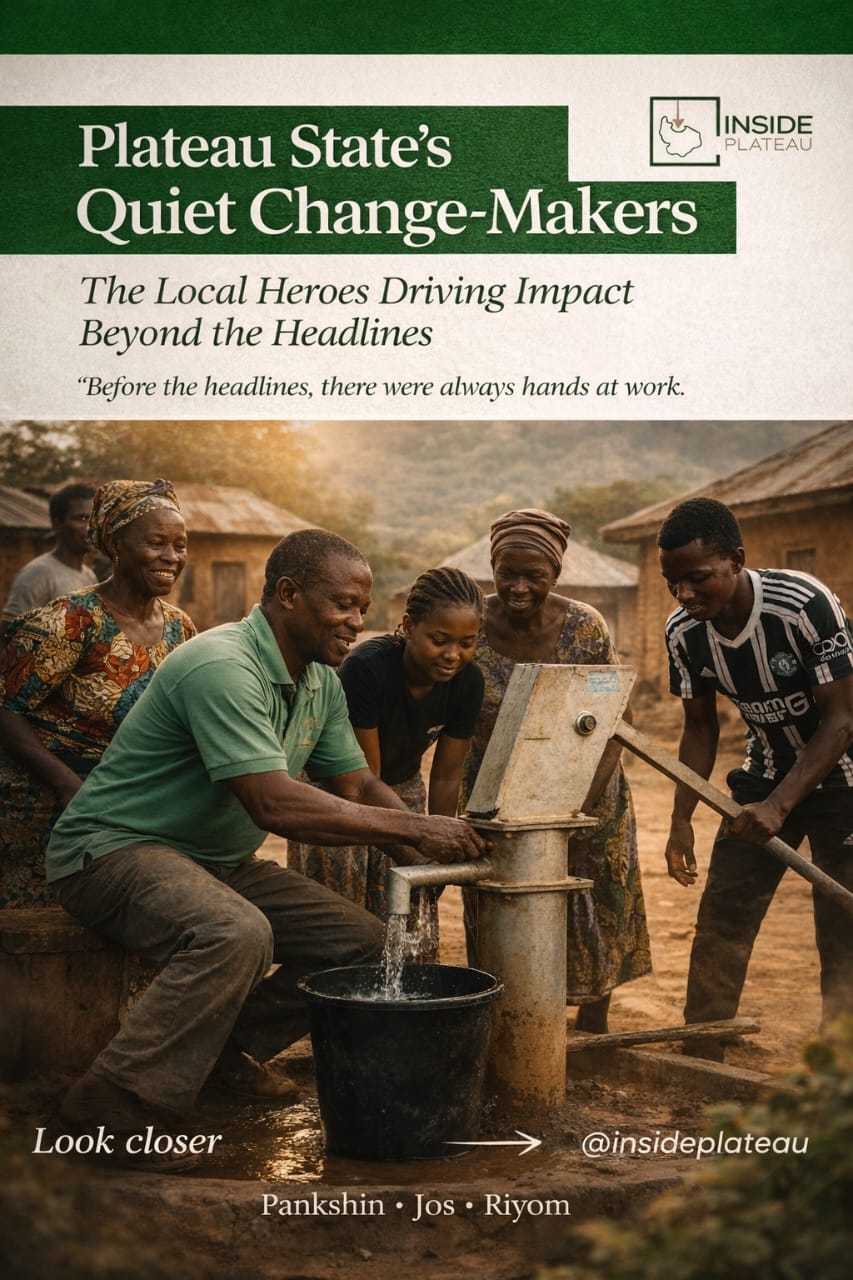
The mist rolls in early with the local heroes making impact in Plateau State.
And at the time the sun begins to press against the hills, the valleys are already awake because you’ll see goats shifting against wooden fences, women sweeping red earth into neat, deliberate patterns, water being drawn before the heat settles in. Nothing about it feels urgent. Nothing announces itself.
But work is already happening.
This is where you begin to understand that the most important stories are not the ones that arrive loudly. They are the ones that continue, with or without attention.
Across Plateau State, far from the rhythm of breaking news, there are people building something steadier. They are not waiting for recognition, not performing for visibility, but are simply doing the work that keeps communities intact.
They are the local heroes making impact in Plateau State, and their influence is easier to miss than it is to measure.
I. Local heroes making impact in Plateau State. The Ground That Remembers
In Plateau State, land is not just geography. It is memory.
In places like Pankshin, Mangu, and Riyom, the soil carries evidence of both conflict and continuity. Crops have failed here before. Communities have fractured. People have left. Many have also stayed.
Those who stayed learned something different about survival.
They learned that stability does not come from outside systems alone. It comes from small, repeated acts. Acts like; planting again after a bad season, rebuilding trust after a disagreement, choosing to remain when leaving would be easier.
This is where the story of local heroes making impact in Plateau State truly begins: not in extraordinary events, but in ordinary decisions made consistently over time.
II. Rewriting the Narrative of Need
For many years, national conversations about Plateau State has been shaped by reports focused on conflict, intervention, and recovery. While those realities cannot be ignored, they are incomplete. This is because they leave out the people who are not waiting for help from elsewhere.
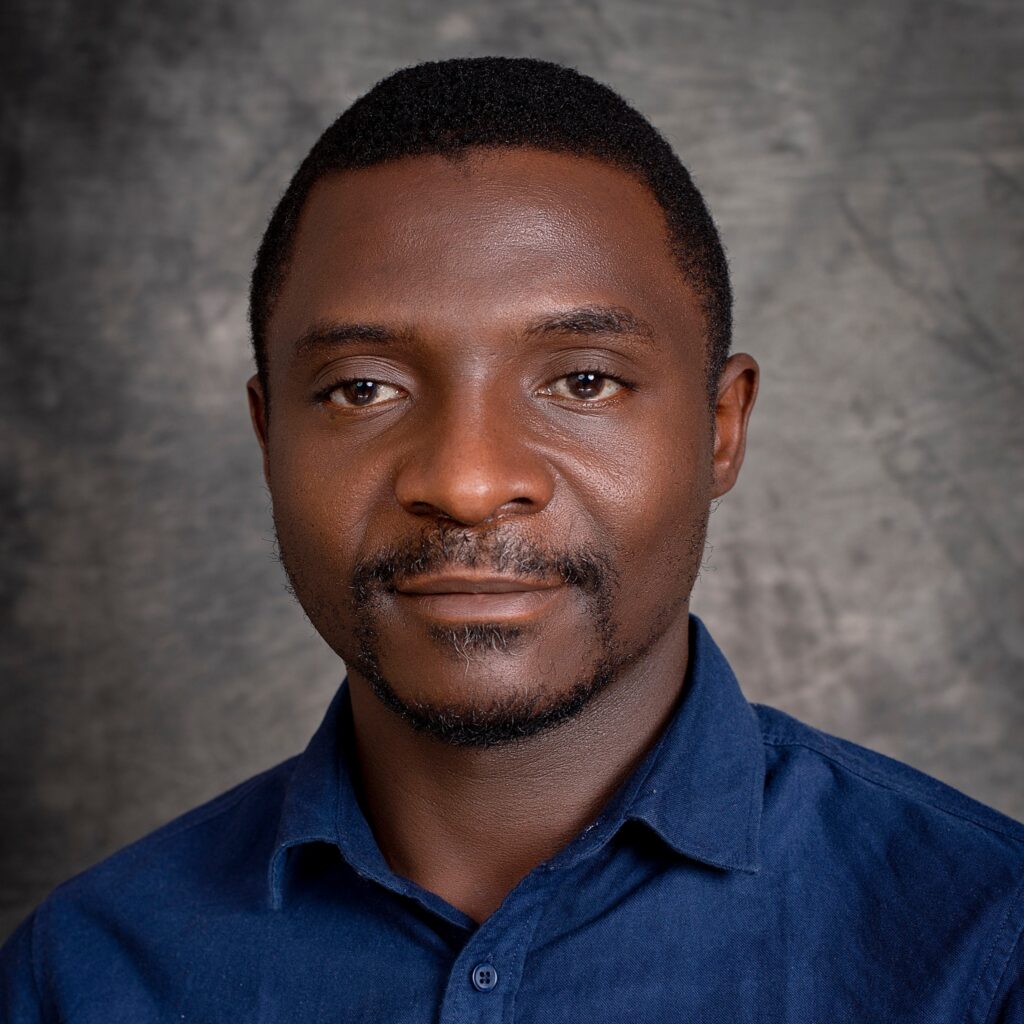
Take Jacob Choji Pwakim, founder of the Youth Initiative Against Violence and Human Rights Abuse. His work focuses on bringing together individuals from communities that have experienced conflict, creating space for dialogue and shared storytelling.
In one of his workshops in Jos, participants who had once seen each other only through suspicion sat in a circle and spoke—slowly at first, then with increasing openness—about what they had lost and what they still hoped to rebuild.
There is a point, he once noted in an interview, “when people realise that holding on to anger costs more than letting it go.”
This kind of work rarely trends. It is patient, uncomfortable, and it takes time. But it is also the kind of work that allows communities to continue.
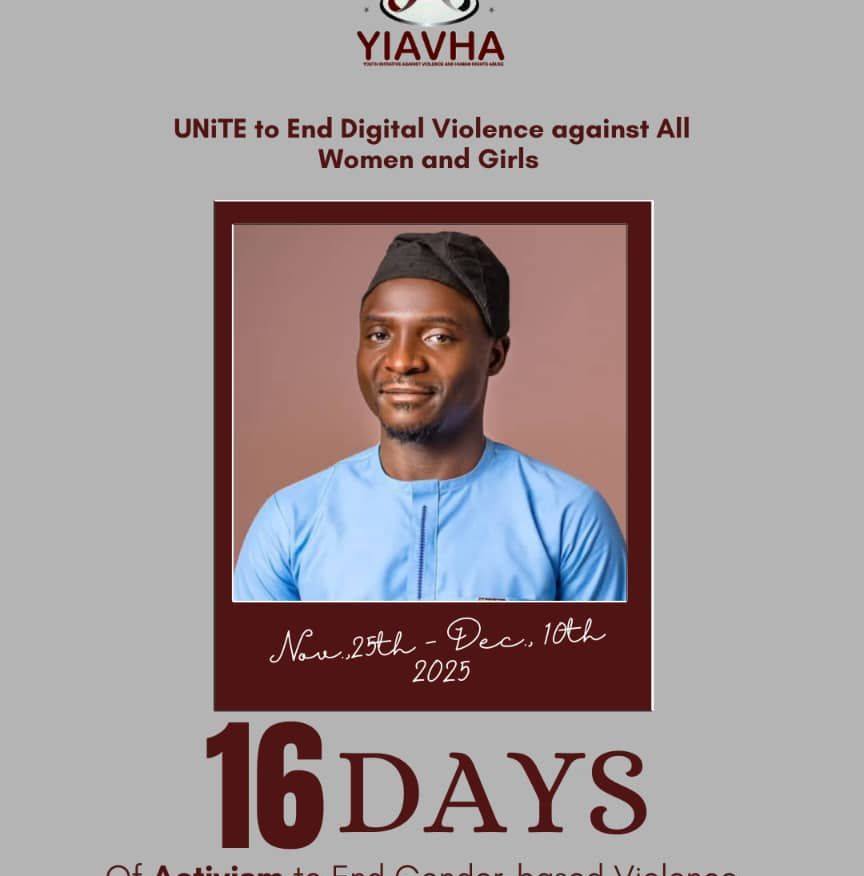
And it is why individuals like him are among the local heroes making impact in Plateau State.
III. Care Where It Is Least Visible
It’s true that mpact is often measured in numbers. In how many people reached, how much funding secured, how many programs launched.
But some of the most meaningful contributions resist easy measurement.
In Jos, Rahab Yachat Kwaja has focused her efforts on elderly women and widows—groups that are frequently overlooked in development conversations. Through the Help the Age Initiative, she works to create economic opportunities and support systems that restore dignity as much as they provide income.
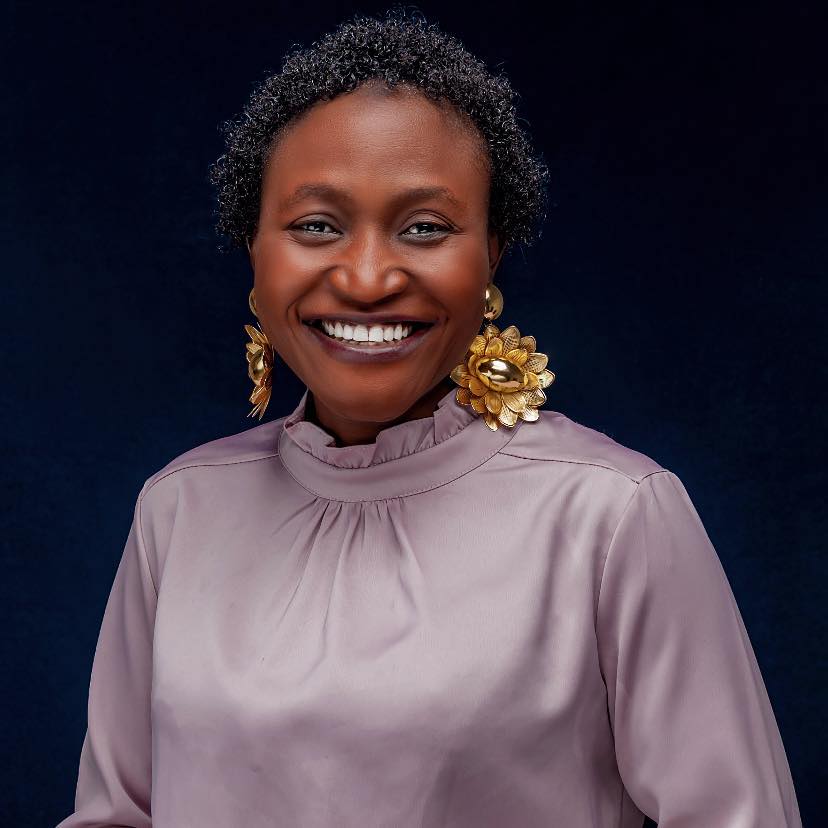
In a small gathering space on the outskirts of the city, women who had once depended entirely on others now manage cooperative savings groups, small businesses, and community support networks.
The changes are not dramatic. They are not designed for headlines but they matter.
And they are part of the reason why people like Kwaja are counted among the local heroes making impact in Plateau State.
IV. From Conflict to Custodianship
When you go to Riyom and Bassa, you’llystories of conflict are well documented. What is less often told are the stories of those who have chosen to step away from violence and into responsibility.
Men like Danlami Madaki once stood on opposite sides of conflict. Today, they work within their communities as advocates for peace, using their experiences to guide others away from the paths they once took.
His credibility does not come from titles. It comes from history.
When they speak about the cost of violence, they do so with authority that cannot be taught in classrooms. When they call for restraint, people listen—not because they are perfect, but because they are understood.
His journeys reflect a broader truth: that transformation is possible, and that those who have witnessed the worst outcomes are often best positioned to prevent them.
This is another dimension of the local heroes making impact in Plateau State—those who turn personal history into communal protection.
V. Agreements That Hold Without Cameras
In Jos South, a group of women gathered not long ago to do something simple and difficult: to sit with farmers and herders and reach an agreement.
The Bangai peace pact did not attract national headlines. There were no major broadcasts. But within the communities involved, it represented something significant—a commitment to coexistence, negotiated through conversation rather than conflict.
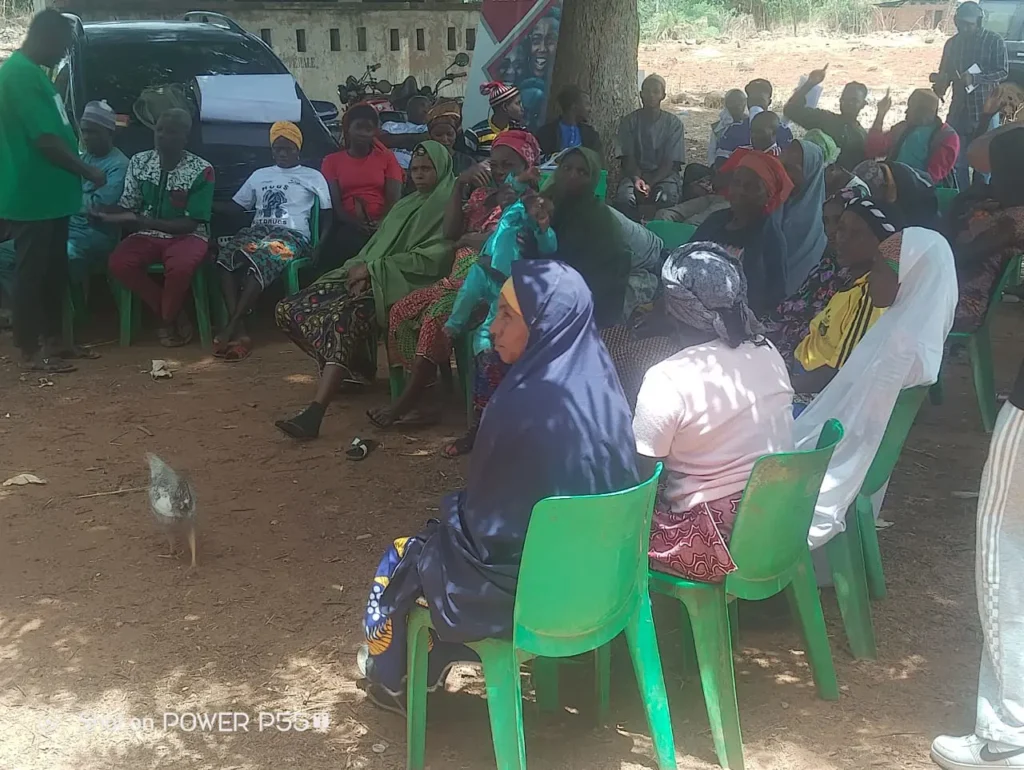
The group of women called The Bangai peace pact facilitate the discussions on peace, but are not widely known outside their communities. Their names rarely appear in reports. But their work holds.
These are part of the network of local heroes making impact in Plateau State whose contributions are measured not by visibility, but by durability.
VI. Work That Begins at Home
In Pankshin Local Government of Plateau State, on a piece of land that does not immediately stand out, a different kind of project is taking shape.
An unfinished structure has been repurposed. A water source, once unreliable, has been stabilised. A small pond is being developed to support food production. What exists now is not a finished system, but the beginning of one.
There are no large teams. And no external branding. Just a handful of people working consistently. A handful of people adjusting, learning, improving.
It is easy to overlook something like this, especially when compared to larger initiatives.
But this is how many sustainable systems begin: small, local, and responsive to the realities of the land.
And it is why even efforts like these belong within the broader story of local heroes making impact in Plateau State.
Also Read: Youth in Tourism: New Faces of Plateau State’s Cultural Future
VII. Creativity as Continuity
In Jos, a different kind of work is happening.
Young creatives in Jos (filmmakers, writers, and musicians) are beginning to shift the tone of their output. Instead of replicating dominant narratives, they are drawing more directly from their own environments and personal experiences.
Stories set in familiar streets, dialogue that reflects real speech patterns, and music that carries both modern influence and local identity.
This is not just artistic preference. It is cultural preservation because, when people see themselves reflected accurately in the stories they consume, something stabilises. Identity becomes less dependent on external validation.
This, too, is part of the ecosystem of local heroes making impact in Plateau State—those who shape how a place understands itself.
VIII. Why This Work Matters Now
There is a growing recognition, both within Nigeria and globally, that large-scale solutions alone are not enough.
Communities are complex. They require approaches that are flexible, locally informed, and sustained over time.
The individuals highlighted here are not operating on a global stage. Not backed by extensive infrastructure. How, they are very effective.
This is because they understand the environments they are working in, and are accountable to the people around them. Because their work is not separate from their lives.
This is why the role of local heroes making impact in Plateau State is becoming increasingly important—not just for the region, but as a model for how meaningful change can occur elsewhere.
IX. A Different Way of Seeing
It is easy to look at a place through the lens of its most visible challenges.
It is harder (but more accurate) to look at it through the lens of those who are actively addressing those challenges every day. This requires a shift in attention.
The shift in attention that is required to address challenges can mean little things like, noticing the farmer who continues planting despite uncertainty, or noticing the teacher who shows up even when resources are limited, or the mediator who spends hours in conversation so that others do not have to experience conflict.
These individuals are not separate from the larger narrative of Plateau State. In fact, they are the ones shaping it. I mean, the local heroes making impact in Plateau State, and their work continues whether it is acknowledged or not.
X. The Work Continues
Whenever the mist is fully lifted in Plateau State, it simply means that most of the morning’s work is already done. What remains is not a dramatic reveal, but a continuation.
These same hands will return tomorrow, same efforts will be repeated, and progress will remain steady, even if it is not immediately visible.
And over time, that steadiness will accumulate into something larger than any single initiative. Something that does not need to announce itself to be real.
Also Read: The Rise of Small Businesses in Jos: Why More People Are Starting Something
CLOSING
It’s not every story that needs to be loud to matter because stories are built through repetition, commitment, and an understanding that lasting impact is rarely immediate. Plateau State is full of such stories.
And at the centre of them are the local heroes making impact in Plateau State—individuals whose work, though often unseen, continues to shape the present and define the future.