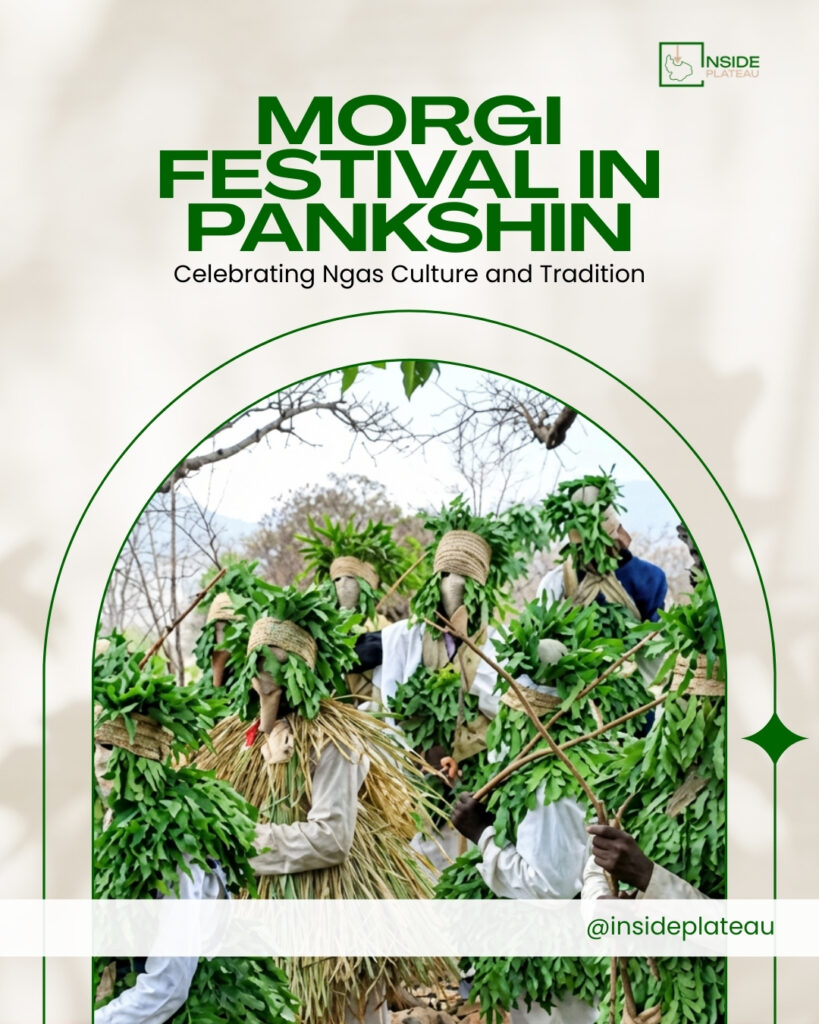
If you were anywhere near Pankshin last weekend, you didn’t need anyone to tell you something special was happening. You could feel the energy of the Morgi Festival in Pankshin it in the drums, the colours, the movement, and the energy of a people who are unapologetically proud of who they are.
The Morgi Festival in Pankshin isn’t just another cultural event you attend and go home from. It’s something you experience. Something you carry with you long after the masquerades have disappeared and the music fades.
However, this year’s Morgi Festival, held on Saturday 14th and Sunday 15th March 2026, felt bigger, louder, and even more intentional.
Also Read: Plateau Traditional Chiefs & Royal Drummers Uncovered
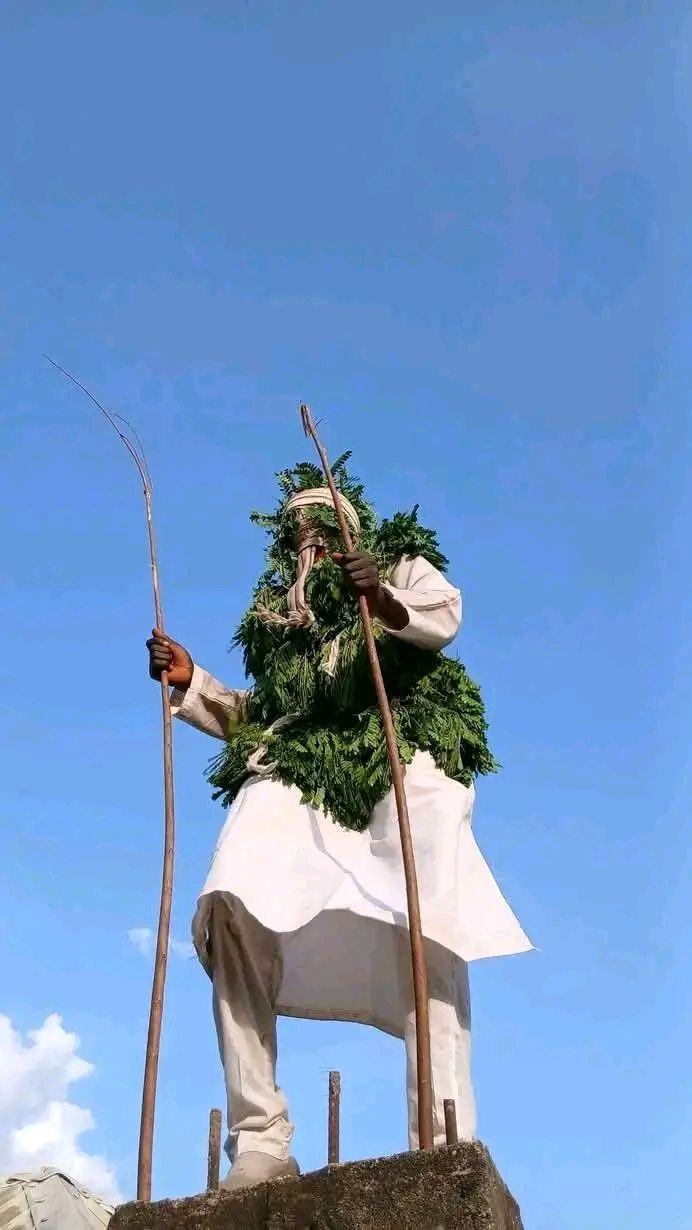
Morgi Festival in Pankshin and the Power of Ngas Culture and Tradition
Let’s be honest—many communities talk about preserving culture. But the Ngas people live it. From their dressing to their food, from the way they show up to festivals to how they involve their children and youths. The culture and tradition of the Ngas people isn’t merely stored in memory. It is really practiced daily.
And during the Morgi Festival, that identity becomes almost impossible to ignore. You see it in the traditional outfits, you hear it in the chants and local dialect, and you feel it in the unity. This is not staged, but it’s very real.
Morgi Festival: More Than Celebration, It’s a Statement
After spending time at the Morgi Festival in Pankshin, one thing became clear very quickly—this isn’t just about celebration, it’s about continuity. It’s about saying, “This is who we are, and we’re not losing it.”
This message will hit even harder when you realise how many young people are involved. Not just watching, but participating, dancing, filming, leading, and learning.
The Role of Youths in the Festival
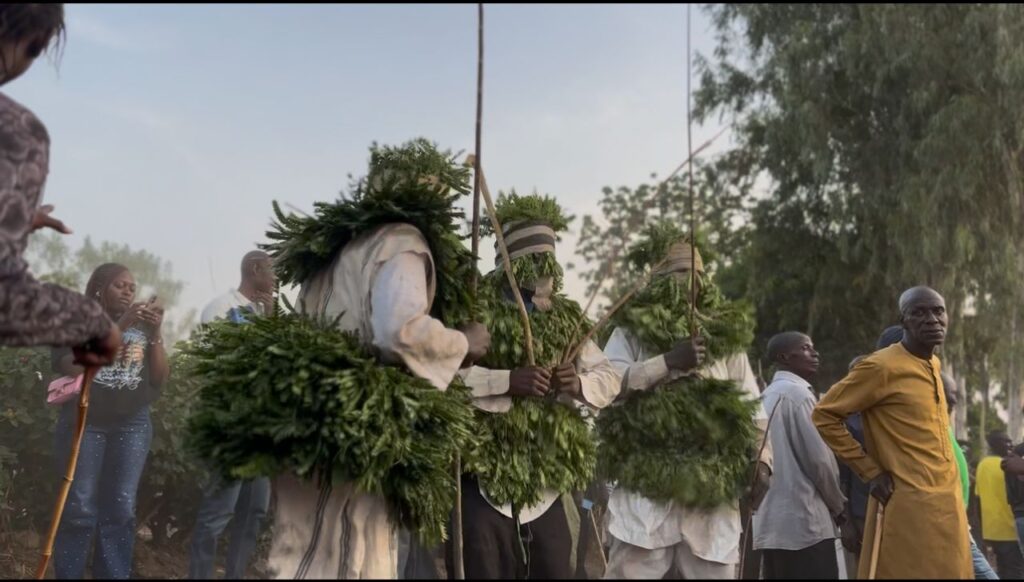
Here’s what stood out the most for me this year—phones. And there were hundreds of them. At almost every corner of the Morgi Festival in Pankshin, you’d see young people with their phones raised, capturing moments. Masquerades moving through crowds, traditional dances, laughter, food, and community.
And within hours—literally hours—those same moments were everywhere on the internet:
TikTok, Instagram, Facebook, and WhatsApp statuses. Now think about that for a second.
The Ngas culture and tradition is truly evolving—not by replacing the old ways, but by documenting them.
The youths are actually doing what museums cannot do in real time. They’re preserving culture as it happens. Not in silence, but loudly.
And this truly matters because a culture that is seen, will survive.
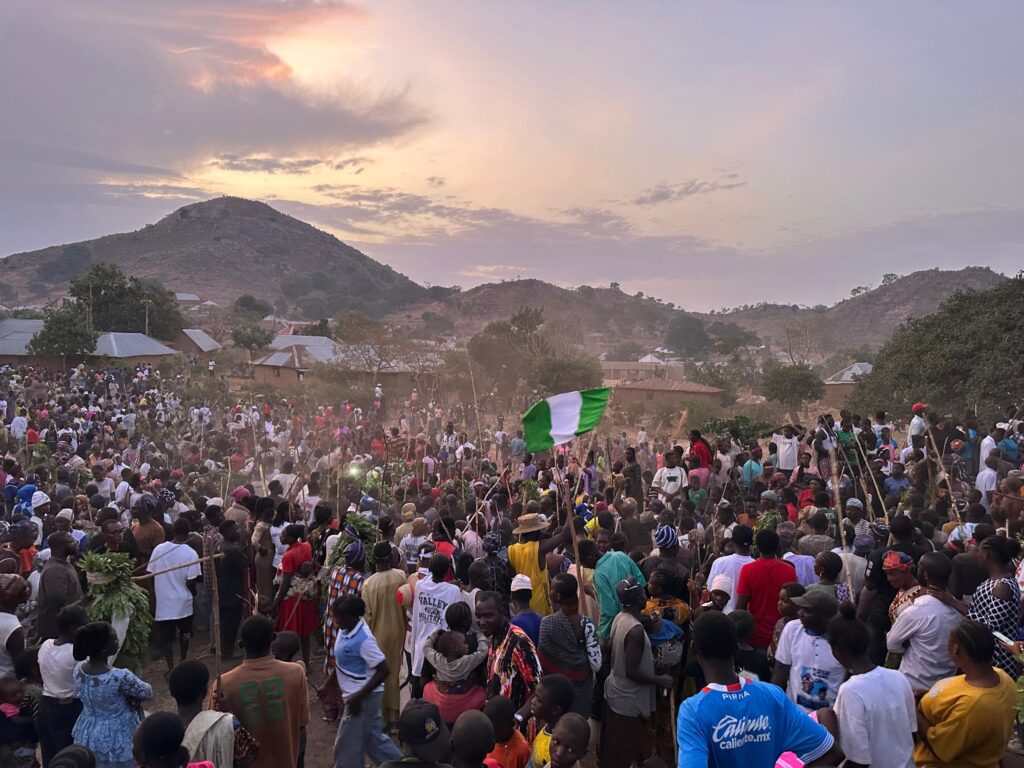
Understanding the Meaning behind the Morgi Festival
To fully understand the Morgi Festival in Pankshin, you have to go back to the land, to farming, and to harvest.
From the words of the Madaki of Kurum, Nde Sati Dechi Tongshak, the process starts long before the festival itself.
After harvesting millet from the farm, it is being tied and carried home by women. The men help them to place the harvest on their heads. On the way home, some masquerades known as ‘Naru’ attempt to pick from the harvest from the women.
And here’s where it gets more interesting. The portion of the harvest that the masquerades successfully pick from the women is considered bad. Then, what is left is what is considered worthy. It is then stored, consumed, and celebrated.
It’s symbolic. Deeply symbolic.
The Morgi Festival isn’t just about abundance. It’s also about quality, purity, and about gratitude for what remains after life takes its share.
And that message applies far beyond farming.
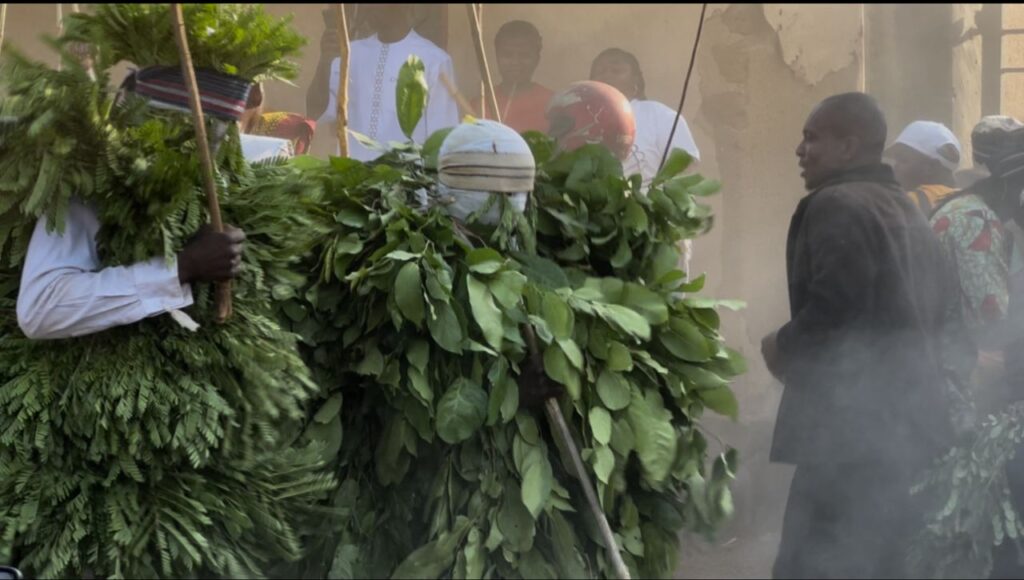
Masquerades, Ancestors, and Protection
Before the masquerades return, something else happens. Food is being prepared. The food is not meant for the people—but for the ancestors.
As explained by the Madaki, portions of stored food are cooked by the chiefs to invite the masquerades back—who are seen as guardians sent by the ancestors to protect both farmers and their harvest.
This is where Ngas culture and tradition reveals its depth. The masquerades are not just performers. They are protectors, symbols, and spiritual messengers.
And during the Morgi Festival in Pankshin, their presence reminds everyone that the harvest is not just physical—it’s spiritual too.
Morgi and the Message of Productivity
Strip everything down, and at its core, the Morgi Festival in Pankshin is about one thing: productivity.
You plant, you nurture, you wait, you harvest, and then—you celebrate. It’s a cycle that rewards patience, discipline, and hard work.
In a time where quick success is glorified, festivals like this quietly remind us that real growth still follows a process. This message alone makes the Morgi Festival in Pankshin more than cultural—it’s instructional.
Food, Unity, and Open Doors
One of the most beautiful parts of the Morgi Festival in Pankshin is how inclusive it is. You don’t need an invitation, you don’t need a title, and you don’t even need to belong to the traditional worship system.
During Morgi festival, homes are open, food is shared, and drinks flow.
When you arrive, you’re specially welcomed; you eat, you laugh, and you connect. And just like that, strangers become part of the celebration.
This is where Ngas culture and tradition speaks loudest—not in the rituals, but in the hospitality because unity isn’t preached. It’s practiced.
How Morgi Festival in Pankshin Is Selling Plateau State to the World
Let’s talk about something important—visibility. The world today is searching for authenticity, real culture, real stories, and real people. That’s exactly what the Morgi Festival offers. No filters, no forced performances, just raw, living tradition.
When those videos started spreading online after the festival, they weren’t just content. They were invitations. Invitations to visit, to experience, and to understand. And this is how Plateau State wins.
Not just through policies or campaigns—but through moments like this that feel real.
Tourism thrives on authenticity. And the Morgi Festival delivers that effortlessly.
Why Morgi Matters Beyond Ngas Land
Here’s the bigger picture. When one community boldly celebrates its identity, it gives others permission to do the same.
The energy from the Morgi Festival in Pankshin doesn’t stop in Pankshin. It travels to other ethnic groups in Plateau State, to other states, and to younger generations who may have felt disconnected from their roots.
Festivals like Morgi often send a simple message: Your culture is not outdated, it is your pride. And in a time where many traditions are fading away, that message is needed.
Morgi Festival as a Living Archive of Ngas Culture and Tradition
Museums are great tools for preserving history. But festivals like the Morgi Festival? They live it. Because, every dance step, every masquerade appearance, and every shared meal is all documentation.
And right now, with the involvement of youths and social media, that documentation doesn’t disappear. It multiplies.
This is how Ngas culture and tradition stays alive—not by resisting change, but by adapting without losing its core.
Final Thoughts on the Morgi Festival in Pankshin
If you are to ask anyone who attended, they’ll probably struggle to explain it fully. Mainly because, the Morgi Festival is not something you summarize, but you feel: in the rhythm of the drums, in the pride of the people, in the stories passed down without being written. And maybe that’s actually the real takeaway.
In our world that is really moving fast, where identities are constantly shifting, the Ngas people have chosen to stand firm, to celebrate loudly, to preserve intentionally, and to welcome openly.
And in doing so, they’ve given Plateau State—and Nigeria—something very valuable: A reminder that culture, when protected and celebrated, doesn’t fade, it grows.