
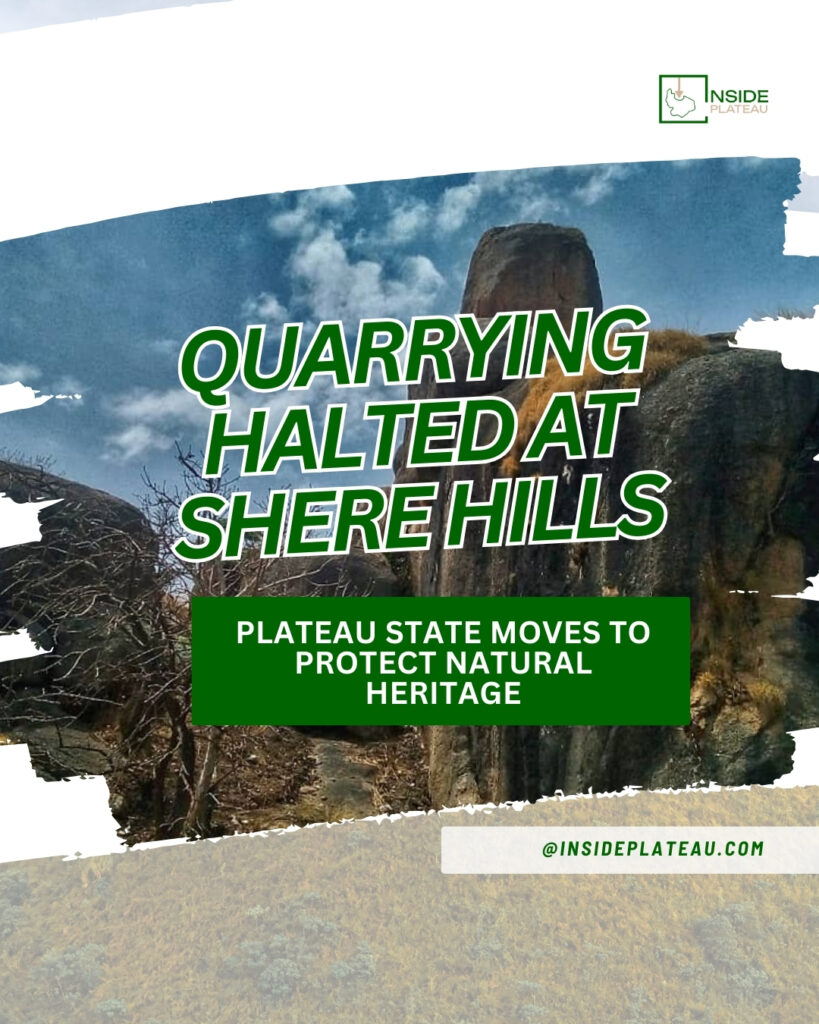
If you’ve ever been to Shere Hills, you already understand something very important: places like this aren’t just ordinary landscapes. They carry memory, identity, and in many ways, the future of Plateau State Tourism.
That’s why the recent decision to halt all activities connected to Quarrying at Shere Hills is more than just a policy move, it’s a big statement. A message that some assets are simply too valuable to destroy for short-term gain.
And if you’ve been following the conversation closely, you’ll know this didn’t happen overnight. The warning signs were already there. Local observers, tourism advocates, and environmental voices had started raising the alarm. The concern was simple but serious: if Quarrying at Shere Hills continued unchecked, one of the most iconic landscapes in Plateau State could gradually disappear.
That would have been a cultural loss, an environmental loss, and very honestly, a tourism loss. So when the Plateau State Government stepped in and brought the activity to a stop, many people saw it as a bold and necessary intervention — one that protects Shere Hills not just for today, but for the generations that will come after.
And when you zoom out and look at the bigger picture, you begin to see why protecting Shere Hills matters so much.
Also Read: Nigeria’s Tomato Capital: The Story Behind Plateau’s Red Gold Nigeria’s Tomato Capital: The Story Behind Plateau’s Red Gold
Shere Hills: A Natural Landmark Worth Protecting
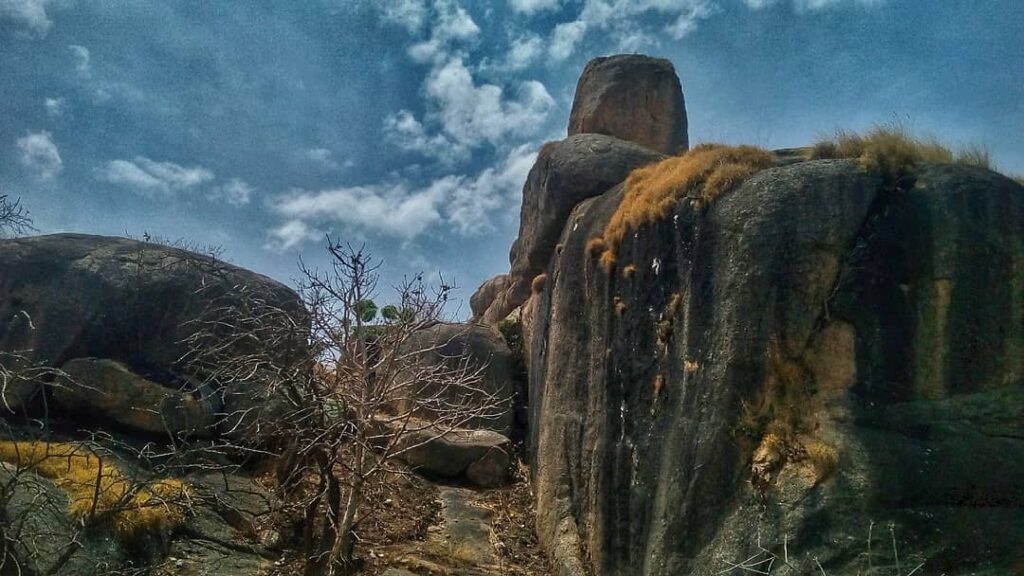
Anyone familiar with Jos knows that Shere Hills is not just another rock outside town. Located around the Jos East axis, the hills form one of the most recognizable natural formations in Northern Nigeria.
The terrain rises dramatically from the Plateau landscape. Jagged granite peaks. Rolling rocky ridges. Natural viewpoints that stretch across miles of countryside.
In fact, Shere Hills is widely known as one of the highest points in Nigeria, with elevations reaching over 1,800 meters above sea level. That alone makes it geographically significant. But the real value goes beyond altitude.
For decades, hikers, tourists, photographers, and adventure enthusiasts have been drawn to Shere Hills because of its unique terrain. The climb itself is part of the attraction. You move through winding paths, climb over natural rock formations, and eventually reach vantage points where the Plateau landscape unfolds beneath you.
And when the sun sets from the top of Shere Hills, it’s something you don’t forget easily.
Moments like that are exactly why the conversation around Plateau State Tourism often includes the hills as a major potential attraction.
But all of that potential can disappear quickly if the environment isn’t protected.
The Threat: Quarrying at Shere Hills
Before the government stepped in, concerns had begun circulating around the growing activity linked to Quarrying at Shere Hills.
At first, the signs were subtle. Small extraction operations. Gradual rock removal. Equipment showing up in areas that previously remained untouched. But anyone who understands how quarrying works knows the long-term implications.
Quarrying is not a small disturbance. It involves drilling, blasting, cutting, and transporting massive quantities of rock. Over time, this process reshapes entire landscapes.
If Quarrying at Shere Hills had continued unchecked, the consequences would have been severe:
• Irreversible damage to the rock formations
• Increased erosion and environmental degradation
• Destruction of hiking paths and natural viewpoints
• Loss of scenic value critical to Plateau State Tourism
In other words, the features that make Shere Hills special would gradually disappear. And once that kind of natural landmark is destroyed, it cannot be restored. That’s what made the situation urgent.
How Discover Jos Raised the Alarm
Interestingly but not surprisingly, one of the voices that helped bring attention to the issue came from the tourism advocacy community.
The platform Discover Jos had started highlighting the risks associated with Quarrying at Shere Hills, drawing attention to how the activity could undermine the long-term tourism potential of the area.
Their message was very straightforward. Plateau State is known for its natural landscape; cool climate, rocky hills, waterfalls, and scenic terrain. These features are the backbone of Plateau State Tourism. Destroying them for short-term extraction would be like dismantling your own economic opportunity.
The advocacy sparked conversations among residents, environmental observers, and tourism promoters. Because once people understood what was at stake, the issue became impossible to ignore.
Protecting Shere Hills was no longer just an environmental argument. It was also an economic one.
The Government Steps In
Then came the decisive moment. The State Government recognizing the growing concerns and the long-term risk to the landscape, moved to halt activities associated with Quarrying at Shere Hills.
This decision immediately shifted the trajectory of the conversation. Instead of waiting until the damage became irreversible, the government acted early. And that early intervention is crucial in environmental protection.
Stopping Quarrying at Shere Hills means the hills will remain intact. The natural formations stay preserved. And the state will retain one of its most powerful natural assets.
In many ways, this move signals something important about governance priorities. It shows that development does not have to come at the expense of heritage. Sometimes the smarter decision is simply protecting what already exists.
Why Shere Hills Matters for Plateau State Tourism
Now let’s talk about the bigger picture. Tourism works best when a destination has unique experiences to offer. Not only generic attractions, but places people can’t find anywhere else. That’s exactly where Shere Hills fits in.
For Plateau State Tourism, the hills represent a powerful opportunity for adventure tourism, eco-tourism, and outdoor recreation. Think about the possibilities:
• Organized hiking trails
• Rock climbing experiences
• Nature photography tours
• Sunrise and sunset viewpoints
• Cultural tourism around surrounding communities
These are the kinds of attractions that bring visitors into a region and encourage them stay longer. And when visitors stay longer, local economies benefit, hotels fill up, restaurants get customers, and transport services become active.
That’s the ripple effect of strong Plateau State Tourism infrastructure. So, protecting Shere Hills preserves the foundation for all of that.
Environmental Protection as Economic Strategy
Here’s something most people overlook. Environmental conservation is not the opposite of economic development. In many cases, it actually strengthens it.
Stopping Quarrying at Shere Hills protects the long-term economic potential of the area. Quarrying might generate short-term revenue, but tourism creates sustained economic activity over decades.
Look at destinations around the world known for their natural landscapes. They attract millions of visitors every year simply because the environment was preserved. That same logic applies to Plateau State Tourism.
When our natural landmarks like Shere Hills remain intact, the state can build a sustainable tourism identity around them. But if these landmarks disappear, the opportunity disappears with them.
Community Pride and Identity
There’s actually a cultural dimension to this story. For many residents, Shere Hills is more than a scenic attraction. It’s part of the identity of the Plateau.
Generations have grown up seeing those rocky ridges rising from the landscape, Hikers have climbed them, Photographers have captured them, and travelers have remembered them.
So when people hear about threats like Quarrying at Shere Hills, the reaction is often emotional. Because protecting natural landmarks is also about protecting shared memory.
And that’s why the government’s decision to halt Quarrying at Shere Hills resonated strongly across communities. It reassured people that the landscape they value is being taken seriously.
A Turning Point for Plateau’s Environmental Story
When you look at the sequence of events — the warning signs, the advocacy, and the government intervention — the outcome represents something positive.
It shows that environmental concerns can be heard. And more importantly, they can lead to action. For Plateau State Tourism, that kind of responsiveness builds confidence.
Investors, tourism operators, and environmental partners pay attention to how governments handle natural assets. When those assets are protected, it signals stability and long-term thinking.
Protecting Shere Hills sends exactly that signal.
Final Thoughts
At the end of the day, the story of Shere Hills is about understanding value. Some resources are meant to be extracted, while others are meant to be preserved. The decision to stop Quarrying at Shere Hills shows a clear recognition that the hills belong in the second category.
The hills are part of Plateau State’s natural heritage. They are a pillar of Plateau State Tourism. And they are a landscape that future generations deserve to experience just as we do today.
Because once a place like Shere Hills is protected, something powerful happens. It stops being just a location on the map and it becomes a symbol of what a state chooses to protect — its beauty, its identity, and its future.